


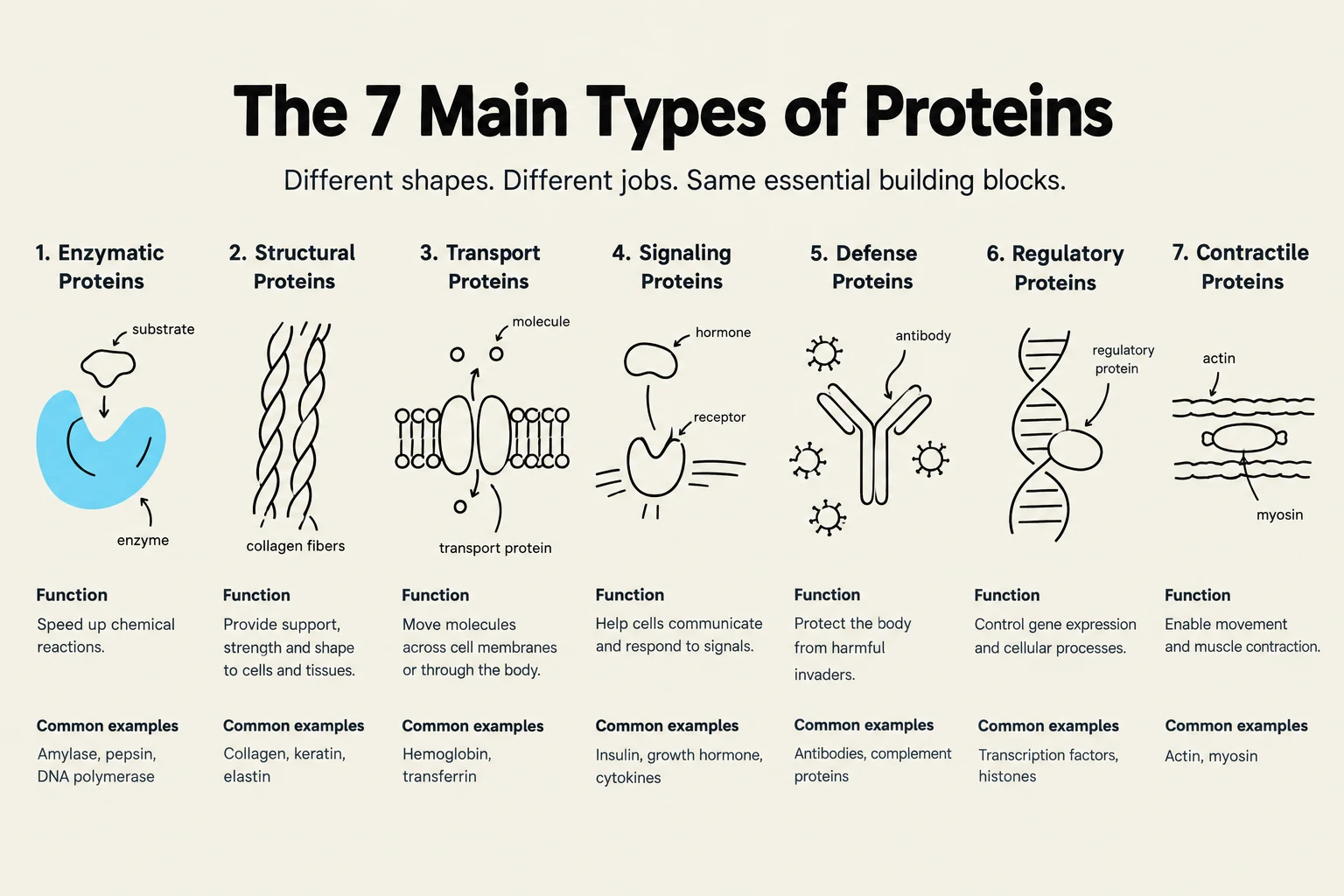
Proteins are among the most versatile and essential macronutrients in the human diet. While carbohydrates and fats primarily serve as energy sources, proteins are the "workhorses" of the cell, performing a vast array of structural, regulatory, and defensive roles. To understand how proteins function, we must first look at their fundamental building blocks: amino acids.
The Building Blocks: Amino Acids and Peptide Bonds
All proteins are large, complex molecules constructed from smaller subunits called amino acids. There are 20 naturally occurring amino acids that serve as the universal building blocks for all proteins in living organisms. These amino acids are linked together through a specific chemical connection known as a peptide bond.
Amino acids are categorized into two primary groups based on whether the human body can manufacture them internally:
- Essential amino acids: There are nine amino acids that the human body cannot synthesize on its own. Because they cannot be produced internally, they must be obtained through dietary intake. Since the body cannot store these amino acids, a lack of them in the diet can lead to protein deficiency diseases.
- Nonessential amino acids: There are eleven amino acids that the body is capable of synthesizing internally.
Exam Tip: Remember that "essential" does not mean "important"—all amino acids are important! In nutritional science, "essential" specifically means the body must get them from food because it cannot make them.
Nutritional Completeness: Complete vs. Incomplete Proteins
When we consume food, we aren't just eating "protein"; we are eating specific profiles of amino acids. Because different foods contain different ratios of the 20 amino acids, scientists classify proteins based on their nutritional completeness.
Keep reading for free.
Create an account to finish this reading and make it part of your study routine.
Continue reading freeAlready have an account? Log in
Updated