


In the American legal system, judges serve as the arbiters of law, ensuring that proceedings are conducted fairly and according to established legal principles. For many legal professionals, attaining a judgeship is viewed as a prestigious capstone to a long and successful legal career. However, the role of a judge is highly specialized and requires a clear understanding of the boundaries between judicial authority and the powers held by other actors in the courtroom, such as prosecutors.
The Functions of a Judge
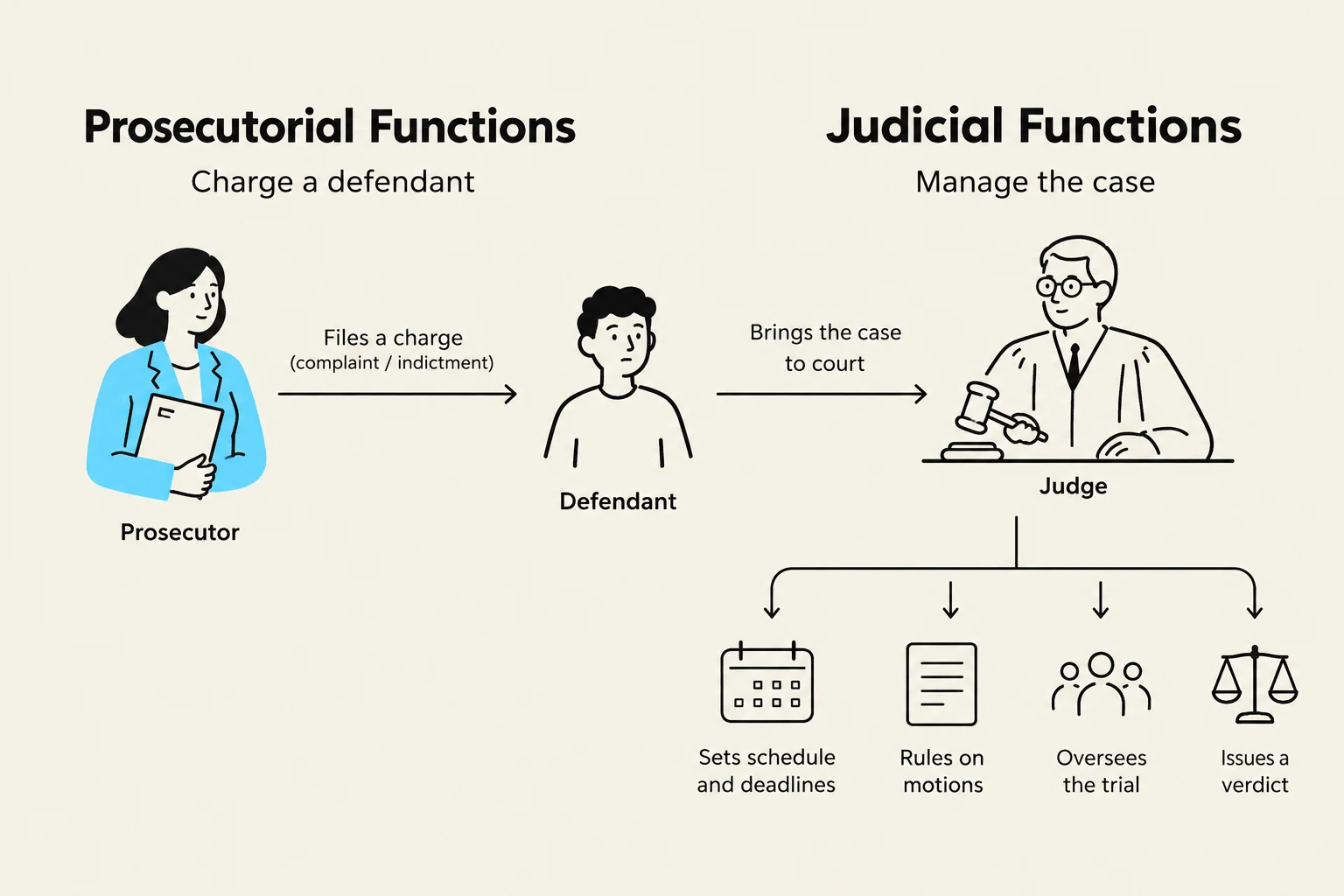
A common misconception in legal studies is the blurring of lines between the roles of the prosecutor and the judge. It is vital for students to understand that deciding whether to charge a defendant with a crime is not a function of a judge. That responsibility falls to the executive branch, specifically prosecutors or grand juries.
Instead, the judge's role is to manage the legal proceedings and make rulings based on the law and evidence presented. A judge's decisions can have profound consequences for the outcome of a trial, including the power to dismiss a case entirely or to rule that a defendant is not guilty.
Exam Tip: If a multiple-choice question asks which task is not a judicial function, look for "deciding whether to charge a defendant." This is a prosecutorial function, not a judicial one.

Keep reading for free.
Create an account to finish this reading and make it part of your study routine.
Continue reading freeAlready have an account? Log in
Updated