


The nervous system is a complex network designed to maintain homeostasis and interact with the environment. While much of our cognitive activity is directed by the brain, the spinal cord plays a much more active and autonomous role than many realize. Beyond acting as a vital highway for information traveling between the brain and the periphery, the spinal cord serves as an integration center capable of executing rapid, independent responses known as spinal reflexes. These reflexes are essential for survival, allowing the body to react to danger before the brain even perceives the stimulus.
The Dual Role of the Spinal Cord
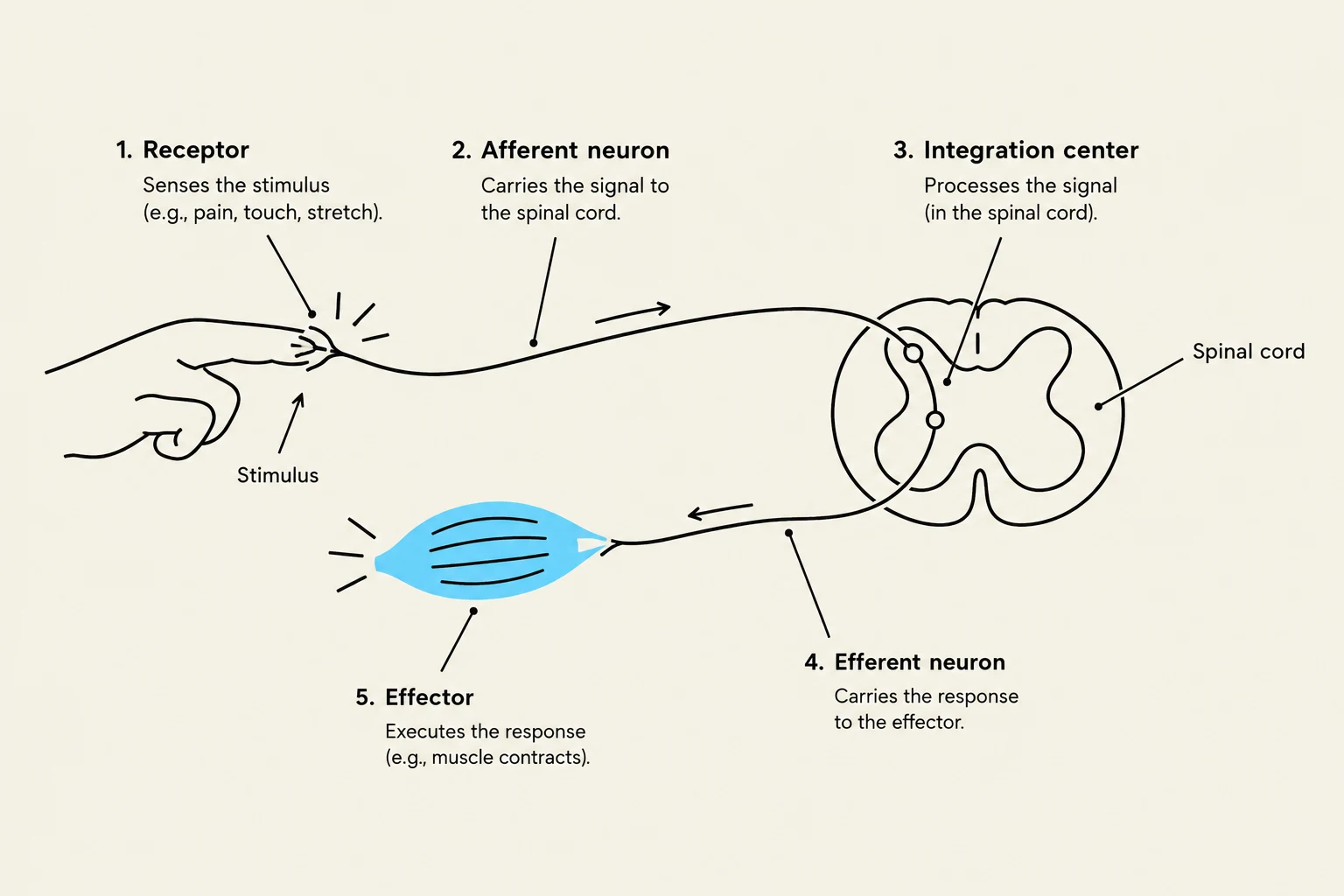
The spinal cord functions in two primary capacities. First, it acts as a conduit, facilitating the flow of information between the brain and the rest of the body. This involves the transmission of sensory information via the afferent division of the peripheral nervous system (PNS) to the central nervous system (CNS), and the subsequent return of motor instructions via the efferent division.
Second, the spinal cord serves as an integration center for spinal reflexes. By processing specific inputs locally, the spinal cord can trigger immediate motor outputs, bypassing the higher processing centers of the brain to save precious milliseconds during a crisis.
Categorizing Reflexes: Simple vs. Acquired
Not all reflexive responses are created equal. Physiologists generally categorize reflexes into two distinct types based on how they are obtained:
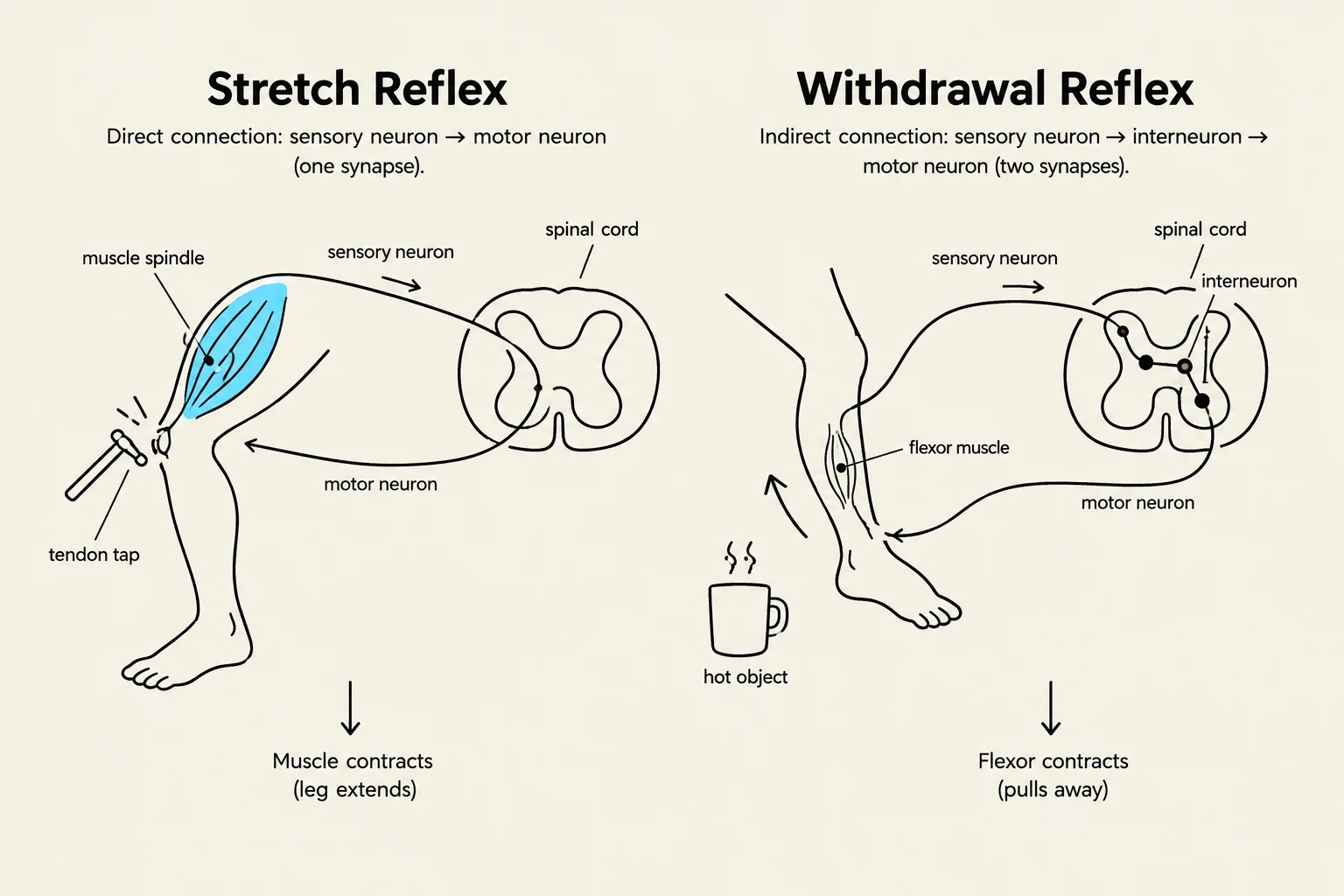
- Simple Reflexes: These are unlearned, automatic, and innate responses to specific stimuli. An example is the immediate withdrawal of a hand when touching a hot surface; this is a hard-wired survival mechanism.
- Acquired Reflexes: These are not innate but result from practice, training, or conditioning over time. A common example is salivating at the sight or smell of a favorite food, a response that has been learned through repeated association.
Keep reading for free.
Create an account to finish this reading and make it part of your study routine.
Continue reading freeAlready have an account? Log in
Updated