


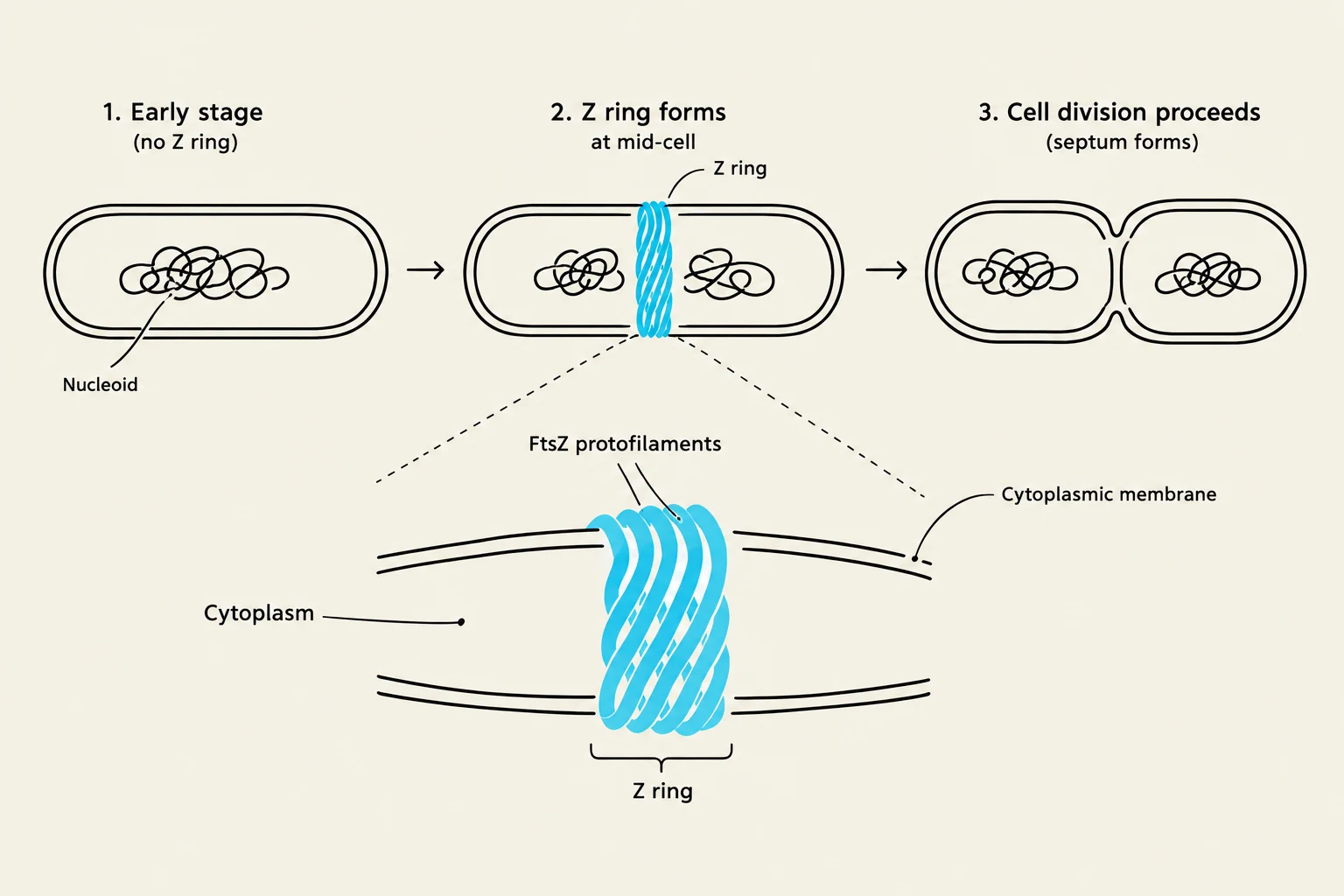
In the world of microbiology, the ability of a bacterium to divide is perhaps its most fundamental survival mechanism. For a single cell to become two, it must precisely locate the center of the cell, assemble a specialized protein machinery, and physically constrict the membrane to split the cytoplasm. At the heart of this complex process lies a single, essential protein: FtsZ. Often described as the bacterial homolog of eukaryotic tubulin, FtsZ is a GTPase that serves as the master architect of the division site.
The Molecular Identity of FtsZ
FtsZ is a highly conserved protein found in almost all bacteria. Its primary function is to act as a scaffold, providing the structural foundation upon which the rest of the cell division machinery (the divisome) is built.
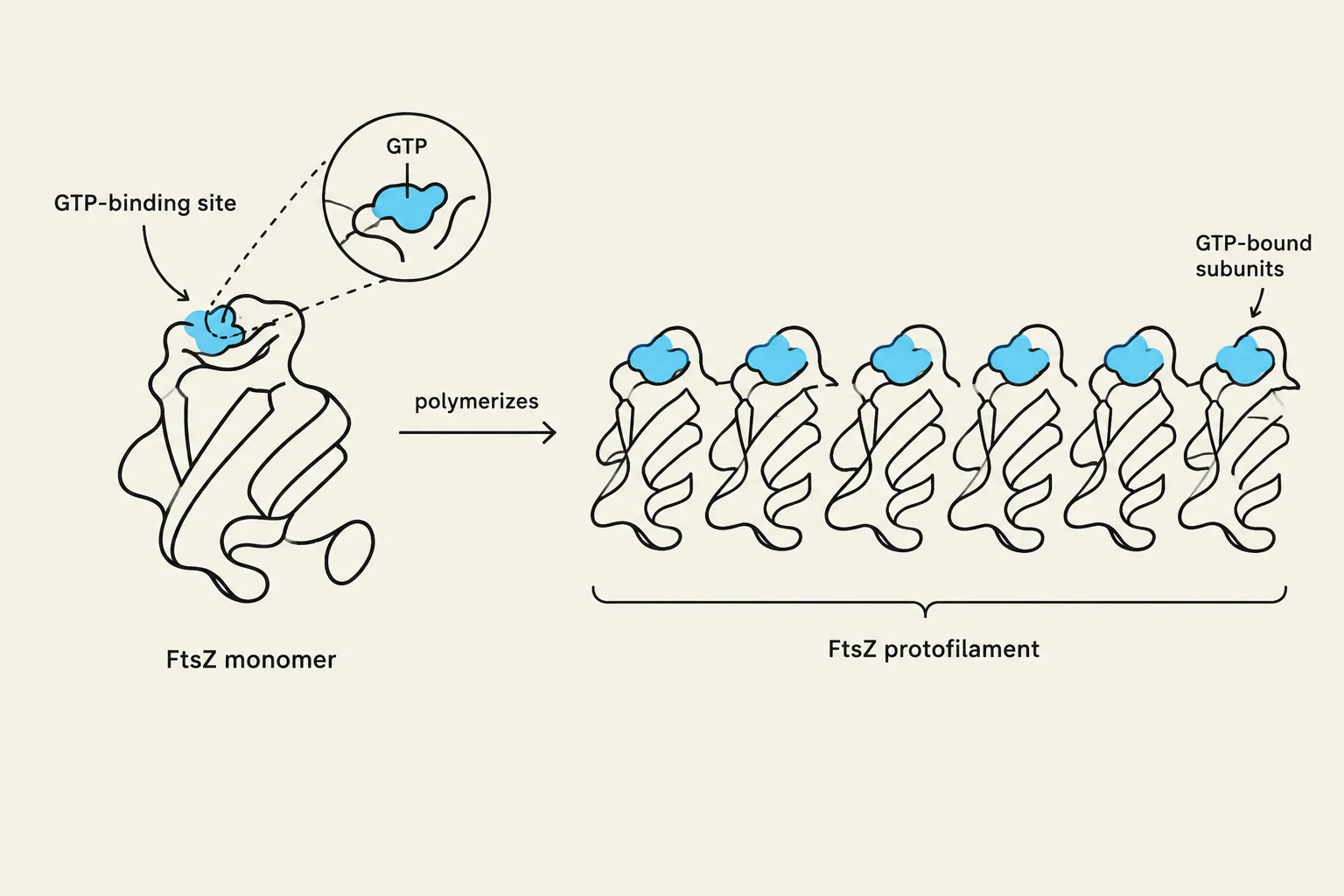
To understand FtsZ, one must understand its enzymatic nature. FtsZ is a GTPase, meaning it has the ability to bind to Guanosine Triphosphate (GTP) and catalyze its hydrolysis into Guanosine Diphosphate (GDP) and an inorganic phosphate (). This chemical reaction is not just a metabolic byproduct; it is the "engine" that drives the structural changes required for division.
Exam Tip: If a question asks which protein is the direct functional analog of eukaryotic tubulin, the answer is FtsZ. While they have different structures, they share the fundamental ability to polymerize and utilize GTP for structural dynamics.
Keep reading for free.
Create an account to finish this reading and make it part of your study routine.
Continue reading freeAlready have an account? Log in
Updated