


In the evolutionary history of plants, the transition from spore-dispersing plants (like ferns) to seed-producing plants marked a monumental shift in survival capability. While spores are single-celled and highly vulnerable to environmental changes, seeds are complex, multicellular structures designed to protect the next generation. This article explores the intricate biological processes that transform an ovule into a seed and examines the fundamental differences between the two major groups of seed plants: gymnosperms and angiosperms.
The Anatomy of an Ovule
Before fertilization can occur, the plant must produce female reproductive structures known as ovules. An ovule is not a seed; rather, it is the precursor that, once fertilized, develops into a seed.
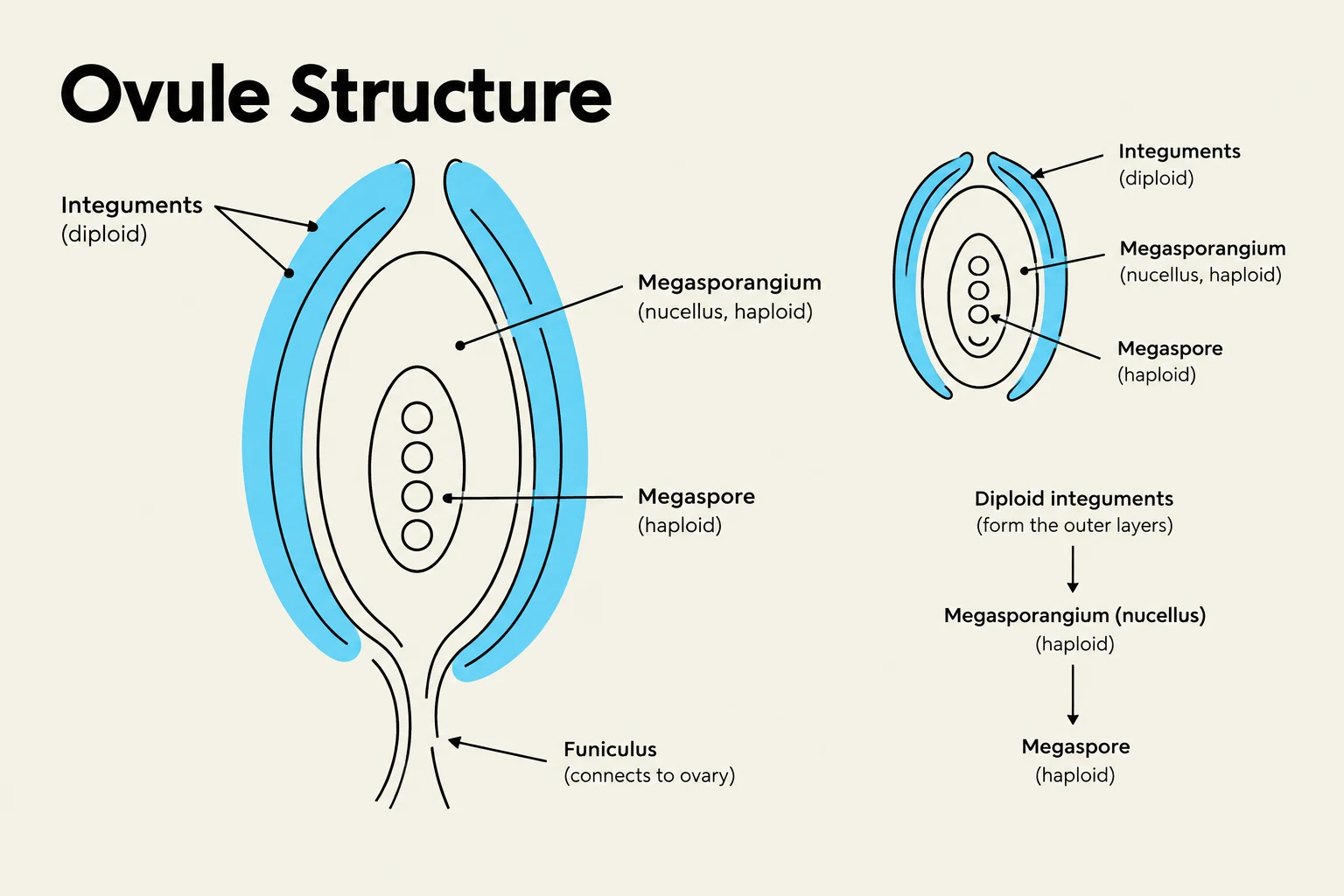
The structure of an ovule is composed of several specialized layers and cells:
- Integuments: These are diploid ($2n$) protective layers that surround the internal structures. After fertilization, the integuments develop into the seed coat.
- Megasporangium: A diploid ($2n$) structure located within the ovule that houses the development of the female gametophyte.
- Megaspore: A haploid () cell produced via meiosis within the megasporangium.
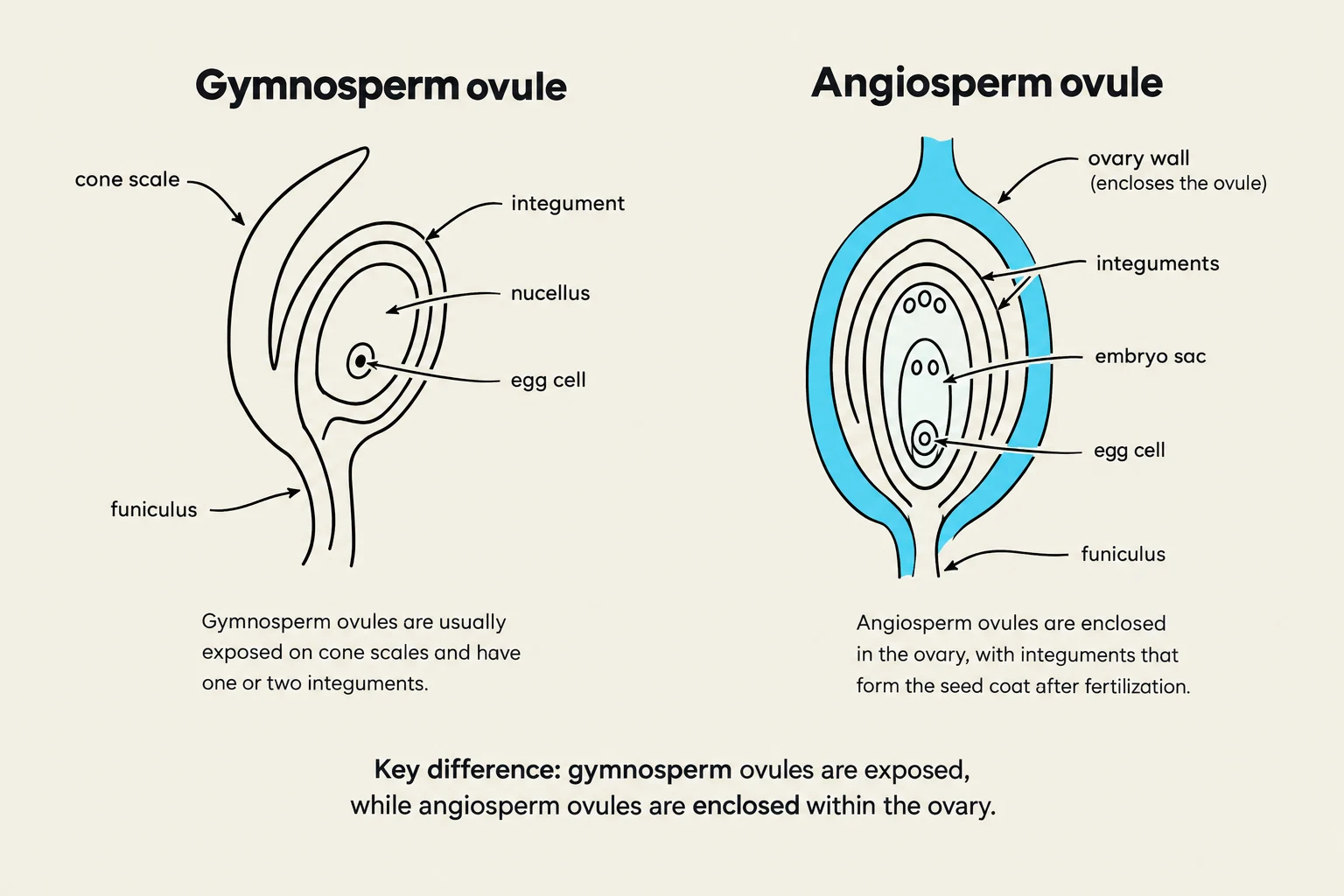
- Archegonium: In many species, specifically gymnosperms, the ovule contains a haploid () archegonium, which is the structure that houses the egg.
Exam Tip: Remember the distinction between ploidy levels. Integuments and megasporangia are diploid ($2n$), while the megaspore and archegonium are haploid ().
From Ovule to Seed: The Biological Advantage
Once fertilization occurs—the process where the sperm and egg cells join—the ovule undergoes a transformation into a seed. A seed is fundamentally different from a spore because it contains an embryonic sporophyte ($2n$). You can think of the embryo as the "grandchild" of the parent tree, as it is the offspring of the gametophyte generation.

Keep reading for free.
Create an account to finish this reading and make it part of your study routine.
Continue reading freeAlready have an account? Log in
Updated