


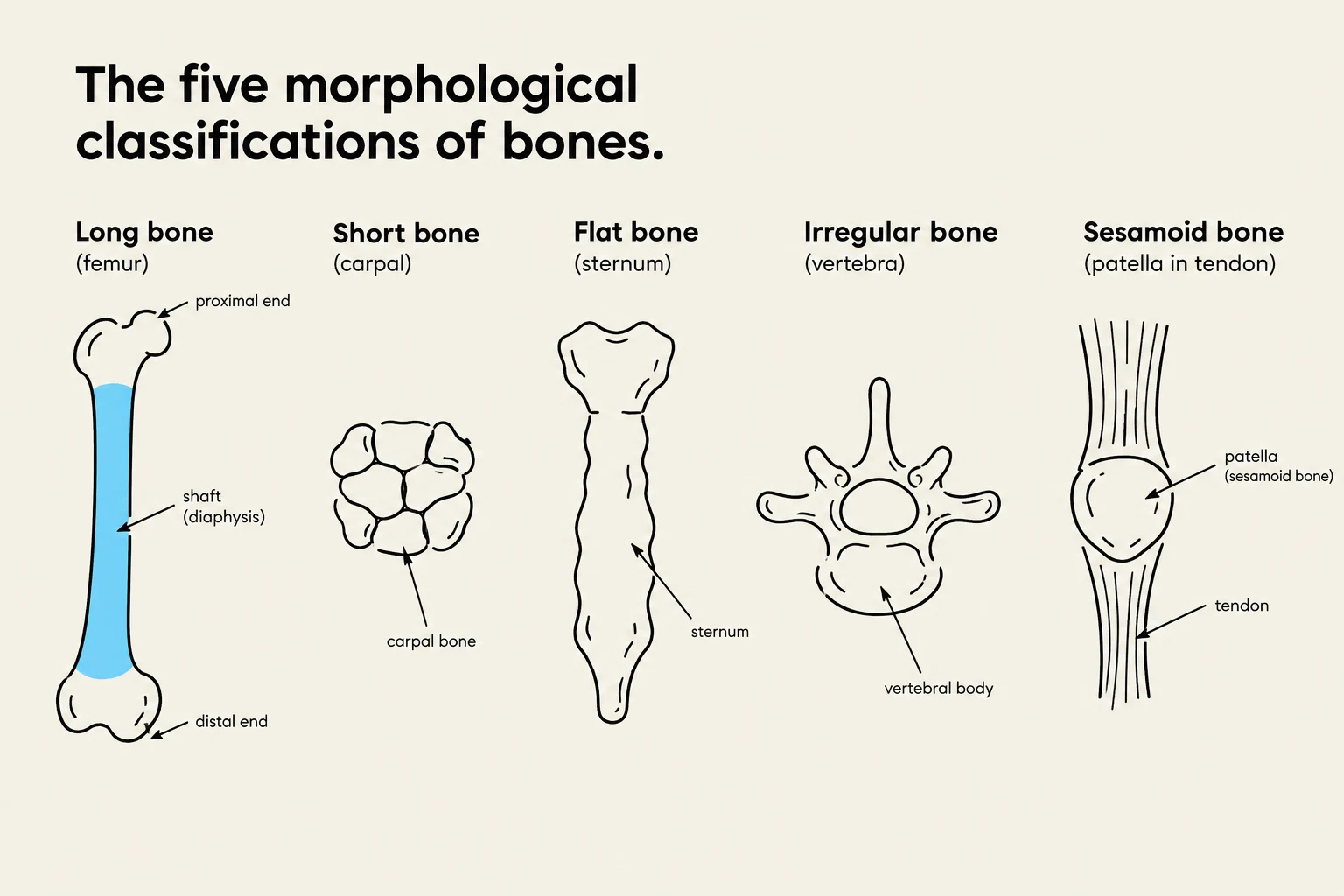
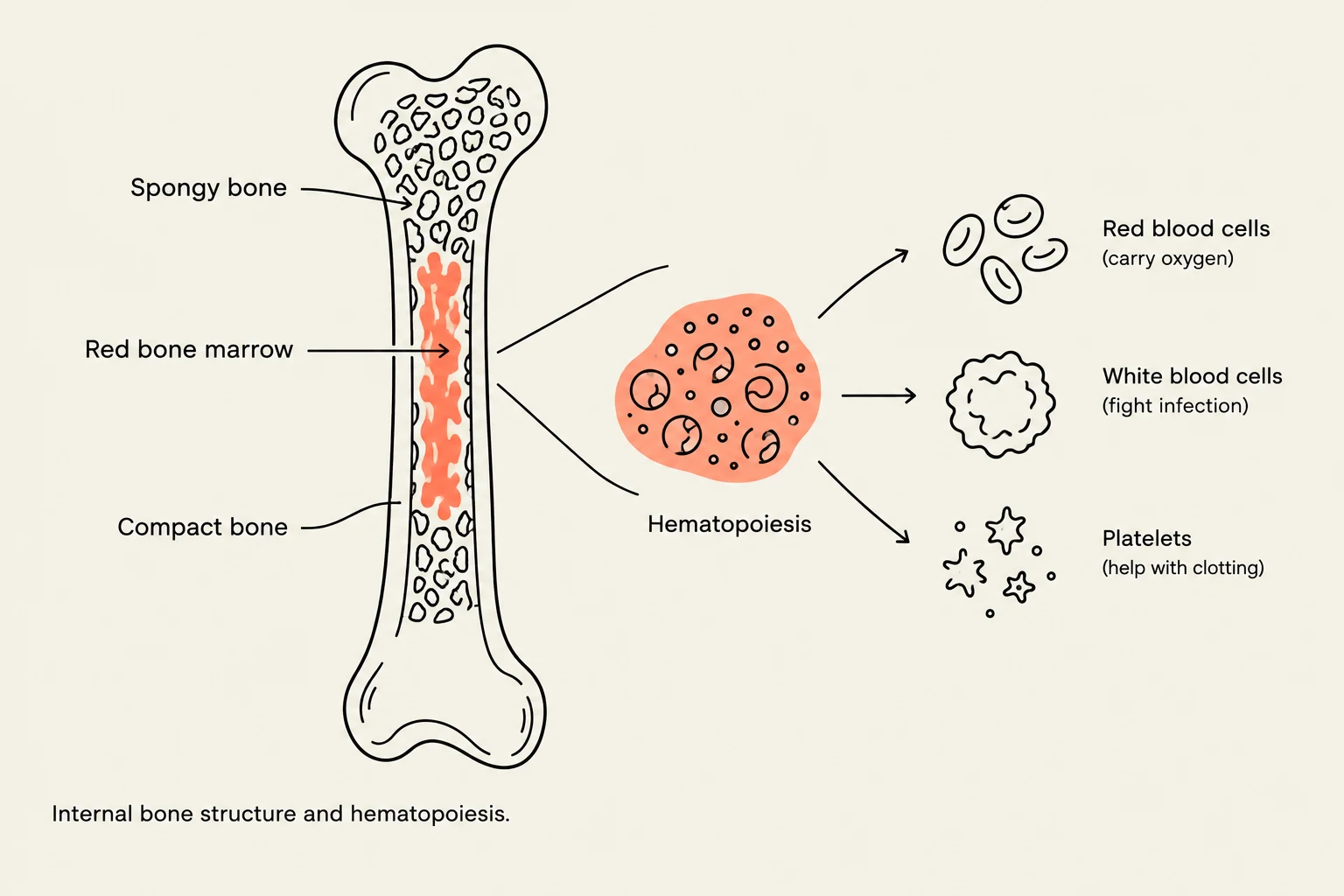
The human skeleton is far more than a rigid scaffolding that holds us upright; it is a dynamic, living organ system essential for survival. While we often think of bones as static structures, they are constantly undergoing remodeling to adapt to physical stress and to serve as a vital reservoir for minerals and blood cell production. Understanding the skeletal system requires looking at its two primary divisions, the diverse shapes bones can take, and the critical physiological processes occurring within their marrow.
The Two Divisions: Axial and Appendicular
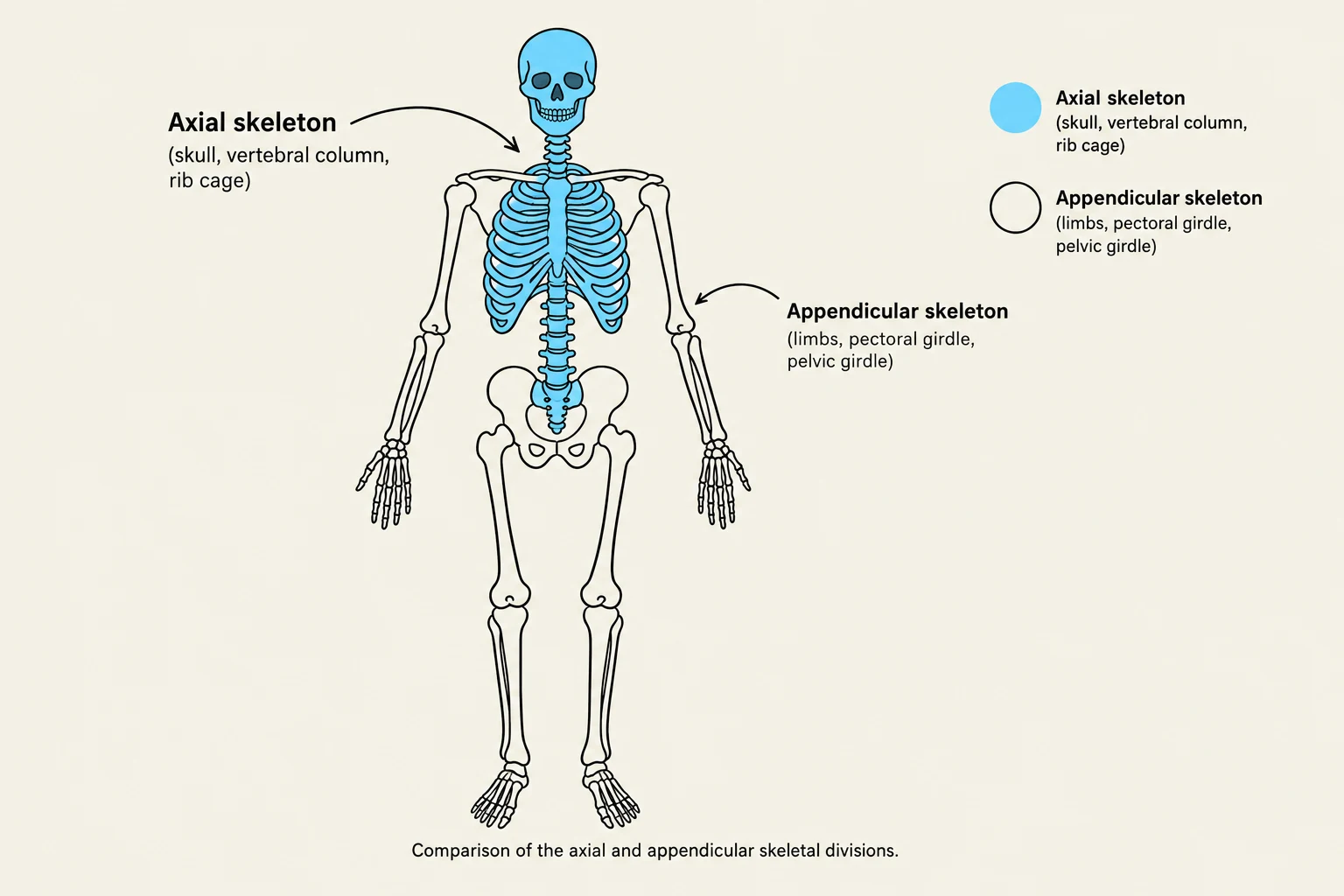
The Axial Skeleton
The axial skeleton forms the central axis of the body. Its primary role is to protect the most vital organs, such as the brain, spinal cord, heart, and lungs. It includes:
- The Skull: Protects the brain and provides structure for the face.
- The Vertebral Column: Supports the weight of the head and trunk while protecting the spinal cord.
- The Thoracic Cage: Comprising the ribs and sternum, this structure shields the thoracic organs.
The Appendicular Skeleton
In contrast to the protective nature of the axial skeleton, the appendicular skeleton is designed for movement and manipulation of the environment. This division includes the bones of the upper and lower limbs, as well as the girdles that attach these limbs to the axial skeleton.
- Pectoral (Shoulder) Girdle: Connects the arms to the axial skeleton.
- Pelvic (Hip) Girdle: Connects the legs to the axial skeleton and supports the weight of the upper body.
- Limbs: The long bones of the arms, legs, hands, and feet.
Keep reading for free.
Create an account to finish this reading and make it part of your study routine.
Continue reading freeAlready have an account? Log in
Updated