This article explores the fundamental principles of Zang-fu theory in Traditional Chinese Medicine (TCM), focusing on the vital functions, substances, and pathological patterns of the Heart and Lungs.
In Traditional Chinese Medicine (TCM), the human body is viewed as an organic, holistic whole where all parts are structurally inseparable and functionally coordinated. To understand how the body maintains health or falls into disease, practitioners utilize the Theory of Zang-fu Organs. This system categorizes organs not just by their anatomical structures, but by their specific physiological roles and their relationships with one another. This article explores the fundamental principles of Zang-fu theory, with a specific focus on the vital functions, substances, and pathological patterns of the Heart and the Lungs.
The Theory of Zang-fu Organs
The Zang-fu system is the cornerstone of TCM physiology. It divides the internal organs into three distinct categories:
Five Zang Organs: These are the "Yin" organs, which are solid in structure and function to "store essence." They include the Heart, Liver, Spleen, Lung, and Kidney.
Six Fu Organs: These are the "Yang" organs, which are hollow in structure and function to "pass, move, and transport" substances. They include the Small Intestine, Large Intestine, Gallbladder, Stomach, Bladder, and Sanjiao.
Extraordinary Organs: These are unique structures that "store essence," such as the Brain, Marrow, Bone, Blood Vessels, Gallbladder, and Uterus.
Understanding these organs requires an appreciation of the Yin-Yang framework. Yin represents nourishing, moistening, and inward-moving functions, while Yang represents moving, warming, and outward-reaching activities. Disease is viewed as an imbalance between these two forces.
The Heart: Ruler of Blood and Mind
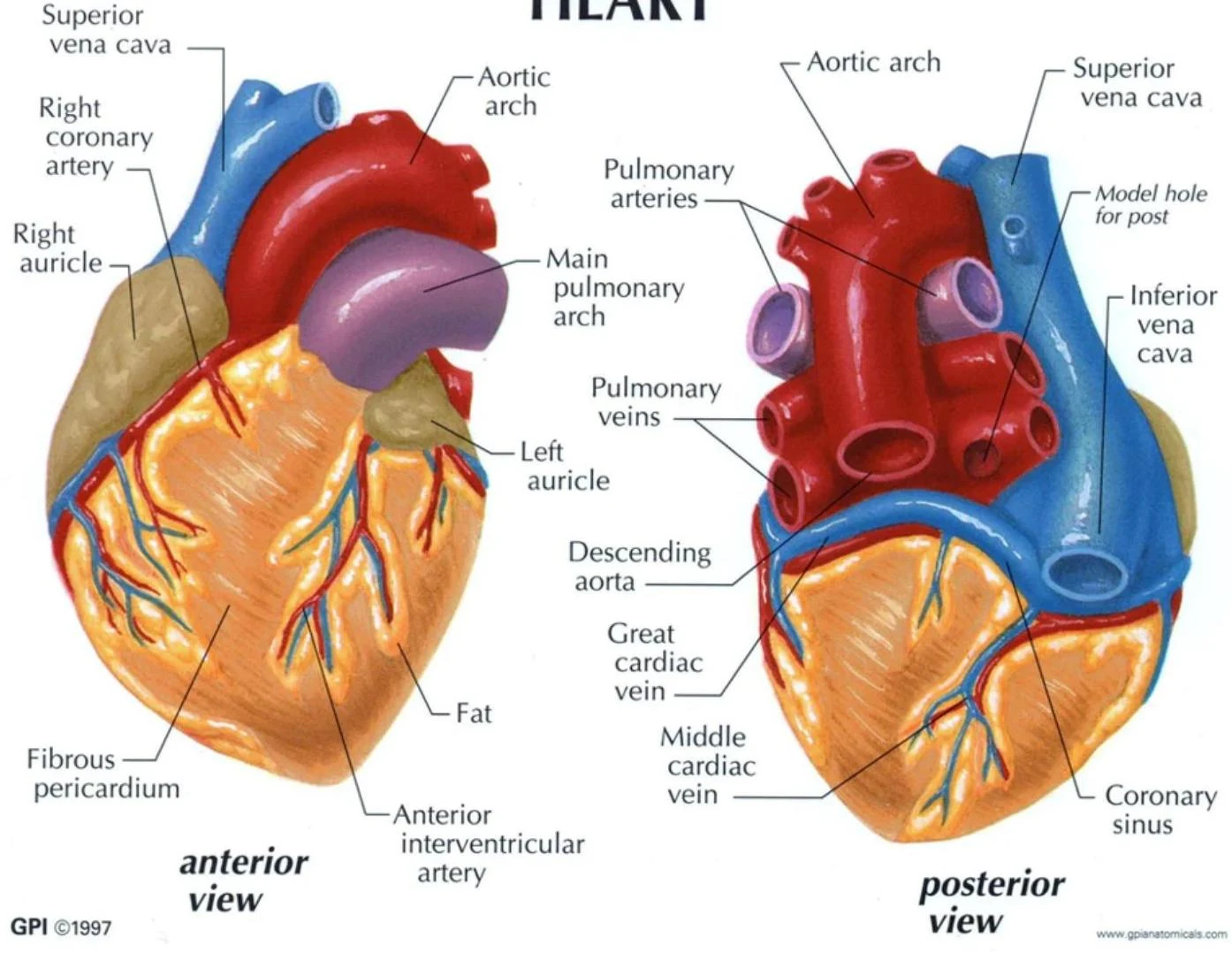
The Heart is located above the diaphragm and is externally protected by the Pericardium, a fibrous membrane sac. In TCM, the Heart is considered the "ruler" of the body, governing both the physical circulatory system and the mental/spiritual aspects of a person.
Physiological Functions
The Heart performs several critical roles:
Governing Blood and Vessels: The Heart is in charge of pumping blood and regulating its flow through the vascular system.
Housing the Mind: The Heart is the residence of the "spirit/mind," governing mental activity, memory, and sleep.
External Manifestations: The Heart "opens into the tongue," affects speech, and its "window" is the complexion (the color of the face).
Fluid Regulation: The specific body fluid associated with the Heart is sweat.
Vital Substances and Pathology
The Heart relies on two primary vital substances: Heart Blood (and Yin) and Heart Qi (and Yang). An imbalance in these substances leads to specific pathological patterns:
Pattern
Key Symptoms
Pulse/Tongue
Heart Qi Deficiency
Palpitations, shortness of breath, fatigue, pale complexion
Weak pulse; Pale/pink tongue
Heart Yang Deficiency
Palpitations, feeling cold, cold limbs, discomfort in heart area
Deep, weak, slow pulse; Pale, swollen, wet tongue
Heart Blood Deficiency
Palpitations, dull pale face/lips, insomnia, poor memory
Thready & choppy pulse; Pale, thin tongue
Heart Yin Deficiency
Palpitations, red cheeks, night sweats, dry mouth, restlessness
Thin-rapid & floating pulse; Red tongue with crack
Heart Blood Stasis
Palpitations, chest pain radiating to left arm, purple lips/nails
Knotted pulse; Purple tongue
Anatomical illustration of the human heart showing anterior and posterior views with labels for major arteries, veins, and chambers.Anatomical illustration of the human heart showing anterior and posterior views with labels for major arteries, veins, and chambers.
The Lungs: Master of Qi and Water
While the Heart governs the blood, the Lungs are responsible for the movement of Qi and the regulation of the body's "water passages". The Lungs act as the "upper source of water" in the TCM hierarchy.
Physiological Functions
The Lungs possess a wide array of functions that connect the internal body to the external environment:
Governing Qi and Respiration: The Lungs dominate the overall Qi of the body through respiration. They extract clean air, mix it with "grain Qi" (from the Spleen) and body fluids, and distribute it to nourish the skin and hair.
Dispersing and Descending: A healthy Lung must maintain the correct direction of Qi. It must disperse (distribute nutrients and fluids outward to the skin) and descend (move Qi and fluids downward).
Regulating Water Metabolism: The Lungs are responsible for the movement, distribution, and excretion of body fluids.
Defense and Protection: The Lungs control the body's defense/immune system and the skin/body hair.
External Connection: The Lungs "open into the nose" and their "window" is the skin.
Vital Substances and Pathology
The primary substances of the Lung are Lung Qi and Lung Yin. Failure in the dispersing or descending functions, or an imbalance in Yin/Qi, results in various respiratory and fluid-related issues:
Student Note: When assessing Lung function, always look for the relationship between breathing and fluid. For example, a "barking cough" often indicates Phlegm-Heat, whereas a "weak, watery sputum" suggests Qi deficiency or fluid accumulation.
Pattern
Key Symptoms
Pulse/Tongue
Wind-Cold Invading LU
Cough, itchy throat, runny nose (clear mucus), aversion to cold
Floating, tense pulse; Normal, thin white coat
Wind-Heat Invading LU
Cough, sore throat, runny nose (yellow mucus), fever
Floating-rapid pulse; Red, thin yellow coat
Lung Qi Deficiency
Shortness of breath, watery sputum, weak voice, fatigue
Weak pulse; Pale or pink tongue
Lung Yin Deficiency
Dry cough (little mucus/blood), hoarse voice, red cheeks, dry throat
Thin-rapid pulse; Red, peeled tongue
Phlegm-Fluids in LU
Cough with splashing sound, shortness of breath, vomiting, white frothy sputum
The Heart and Lungs do not work in isolation. The Lungs are often described as the "ruler" of Qi, while the Kidneys are the "root" of Qi. The Lungs send Qi down, and the Kidneys "receive and grasp" it. Similarly, the Lungs help the Heart by assisting in the formation of Zong Qi (Gathering Qi), which helps the Heart move the blood.
Understanding these foundational patterns—from the Heart's role in mental stability to the Lung's role in water regulation—is essential for accurate syndrome differentiation and effective treatment in TCM.
Keep reading for free.
Create an account to finish this reading and make it part of your study routine.