


The blueprint of life is written in a chemical language composed of specialized molecules called nucleotides. These small building blocks serve as the fundamental units for the two most critical nucleic acids in biology: Deoxyribonucleic Acid (DNA) and Ribonucleic Acid (RNA). Understanding how these molecules are constructed, how they are named, and how they facilitate the flow of genetic information is essential for mastering cellular biology.
The Anatomy of a Nucleotide
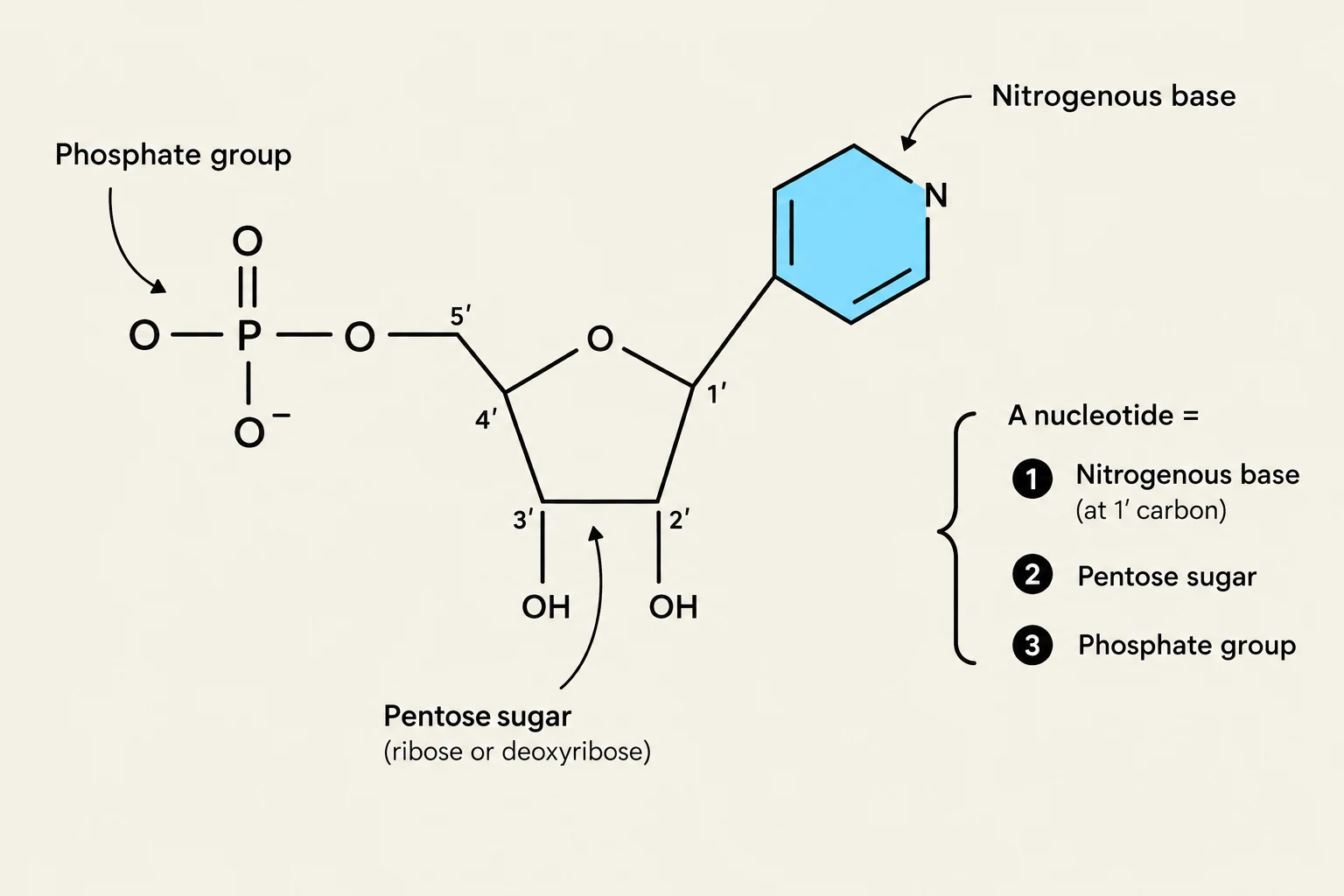
A nucleotide is not a single uniform structure, but rather a complex composed of three distinct chemical components: a nitrogenous base, a pentose (five-carbon) sugar, and one or more phosphate groups. To understand how to build or identify a nucleotide, one must look at the specific attachment points on these components.
1. The Pentose Sugar (The Backbone Foundation)
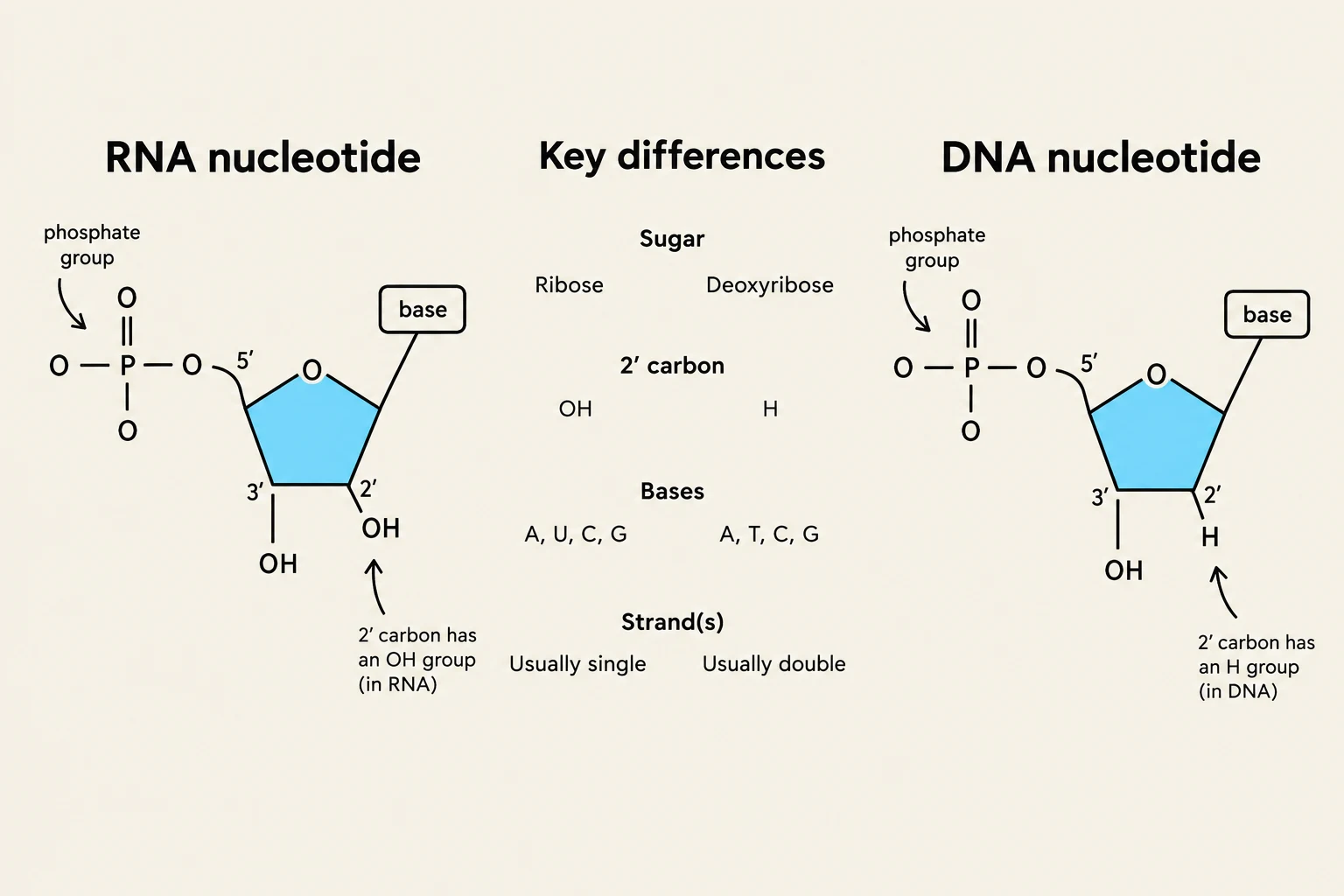
The sugar provides the structural framework. The primary difference between DNA and RNA lies in the chemical group attached to the 2' carbon of this sugar:
- Ribose (RNA): Contains a hydroxyl group (-OH) at the 2' position.
- Deoxyribose (DNA): Contains a hydrogen atom (-H) at the 2' position. The "deoxy" prefix literally indicates the "loss" of an oxygen atom compared to ribose.
2. The Nitrogenous Base (The Information Carrier)
The bases are attached to the 1' carbon of the sugar. These are categorized by their chemical ring structures:
- Purines: These consist of a double-ring structure. The two purines are Adenine (A) and Guanine (G).
- Pyrimidines: These consist of a single-ring structure. The pyrimidines are Cytosine (C), Thymine (T), and Uracil (U).
Keep reading for free.
Create an account to finish this reading and make it part of your study routine.
Continue reading freeAlready have an account? Log in
Updated