In any service-oriented field—whether in community development, healthcare, or social work—the quality of the relationship between the practitioner and the client is the primary vehicle for change. A professional relationship is not merely a transaction of services; it is a structured interaction built upon a foundation of psychological safety. When clients feel safe, they are more likely to engage honestly, participate in decision-making, and commit to the processes required to achieve their goals.
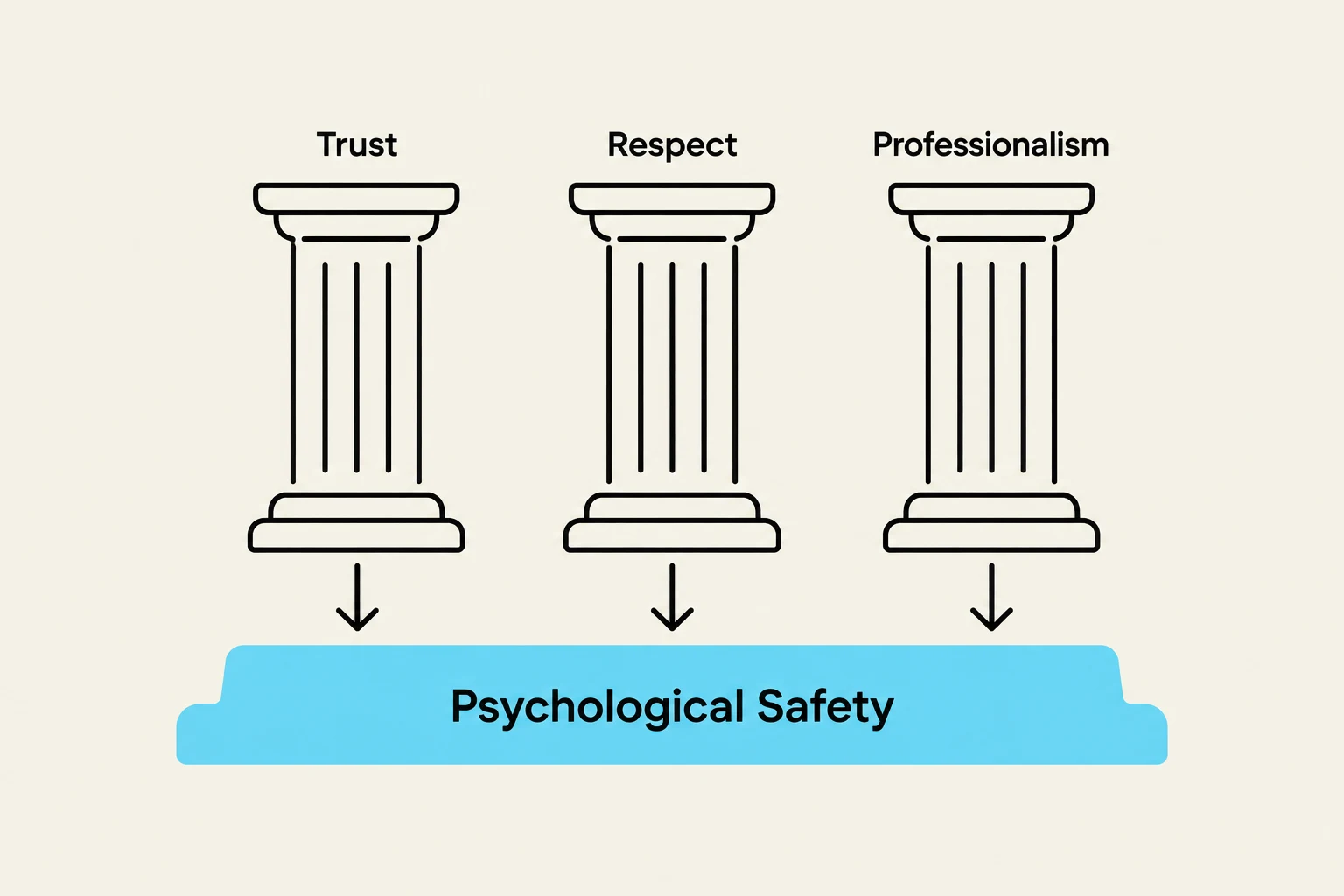
Three pillars, labeled Trust, Respect, and Professionalism, support Psychological Safety.
To master this, one must understand the three core pillars: trust, respect, and professionalism. These elements work in tandem to create an environment where clients feel empowered rather than judged.
The Pillar of Trust: Creating Psychological Safety
Trust is the bedrock of engagement. Without it, a client may provide superficial information or withhold the very details necessary for effective support. Trust in a professional context is not about "liking" someone; it is about the client's belief that the practitioner is reliable, competent, and has their best interests at heart.
Building trust requires consistency between words and actions. If a practitioner promises to follow up on a resource by Tuesday, failing to do so—even for a valid reason—can cause a significant rupture in the relationship.
Exam Tip: Remember that trust is often built in small, incremental moments rather than through grand gestures. Consistency is more important than intensity when establishing long-term rapport.
Components of Trustworthy Behavior:
Reliability: Following through on commitments and maintaining boundaries.
Transparency: Being honest about what you can and cannot do, including being clear about the limitations of your role.
Confidentiality: Demonstrating through action that sensitive information is handled with the utmost care and according to legal and ethical standards.
The Pillar of Respect: Valuing Agency and Diversity
This diagram illustrates the power imbalance in professional relationships, showing how a practitioner's specialized knowledge and institutional authority can outweigh a client's vulnerability.
Respect in professional relationships goes beyond simple politeness. It involves a deep recognition of the client's inherent dignity, their lived experience, and their right to self-determination. When a client feels respected, they feel seen as a whole person rather than a "case number" or a "problem to be solved."
Respectful practice requires an awareness of power dynamics. In most professional settings, there is an inherent imbalance of power: the practitioner holds specialized knowledge or institutional authority, while the client is often in a position of vulnerability.
Practicing Respectful Engagement:
Active Listening: Giving the client your full attention and validating their feelings without immediately jumping to "fix" the situation.
Cultural Humility: Approaching every interaction with the understanding that you are not an expert on the client's culture or personal identity. This involves a willingness to learn from the client.
Honoring Autonomy: Recognizing that the client is the expert on their own life. Instead of telling a client what to do, a professional presents options and supports the client in making their own informed choices.
The Pillar of Professionalism: Maintaining Boundaries and Standards
Professionalism provides the framework that keeps the relationship safe for both the client and the practitioner. It is the set of behaviors, ethics, and standards that distinguish a professional relationship from a personal friendship.
While a professional relationship should be warm and empathetic, it must remain bounded. Without clear boundaries, the relationship can become blurred, leading to emotional burnout for the practitioner or confusion and dependency for the client.
Key Elements of Professionalism:
Boundaries: Maintaining clear limits regarding time, physical contact, and the nature of the interaction. For example, a professional does not share their own personal problems with a client, as this shifts the focus away from the client's needs.
Ethical Conduct: Adhering to the code of ethics specific to your industry, which guides decision-making in complex or ambiguous situations.
Emotional Regulation: The ability to remain calm, objective, and composed, even when a client is experiencing high levels of distress or anger.
Worked Example: The Boundary Dilemma
Scenario: A client you have been working with for six months offers you a small, handmade gift as a token of gratitude.
Unprofessional Response: Accepting the gift enthusiastically and suggesting you meet for coffee outside of office hours to celebrate your progress. (This blurs the line between professional and personal).
Professional Response: Acknowledging the kindness of the gesture, explaining the professional policy regarding gifts, and redirecting the focus to the client's hard work and achievements. This maintains the boundary while still validating the client's sentiment.
Integrating the Pillars for Effective Engagement
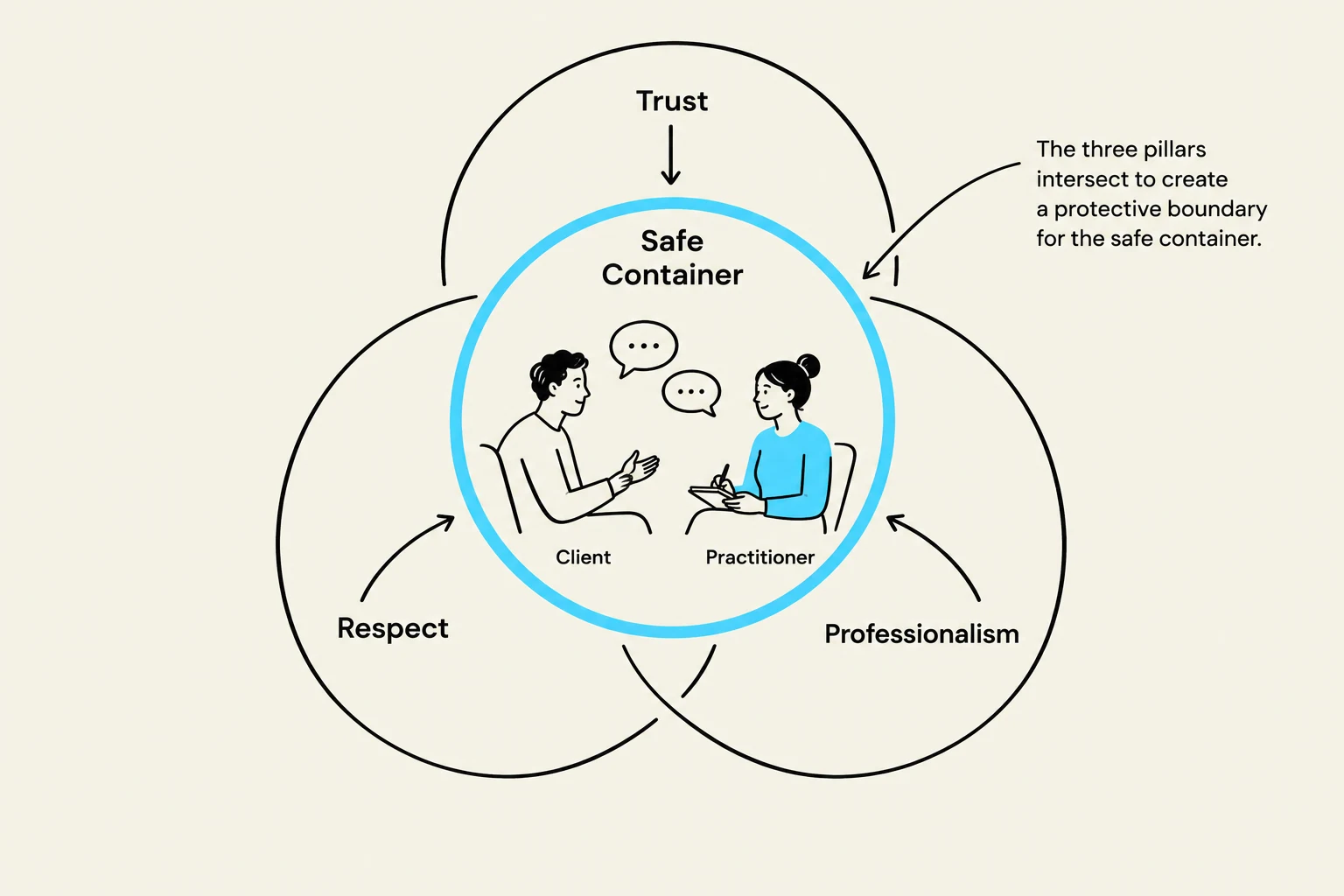
A diagram illustrating the concept of a safe container formed by the intersection of trust, respect, and professionalism, with a client and practitioner interacting within.
When trust, respect, and professionalism are integrated, they create a "safe container" for engagement. In this environment, the client feels that they can take risks—such as admitting to a failure or expressing a difficult emotion—without fear of judgment or loss of support.
Pillar
Primary Goal
Risk of Absence
Trust
To establish reliability and safety.
Client withdrawal or dishonesty.
Respect
To empower the client and honor dignity.
Client resentment or feeling dehumanized.
Professionalism
To maintain structure and ethical safety.
Boundary blurring and role confusion.
By mastering these pillars, practitioners do more than just provide a service; they build the relational capacity necessary for meaningful, long-term community and individual development.
Keep reading for free.
Create an account to finish this reading and make it part of your study routine.