Foundations of Nursing and the Canadian Healthcare System
An overview of the evolution of nursing, its theoretical underpinnings, and the structure, principles, and regulation of the Canadian healthcare system, including primary health care and levels of care.
Entering the nursing profession in Canada requires more than just clinical skill; it demands a deep understanding of the complex systems, legal frameworks, and theoretical foundations that shape patient care. This article explores the intersection of nursing practice and the Canadian healthcare system, providing a roadmap for students to navigate professional identity, regulation, and the delivery of care within a diverse and evolving landscape.
The Evolution and Theory of Nursing
Nursing is a profession built upon a rich history and a robust scientific foundation. Understanding the historical evolution of nursing in Canada allows practitioners to appreciate how the role has transitioned from traditional caregiving to a highly regulated, evidence-based profession. This evolution is deeply intertwined with the development of foundational nursing theories—philosophies and sciences that provide a framework for how nurses perceive health, patients, and their own practice.
To move from theory to practice, nurses utilize the nursing process and evidence-informed nursing practice. This means that care is not based on intuition alone, but on the integration of the best available research, clinical expertise, and patient preferences.
Exam Tip: When studying nursing theories, focus on how they are applied to the nursing process to ensure safe and effective patient care.
The Canadian Healthcare System: Structure and Principles
The Canadian healthcare system, often referred to as "Medicare," is a publicly funded system designed to provide Canadians with access to medically necessary services without direct payment at the point of care. It serves as a vital component of the Canadian social safety net.
The system is characterized by a division of responsibilities between the federal and provincial/territorial governments:
The Federal Government: Sets national principles, assists in financing through transfer payments, and delivers services for specific groups such as Indigenous peoples, veterans, and federal inmates.
Provincial/Territorial Governments: Develop and administer their own insurance plans, manage the delivery of services, and determine the location of facilities like hospitals and long-term care centers.
The cornerstone of this system is the Canada Health Act (1984), which mandates five core principles that provinces must follow to receive federal funding:
Public Administration: Operated on a non-profit basis by a public authority.
Comprehensiveness: Must cover all medically necessary services.
Universality: All insured residents receive the same level of care.
Portability: Coverage continues when a resident moves within Canada.
Accessibility: Reasonable access to services without financial barriers.
This diagram illustrates the relationship between the federal government and the provinces/territories in Canada's healthcare system, showing how federal transfer payments support healthcare delivery and how provinces manage services.
Primary Health Care and Levels of Care
A critical distinction in Canadian healthcare is the difference between primary care and primary health care. While primary care refers to the first point of contact for personal health services (like a doctor's visit), primary health care is a broader, holistic approach that emphasizes health promotion, disease prevention, and equitable resource distribution. It is built on four pillars: Teams, Access, Information, and Healthy Living.
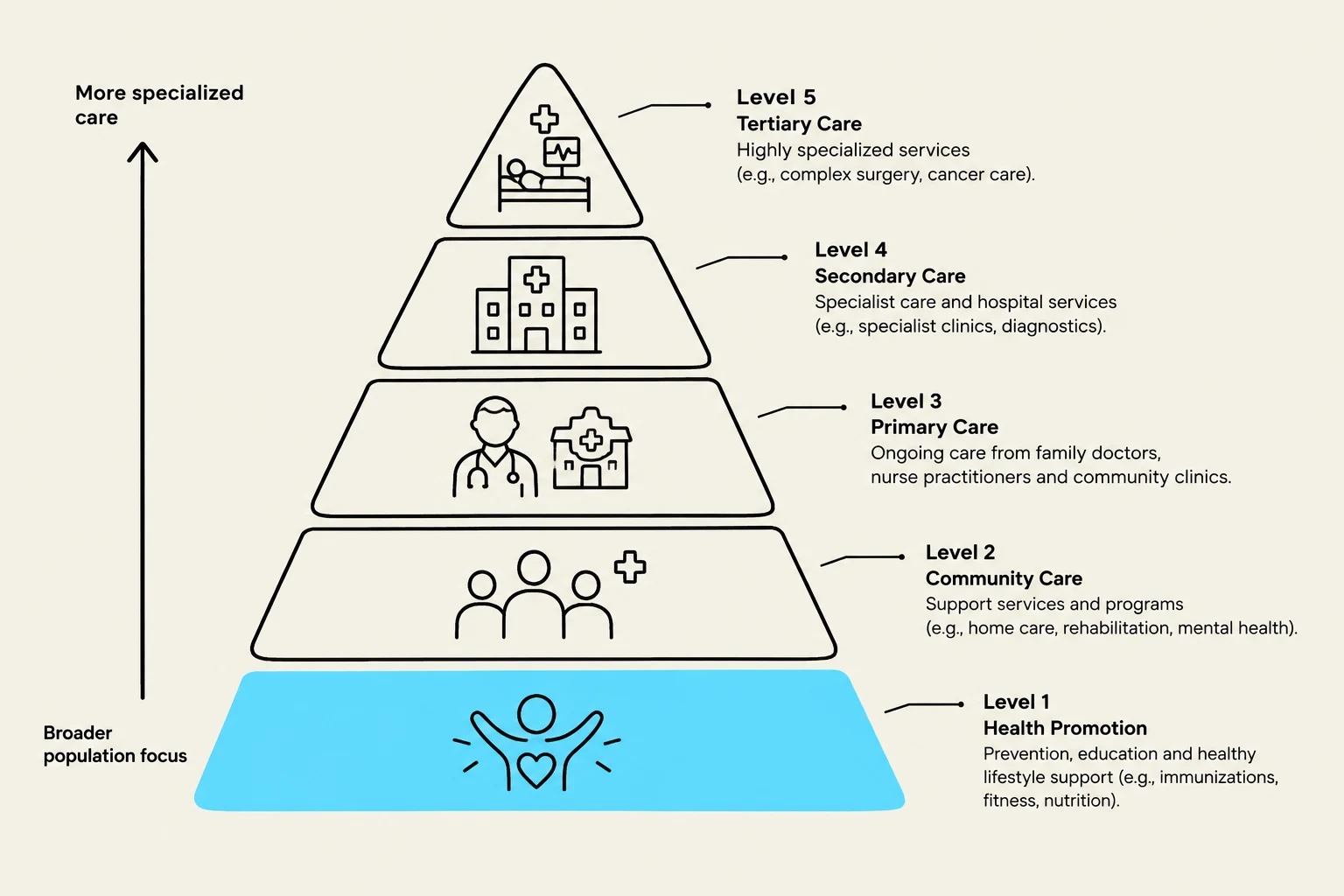
To organize care effectively, the system utilizes five distinct levels of care:
Level
Focus
Examples
Level 1
Health Promotion
Wellness services, advocacy
Level 2
Disease & Injury Prevention
Immunizations, risk reduction
Level 3
Diagnosis & Treatment
Primary, secondary, and tertiary care
Level 4
Rehabilitation
Physiotherapy, occupational therapy
Level 5
Supportive Care
Long-term care, palliative care
This diagram illustrates a tiered model of healthcare services, ranging from broad health promotion to highly specialized tertiary care.
Regulation, Law, and Ethics in Nursing
Nursing is a self-regulated profession, meaning that regulatory bodies manage the standards, competencies, and ethics of their members to protect the public. In Ontario, this is governed by two key pieces of legislation:
The Regulated Health Professions Act (RHPA), 1991: Provides the framework for all regulated health practitioners.
The Nursing Act, 1991: Specifically determines how the nursing profession is regulated.
Beyond legislation, nurses must adhere to strict legal and ethical foundations, including professional accountability, privacy, and confidentiality. The Canadian Nurses Association (CNA) provides a Code of Ethics that guides values such as honoring human dignity, promoting social justice, and pursuing Truth and Reconciliation.
Professional Identity and Clinical Excellence
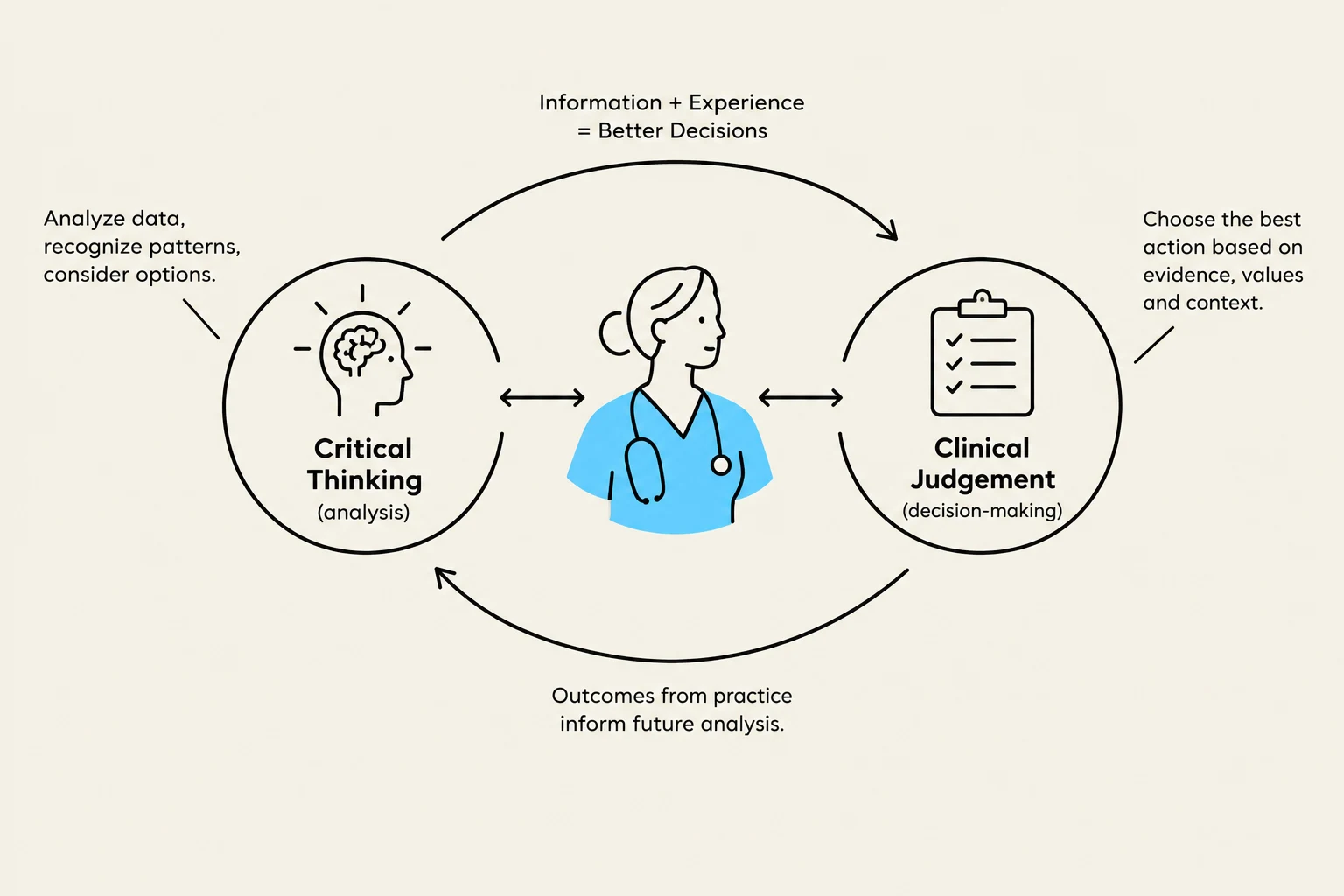
Developing a professional identity is an ongoing process of becoming a "nursing scholar" through lifelong learning. This identity is forged through the continuous application of three essential cognitive skills:
Critical Thinking: The ability to analyze information and question assumptions.
Clinical Judgement: The ability to use critical thinking and experience to make safe, effective decisions in real-time clinical situations.
Reflective Practice: The process of looking back on one's own actions and decisions to gain new insights and improve future performance.
This diagram illustrates the relationship between critical thinking and clinical judgment in decision-making, emphasizing the role of information and experience in improving outcomes.
Reflective Prompt: As you progress through your studies, ask yourself: "How did my decisions in this clinical scenario align with the evidence, and how can I improve my judgement next time?"
As the Canadian healthcare system faces challenges like an aging population, rising costs, and the need for improved Indigenous health equity, the role of the nurse must continue to evolve. By mastering these foundational concepts, nurses are prepared to lead change and provide high-quality, equitable care in an increasingly complex environment.
Keep reading for free.
Create an account to finish this reading and make it part of your study routine.