An overview of human sexuality, its multidimensional nature, and its evolution throughout the lifespan. Covers sexual development, the influence of family and culture, factors affecting sexuality and sexual function, and clinical aspects of reproductive health.
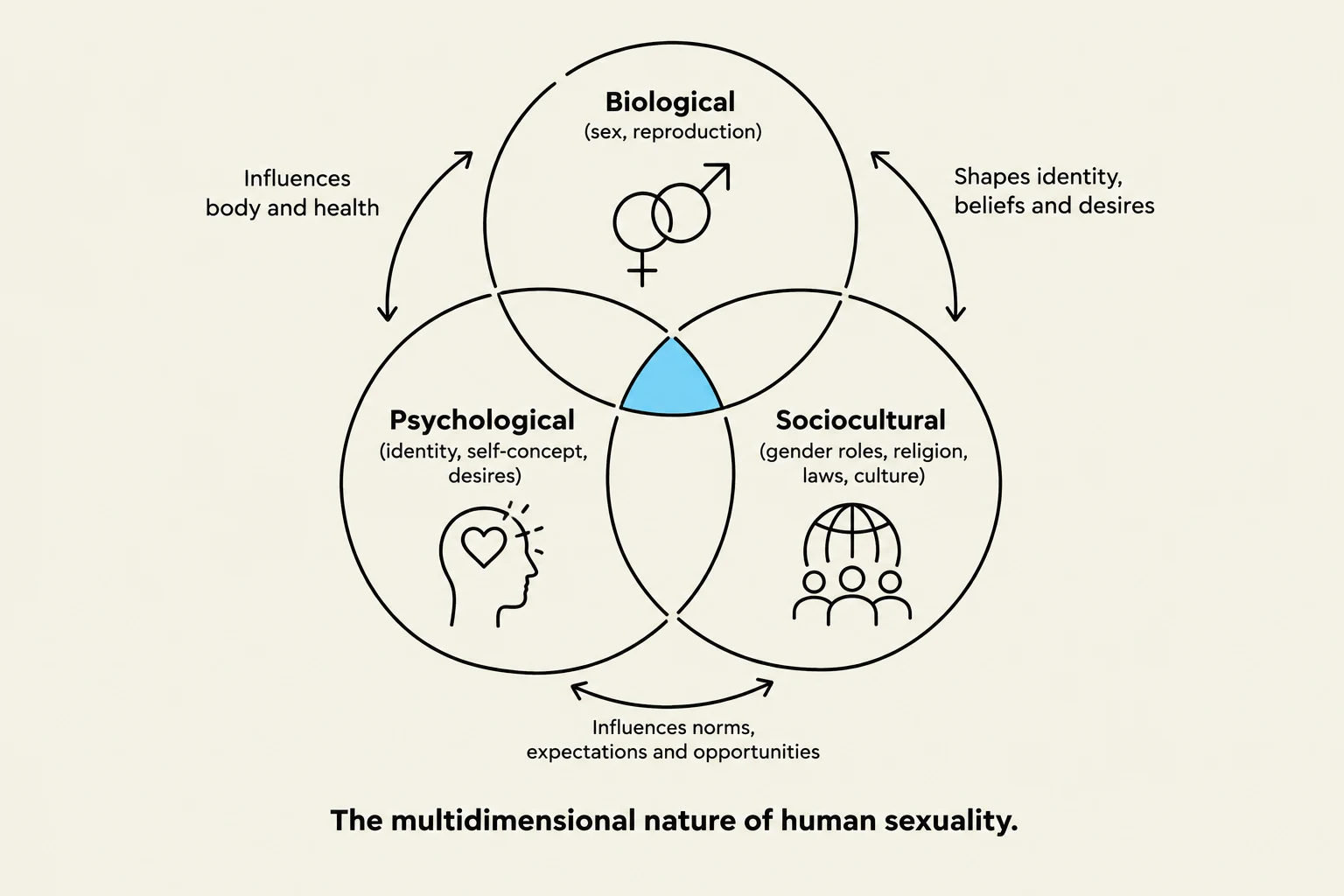
Sexuality is a fundamental and central aspect of being human that persists throughout the entire lifespan. It is a multidimensional concept that extends far beyond biological reproduction; it encompasses sex, gender identities and roles, sexual orientation, eroticism, pleasure, intimacy, and reproduction. Because it is expressed through a complex interplay of thoughts, desires, beliefs, behaviors, and relationships, sexuality is shaped by a vast array of influences, including biological, psychological, social, economic, political, cultural, legal, historical, religious, and spiritual factors.
A diagram illustrating the multidimensional nature of human sexuality, showing the interplay between biological, psychological, and sociocultural factors.
Defining Sexuality and Its Scope
To understand sexuality, one must recognize that it is not a static trait but a dynamic experience. While it includes many dimensions—such as fantasies, values, and attitudes—not every individual will experience or express all of these dimensions at once.
Understanding the scope of sexuality requires looking at how different factors interact. For instance, a person's sexual well-being can be impacted by their cultural perspective or their personal self-concept.
Sexual Development Through the Lifespan
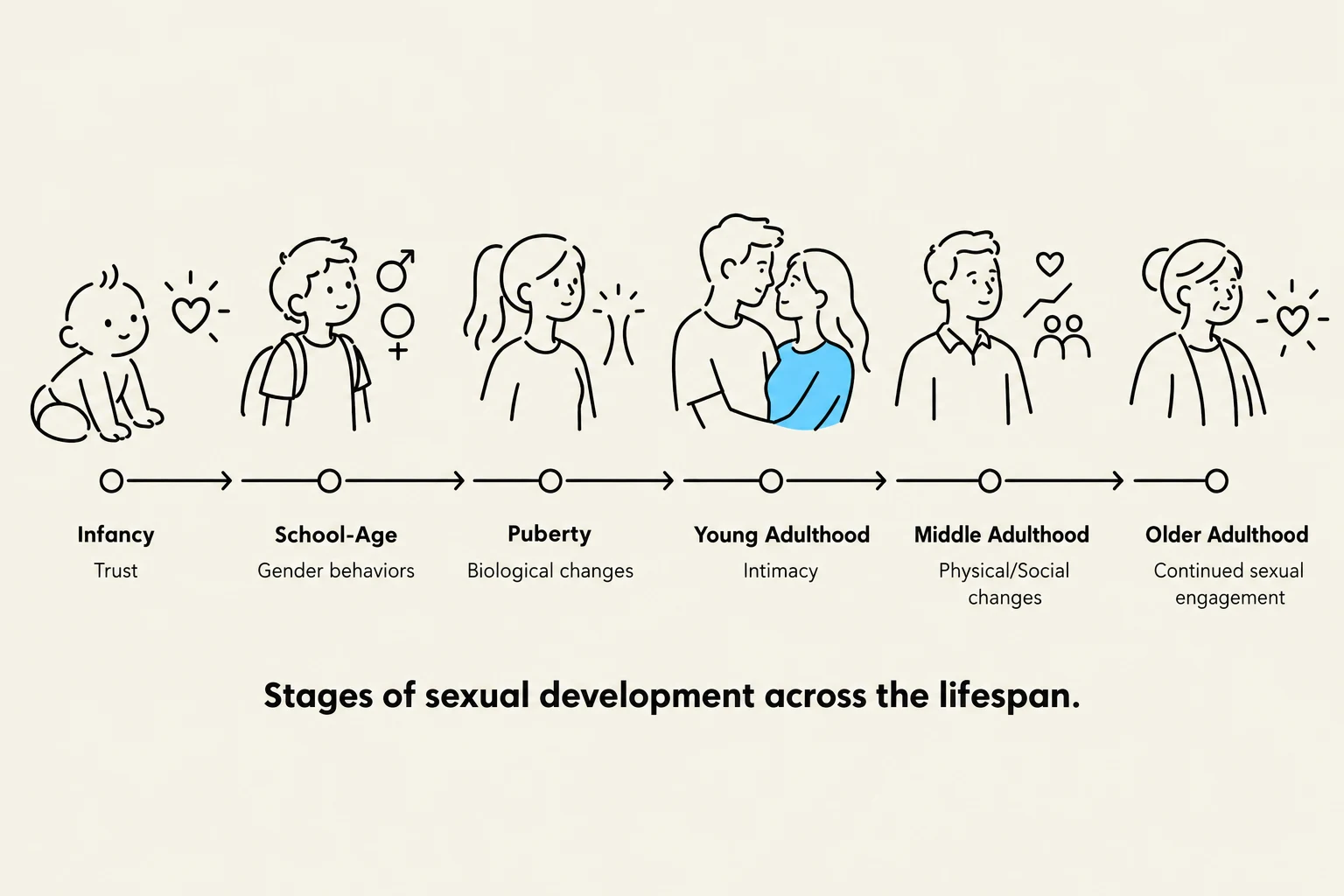
Stages of sexual development across the lifespan, illustrating key periods from infancy to older adulthood with associated characteristics.
Human sexuality evolves as we move through different developmental stages. Recognizing these stages helps healthcare providers provide age-appropriate education and support.
Infancy and Early Childhood: The primary developmental task is the establishment of trust.
School-Age Years: Children begin to adopt biologic gender behaviors.
Puberty: This is a critical transition period where significant biological changes occur, necessitating specialized education and guidance.
Young Adulthood: The developmental focus shifts toward establishing intimacy and sexuality.
Middle Adulthood: This stage is marked by social and emotional changes. Physical alterations during this time may impact both sexuality and overall sexual function.
Older Adulthood: Sexuality does not cease with age; older adults continue to engage in and enjoy sexual relationships.
The Role of Family and Culture
The family serves as the primary unit of socialization and acts as a potent support system for its members. In healthcare, especially in maternal and newborn nursing, the family is considered the target of family-centered care because they play a pivotal role in making health care decisions.
Family dynamics are deeply intertwined with culture, which is shaped by religion, the environment, historic events, and values passed down through generations. These cultural factors directly influence health behaviors and how families approach topics like family planning and reproductive health.
Developing Cultural Competence
For healthcare providers, delivering effective care requires cultural competence. This is not just about knowing facts, but about the practical application of knowledge. Cultural competence involves:
Recognizing that disparities exist in healthcare.
Educating and promoting healthy behaviors while respecting different styles.
Communicating with respect and anticipating varied degrees of understanding among patients.
Factors Affecting Sexuality and Sexual Function
Sexuality is influenced by a wide range of internal and external factors. These can be categorized to help clinicians assess a patient's needs more effectively.
Factors Affecting Sexuality
These are broader influences that shape an individual's sexual identity and expression:
Personal Identity: Self-concept, ego, and body image.
Experience: Previous relational experiences and personal expectations.
Environment: Cognitive, intellectual, and ethical factors.
Factors Affecting Sexual Function
When a patient experiences difficulty with the physical or psychological aspects of sexual activity, clinicians should look at these five categories:
Physical: Illnesses, medications, fatigue, and pain.
Functional: Specific diseases and the side effects of medications.
Relationship: Stress, communication barriers, and issues regarding control.
Lifestyle: Work responsibilities, childcare, and substance abuse.
Developmental: Immature or inappropriate expectations, poor self-concept, body image issues, or a history of abuse.
Exam Tip: The "Five Ps" of Sexual History
When taking a sexual history, remember to assess the "Five Ps" to ensure a comprehensive evaluation:
Partners
Practices
Protection from infection
Past history of infection
Prevention of pregnancy
Clinical Exemplars: Reproductive Health and Dysfunction
Infertility and Family Planning
Infertility is defined as the failure to achieve pregnancy after 12 months or more of regular unprotected sexual intercourse. It affects approximately 10% to 15% of reproductive-age couples.
Family planning is the conscious decision regarding when to conceive or avoid pregnancy. Contraception options include:
Nonprescription: Abstinence, timing, and barrier methods (e.g., condoms, diaphragms).
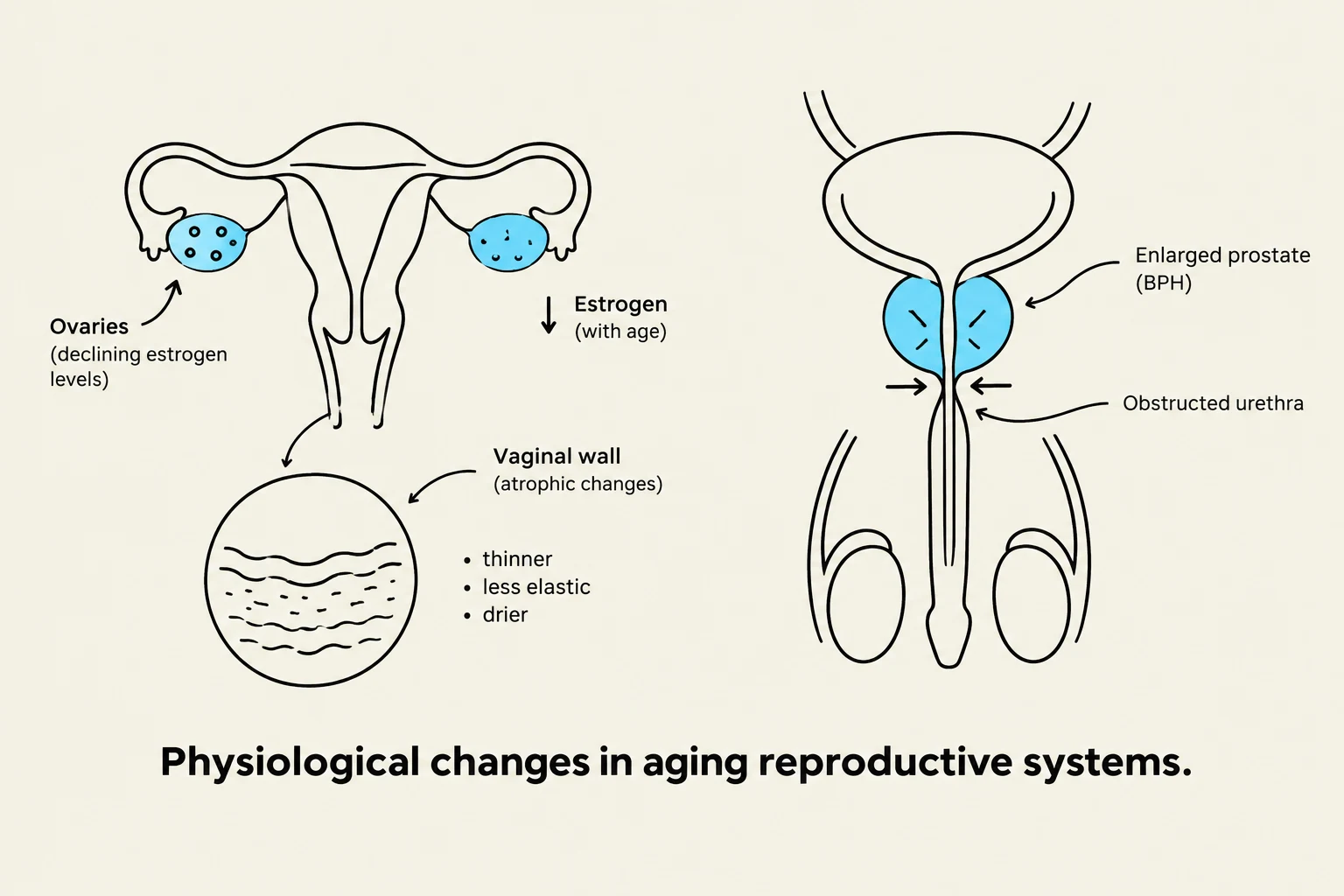
This diagram illustrates physiological changes in aging reproductive systems, including declining estrogen levels and their effects on the ovaries and vaginal wall, as well as an enlarged prostate causing urethral obstruction.
As individuals age, physiological changes can impact sexual health.
Menopause is the permanent cessation of menses due to declining ovarian function, diagnosed after 12 months of no menstrual cycles. Common manifestations of estrogen deficiency include vasomotor symptoms (hot flashes, night sweats), genitourinary issues (atrophic vaginitis, dyspareunia), and psychological changes (emotional lability).
Erectile Dysfunction (ED) is the inability to attain or maintain an erection sufficient for satisfactory sexual activity. Risk factors include hypertension, diabetes, stress, and aging.
Benign Prostatic Hyperplasia (BPH) affects many men as they age, involving the enlargement of the prostate gland. It can cause irritative symptoms (nocturia, urgency, frequency) and obstructive symptoms (difficulty initiating a stream, weak flow, dribbling). Surgical management, such as Transurethral Resection of the Prostate (TURP), is considered the "gold standard" for obstructing BPH.
Keep reading for free.
Create an account to finish this reading and make it part of your study routine.