


In criminal litigation, audio recordings—such as emergency 111 calls—can serve as powerful evidence. However, a critical challenge arises when the clarity of a recording is compromised. Forensic linguists and audio experts are often called upon to determine whether ambiguous audible sounds constitute actual speech containing linguistic content or are merely unvoiced physiological sounds. This distinction is not merely academic; it can determine the admissibility of a confession and the ultimate outcome of a trial.
The Mechanics of Sound: Speech vs. Exhalation
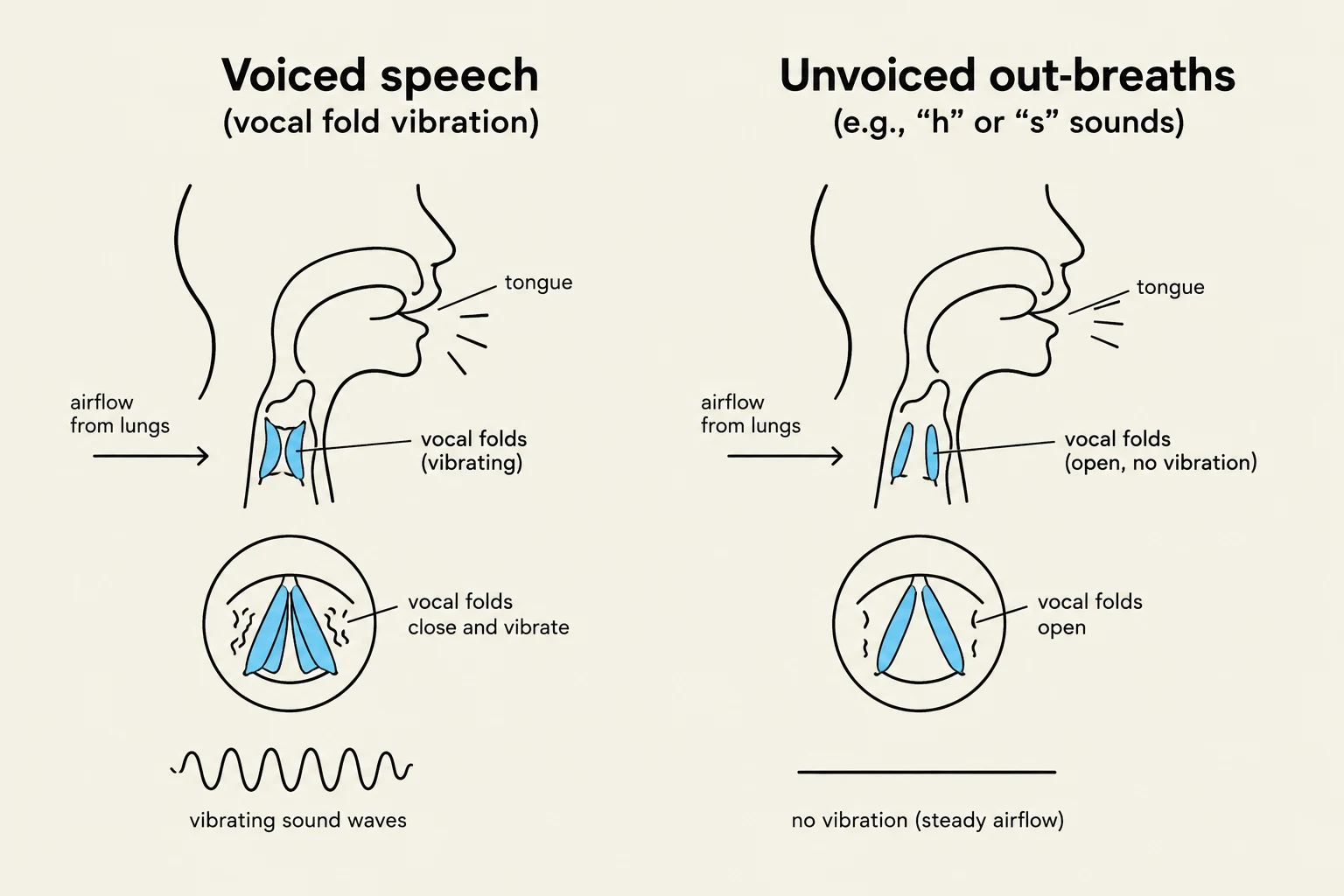
To evaluate a disputed recording, experts must distinguish between phonation (speech) and non-speech sounds. A primary factor in this distinction is vocal fold vibration. In standard speech, the vocal folds vibrate to create voiced sounds. However, a person under extreme distress may produce sounds through an unvoiced out-breath.
An unvoiced out-breath occurs when air is expelled from the lungs through the oral tract without the vibration of the vocal folds, similar to a whisper. In such instances, the movement of the tongue and lips might coincidentally mimic the patterns of speech, creating what experts call "accidental" or "randomly sequenced" sounds that resemble words.
Key Concept: The "Cloud" Analogy Forensic experts often use the analogy of seeing shapes in clouds. Just as water particles may coincidentally arrange themselves to look like a face, a series of exhaled breaths and lip movements may coincidentally arrange themselves to sound like a specific phrase, such as "I shot the prick," without any actual linguistic intent.

Keep reading for free.
Create an account to finish this reading and make it part of your study routine.
Continue reading freeAlready have an account? Log in
Updated