Learn the critical stages of food purchasing and receiving in the food service industry, including selecting approved suppliers, managing deliveries, and conducting thorough inspections to ensure food safety and quality.
This diagram illustrates the flow of food from a supplier through delivery, receiving, and kitchen storage.
In the professional food service industry, the "flow of food" begins long before a chef picks up a knife. It starts with the strategic selection of suppliers and the meticulous inspection of goods as they arrive at the loading dock. Effective purchasing and receiving are critical stages in ensuring food safety, maintaining high quality, and protecting the establishment from economic loss. If a failure occurs at this initial stage, even the most advanced kitchen sanitation protocols may not be able to prevent foodborne illness or wasted inventory.
Selecting an Approved Supplier
Not all vendors are created equal. To mitigate risk, food service operations must work exclusively with approved suppliers. An approved supplier is a vendor that has been vetted to ensure they meet the rigorous standards required for food safety and regulatory compliance.
The primary characteristics of an approved supplier include:
Inspection History: They must have been inspected by relevant authorities and be able to provide official inspection reports upon request.
Safety Compliance: They must demonstrate that they meet all applicable food safety requirements throughout their own production and distribution processes.
Integrity: Deliveries must be "honestly presented," meaning the quality and quantity promised match what is actually delivered.
Managing Deliveries and Food Requests
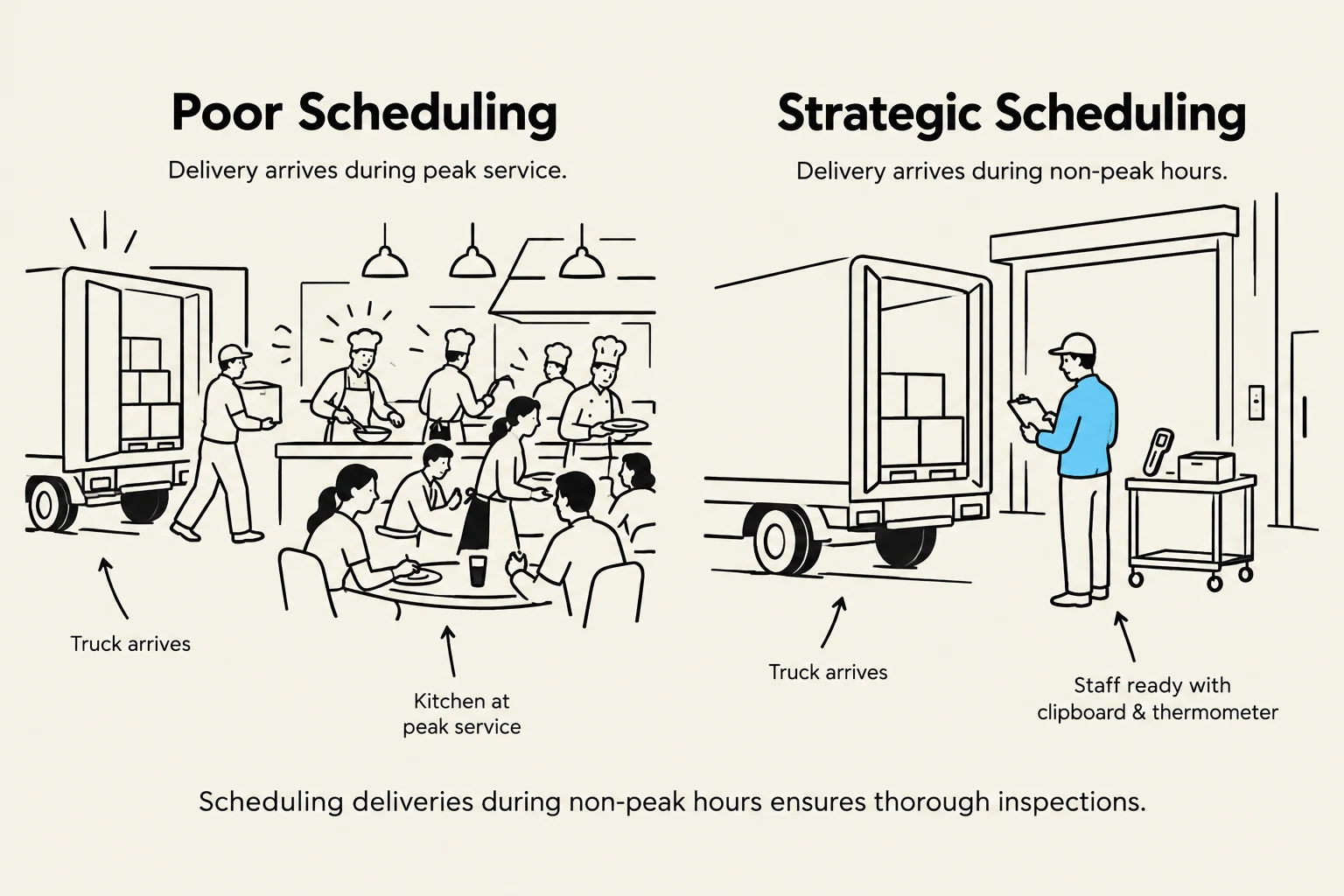
This illustration contrasts poor scheduling, where deliveries disrupt peak kitchen service, with strategic scheduling, where deliveries occur during non-peak hours, allowing for thorough inspections.
Operational efficiency depends heavily on how deliveries are scheduled. A common mistake in food service is allowing deliveries to arrive during peak service hours when staff are too busy to perform proper inspections.
Strategic Scheduling
To maintain high standards, deliveries should be arranged so they arrive at an appropriate time. Ideally, shipments should arrive when staff members have the necessary time to conduct thorough inspections and correctly process the items into storage.
Key Drop Deliveries
In some operations, "key drop" deliveries are utilized, where a supplier is given after-hours access to the facility. While this can be convenient, these deliveries carry higher risks and must meet strict criteria:
They must come from an approved source.
They must be inspected immediately upon arrival at the operation.
They must be placed in the correct storage temperature immediately to maintain quality.
They must be protected from contamination and be completely free of contaminants.
The Receiving Process: Procedures and Standards
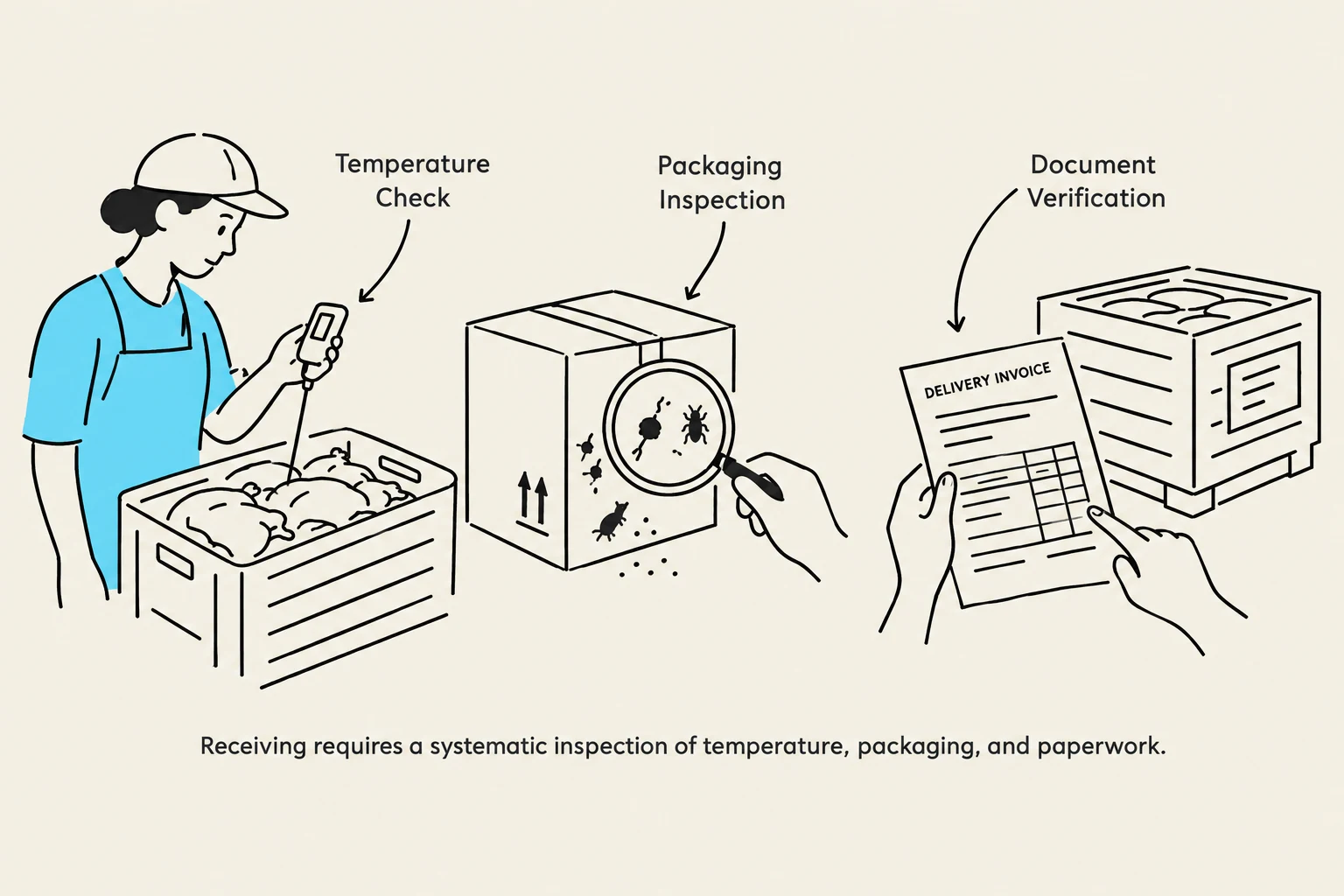
This illustration depicts the systematic inspection process for receiving goods, including temperature checks, packaging inspection for pests, and document verification.
Receiving is a high-responsibility task that requires specific training and authority. It is not merely a matter of signing a clipboard; it is a formal inspection process.
Staff Training and Responsibility
A core principle of a safe kitchen is ensuring that specific, trained personnel are held responsible for receiving. These employees must be empowered with the authority to accept, reject, and sign for deliveries based on established standards.
Staff must be trained to identify several critical indicators during the inspection:
Temperature Requirements: Checking that perishable goods are at the correct, safe temperatures to prevent pathogen growth.
Expiration Dates: Verifying "expired good dates" to ensure no outdated products enter the inventory.
Pest Damage: Looking for any signs of pest activity or damage to packaging.
Contamination and Damage: Inspecting for physical damage to food items and any potential contamination risks.
The Inspection Checklist
When a delivery truck arrives, the receiving staff should follow a systematic approach:
Inspect the Vehicle: Check the truck for cleanliness and ensure the internal temperature of the vehicle is maintained at the required level.
Verify Documentation: Ensure all paperwork is accurate and matches the physical goods received.
Check Inspection Stamps: Look for official government inspection stamps and quality inspection stamps to validate the legitimacy and safety of the products.
💡 Pro-Tip: Handling Rejections
If an item does not meet your standards (e.g., it is too warm or the packaging is torn), do not simply leave it. You must separate rejected items from accepted items. Always obtain a signed adjustment or credit slip from the driver before they leave, and ensure you log the incident on the invoice or receiving document to maintain an accurate paper trail.
Summary of Receiving Standards
To ensure consistency, establishments should maintain specific receiving standards for specific food items. For example, the temperature requirements for raw poultry will differ from those for dry goods or fresh produce. By strictly monitoring temperature, packaging integrity, and supplier reliability, an establishment can effectively manage the risks associated with the initial entry of food into the supply chain.
Inspection Category
What to Look For
Temperature
Perishables at correct levels; truck temperature is stable
Packaging
No dents, leaks, or tears; no signs of pest damage
Legitimacy
Government and quality inspection stamps present
Dates
No expired goods; "use by" dates are clearly visible
Documentation
Correct quantities; signed credit slips for rejections
Keep reading for free.
Create an account to finish this reading and make it part of your study routine.