


Maintaining homeostasis in the human body requires a delicate balance of water, electrolytes, and pH levels. While water serves as the primary medium for all physiological processes, the concentration of specific ions—such as sodium, potassium, and chloride—and the acidity or alkalinity of the blood are critical for survival. When these balances shift, the body enters states of imbalance that can range from mild discomfort to life-threatening emergencies.
Chloride Imbalance
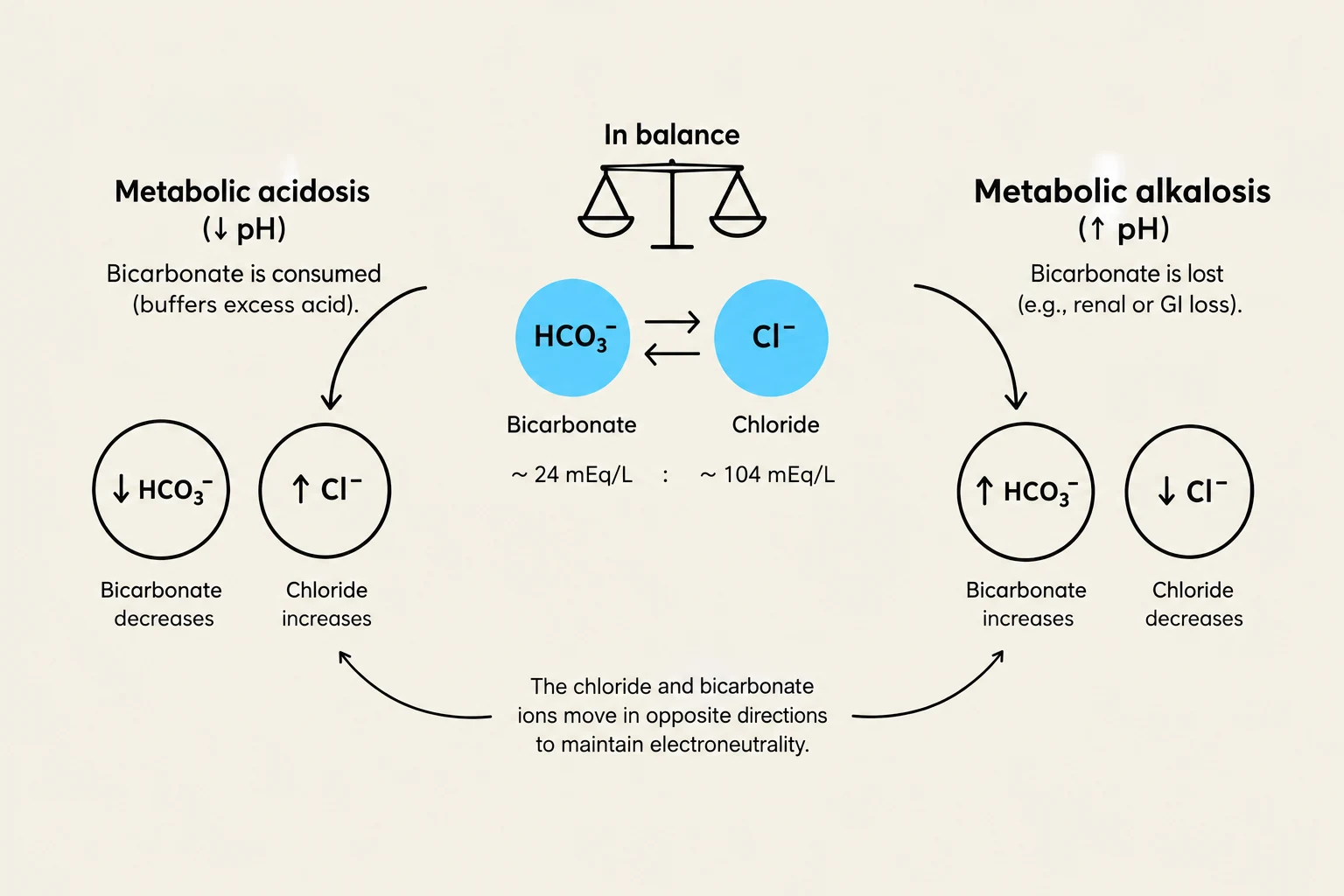
Chloride ($Cl^-$) is the major extracellular anion in the body. Its concentration is closely linked to sodium () levels, and it often shifts in response to changes in the body's acid-base status.
There are two primary directions of imbalance:
- Hypochloremia: A deficit of chloride in the blood. This is frequently associated with alkalosis. For example, in the early stages of vomiting, the body loses significant amounts of hydrochloric acid (), leading to low chloride levels.
- Hyperchloremia: An excess of chloride, often resulting from the excessive intake of sodium chloride (table salt).
Control of Serum pH
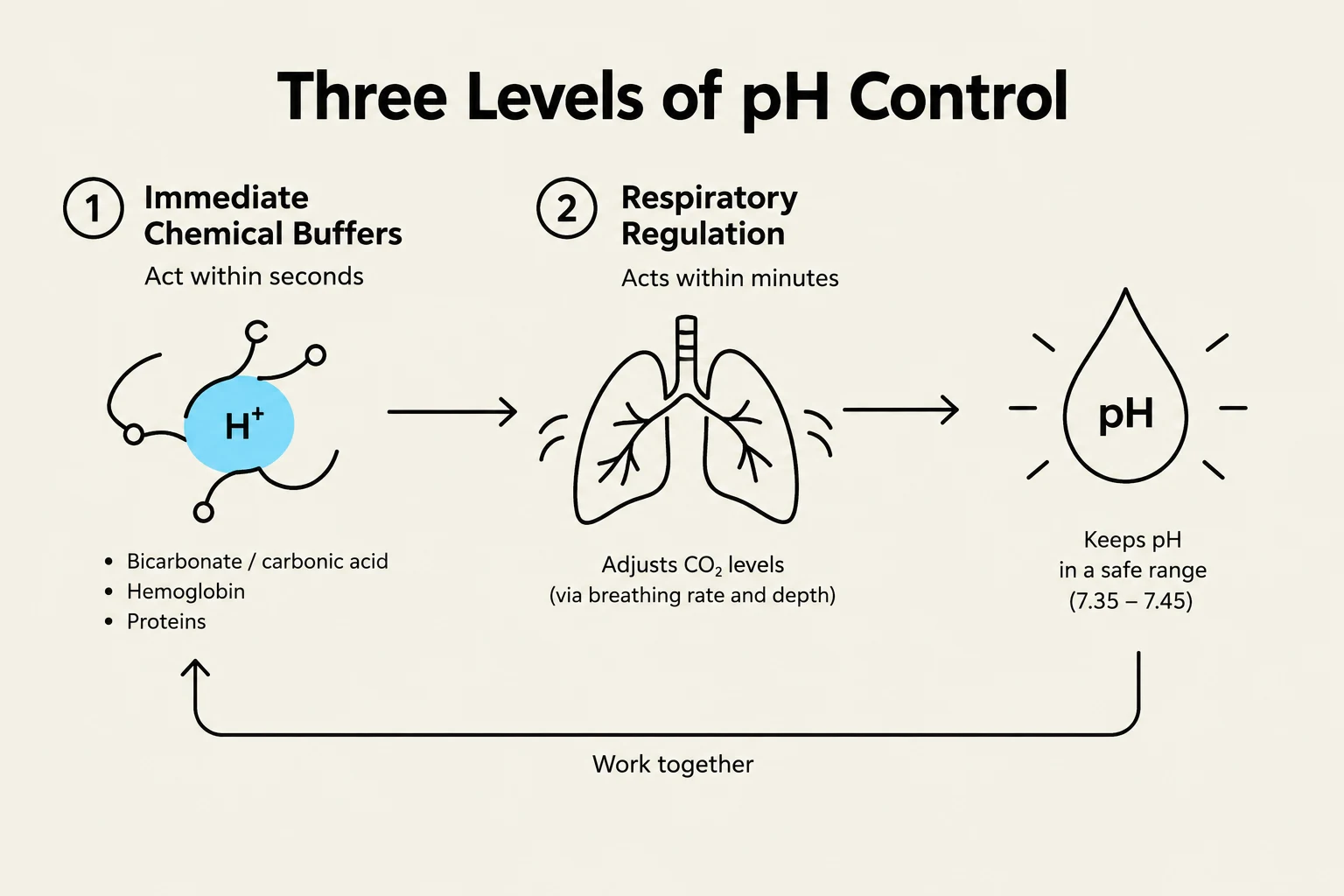
The human body must maintain a very narrow range of serum pH to function correctly. The control of this pH involves three distinct layers of defense that act at different speeds:
- Buffer Systems: These are the first line of defense. Buffer pairs in the blood respond to pH changes almost immediately.
- The Respiratory System: This system acts more slowly than buffers but faster than the kidneys. It regulates pH by altering the levels of carbonic acid through changes in breathing rates.
- The Kidneys: The renal system is the most significant control mechanism, but it is also the slowest. The kidneys regulate pH by modifying the excretion rate of acids and the absorption of bicarbonate ions ().
Keep reading for free.
Create an account to finish this reading and make it part of your study routine.
Continue reading freeAlready have an account? Log in
Updated