


In the human body, water is not just a passive background substance; it is a dynamic component that is constantly moving, shifting, and reacting to changes in chemistry. To maintain homeostasis, the body must precisely regulate how much fluid resides in different compartments and ensure that the concentration of solutes remains within a very narrow range. Understanding the relationship between fluid distribution and osmolality is fundamental to clinical practice, particularly in managing dehydration, edema, and electrolyte imbalances.
The Compartments of Body Fluid
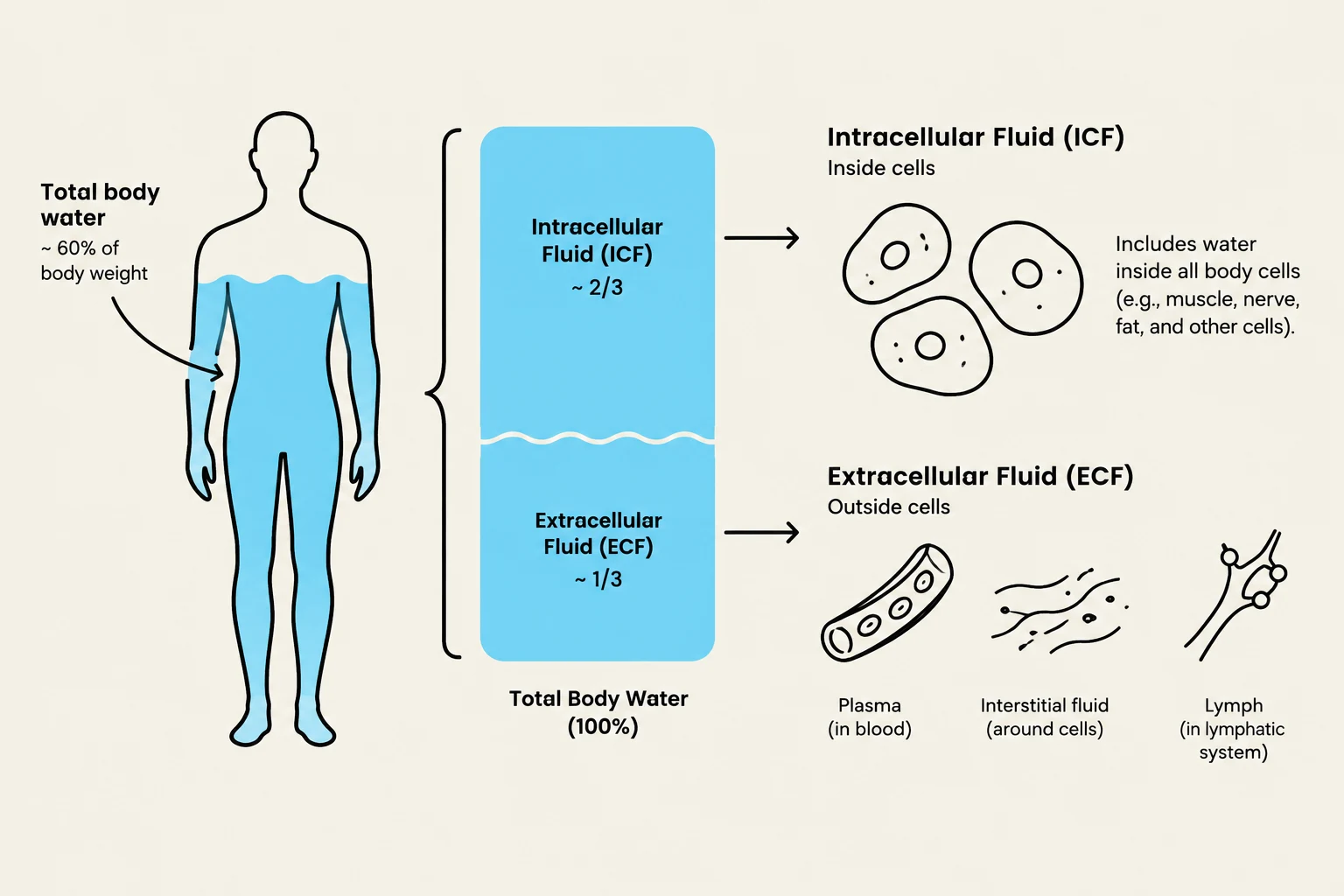
Total Body Water (TBW) is distributed into two primary functional compartments: the Intracellular Fluid (ICF) and the Extracellular Fluid (ECF).
- Intracellular Fluid (ICF): This is the fluid contained within the individual cells. It makes up approximately two-thirds (66%) of the total body water.
- Extracellular Fluid (ECF): This is the fluid found outside the cells, making up the remaining one-third (33%) of TBW. The ECF is further subdivided into:
- Interstitial Fluid: The fluid that bathes the cells and fills the spaces between them.
- Intravascular Fluid (Plasma): The liquid component of the blood.
- Transcellular Fluid: Small amounts of fluid in specialized spaces, such as cerebrospinal fluid or joint fluid.
Exam Tip: When calculating fluid shifts, remember the 60-40-20 rule. Roughly 60% of body weight is water; 40% is ICF, and 20% is ECF.
Understanding Osmolality
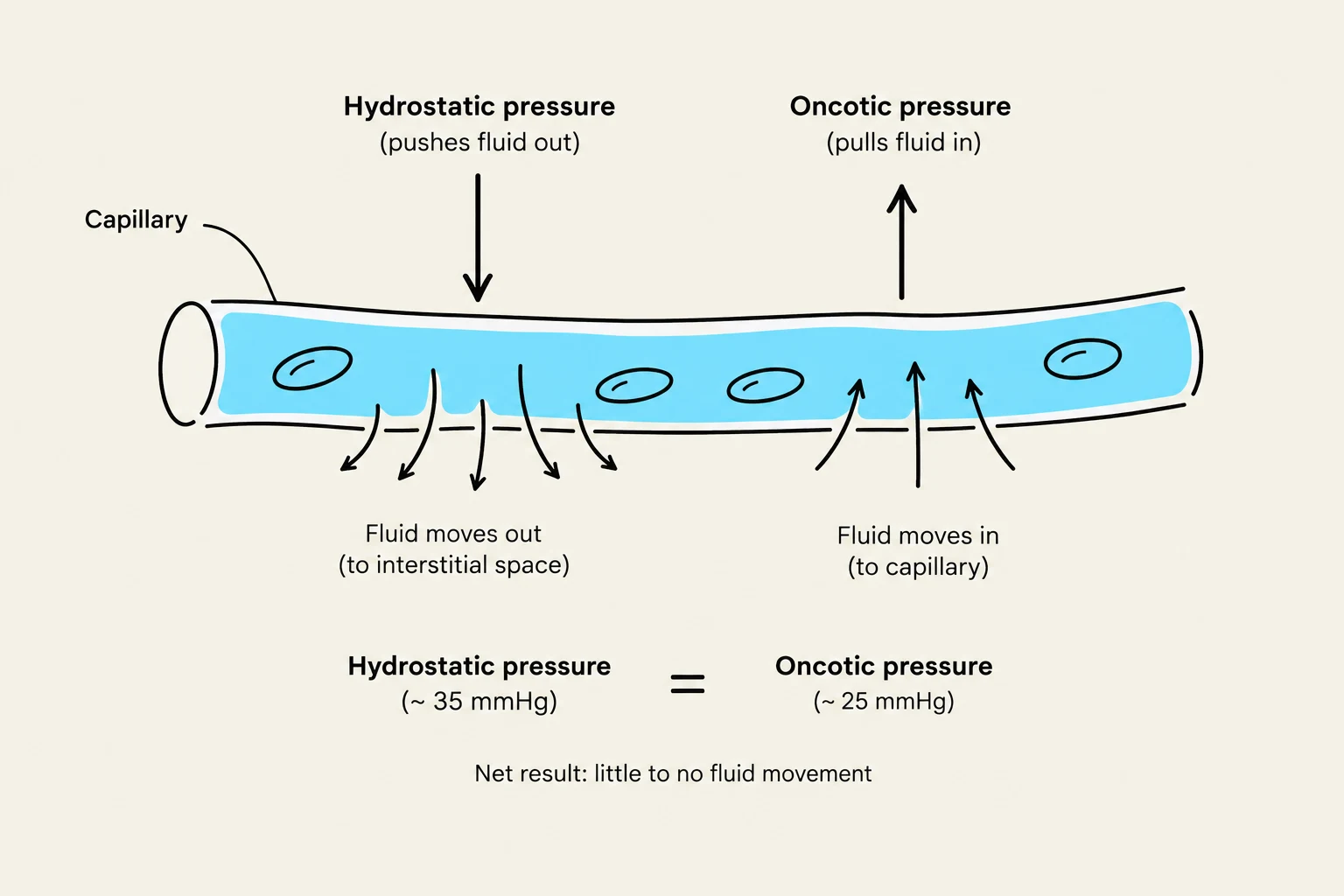
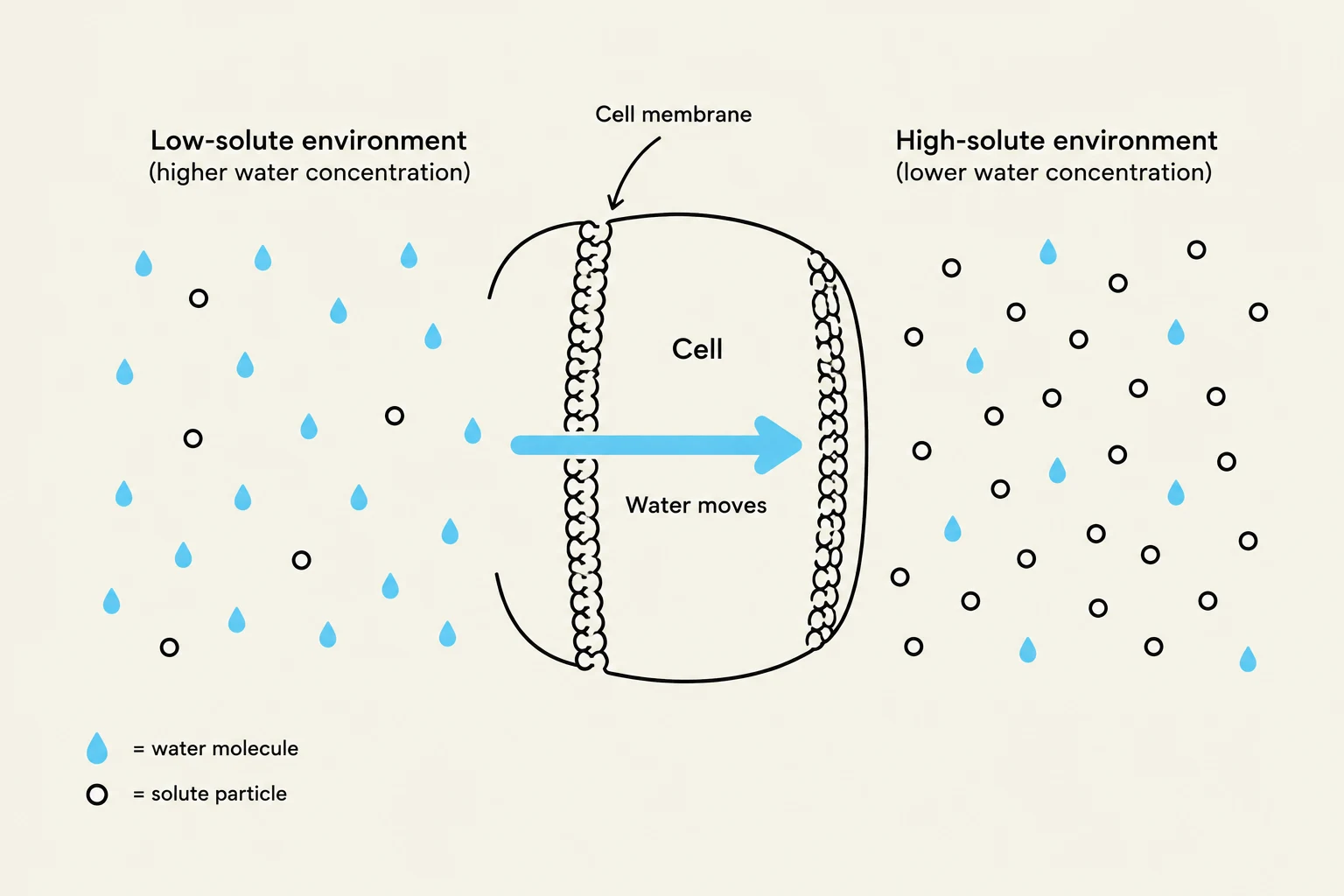
To understand why fluid moves from one compartment to another, we must define osmolality. Osmolality refers to the concentration of solute particles (such as sodium, glucose, or urea) per kilogram of solvent (water).
Keep reading for free.
Create an account to finish this reading and make it part of your study routine.
Continue reading freeAlready have an account? Log in
Updated