


As the global demand for seafood continues to rise, the methods used to extract protein from our oceans have come under intense scrutiny. While fishing is a vital component of global food security, the industrialization of fishing techniques has introduced significant ecological risks. From the destruction of seafloor habitats to the accidental killing of protected species, the tension between commercial efficiency and marine conservation is one of the most pressing challenges in modern environmental science.
Industrial Fishing Techniques
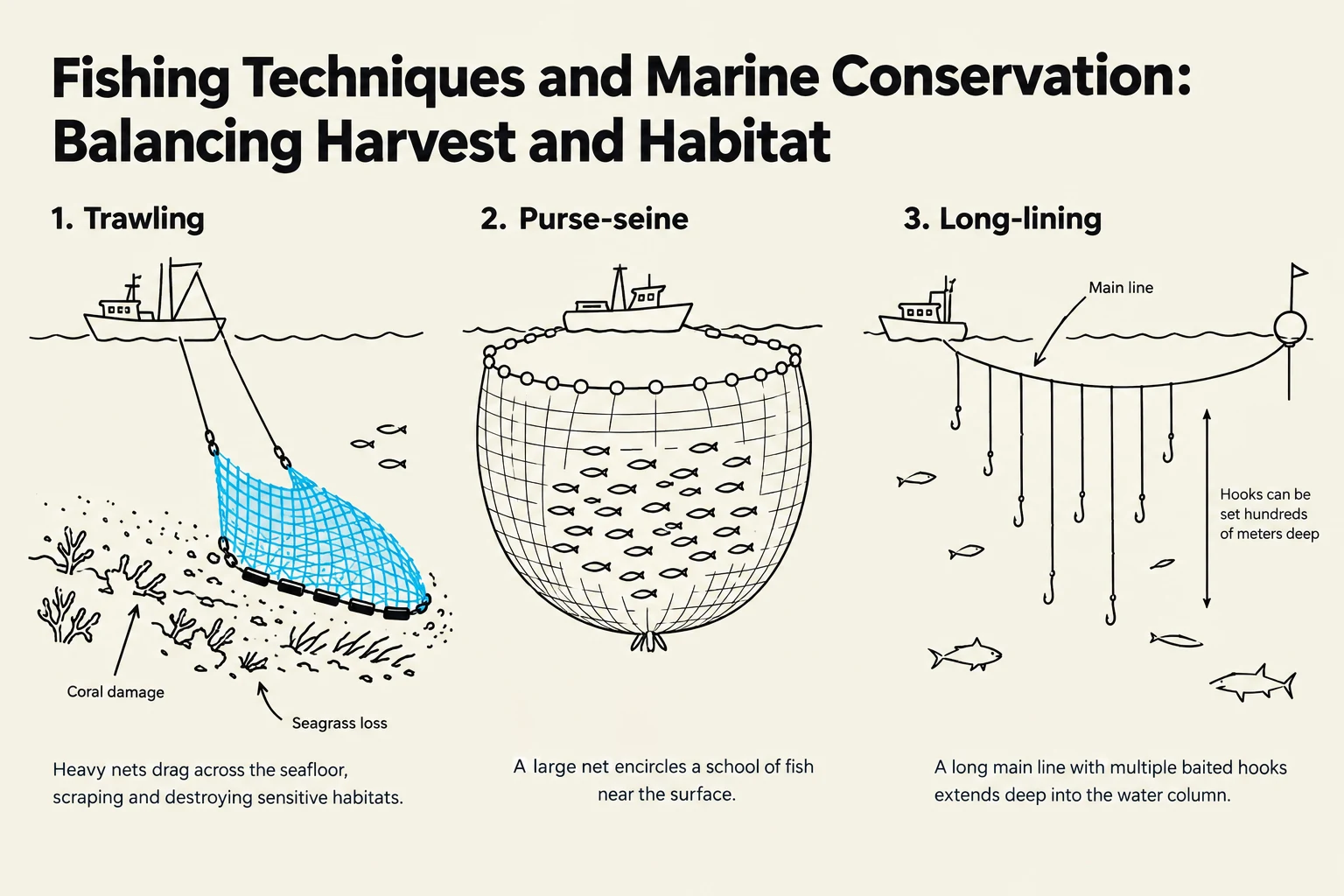
Trawling
Trawling is a method that involves dragging large, heavy nets along the seafloor. While effective for catching bottom-dwelling species, this technique is often criticized for its physical impact on the marine environment, as the heavy gear can scrape and destroy delicate seafloor ecosystems and habitats.
Purse-seine Fishing
Purse-seine fishing is designed to target surface-dwelling species. This method utilizes massive nets that can reach lengths of up to 2,000 meters and depths of 250 meters. Large vessels, ranging from 45 to 110 meters in size, are typically used to deploy these nets to encircle schools of fish.
Long-lining
Long-lining utilizes long lines equipped with numerous baited hooks to catch specific high-value species. This method is commonly used to target:
- Swordfish
- Tuna
- Sharks
- Halibut
- Cod
The Challenge of Bycatch and Aquaculture
A primary ecological concern stemming from these methods is bycatch. Bycatch refers to the accidental capture of nontarget species—animals that fishermen did not intend to catch. This often includes highly sensitive or protected animals such as dolphins, sea turtles, and various seabirds.
Keep reading for free.
Create an account to finish this reading and make it part of your study routine.
Continue reading freeAlready have an account? Log in
Updated