


Acute Coronary Syndrome (ACS)—which encompasses ST-elevation myocardial infarction (STEMI), non-ST-elevation myocardial infarction (NSTEMI), and unstable angina—represents a critical medical emergency where myocardial oxygen supply fails to meet demand. Rapid pharmacological intervention is essential to limit thrombus formation and reduce the workload on the struggling heart muscle. The two primary pillars of immediate pharmacological management are Aspirin, to inhibit platelet aggregation, and Glyceryl Trinitrate (GTN), to improve perfusion and reduce cardiac workload.
Aspirin: The Antiplatelet Foundation
In the setting of ACS, the immediate goal is to prevent the progression of a coronary artery occlusion. Aspirin is administered as a high dose of 300mg.
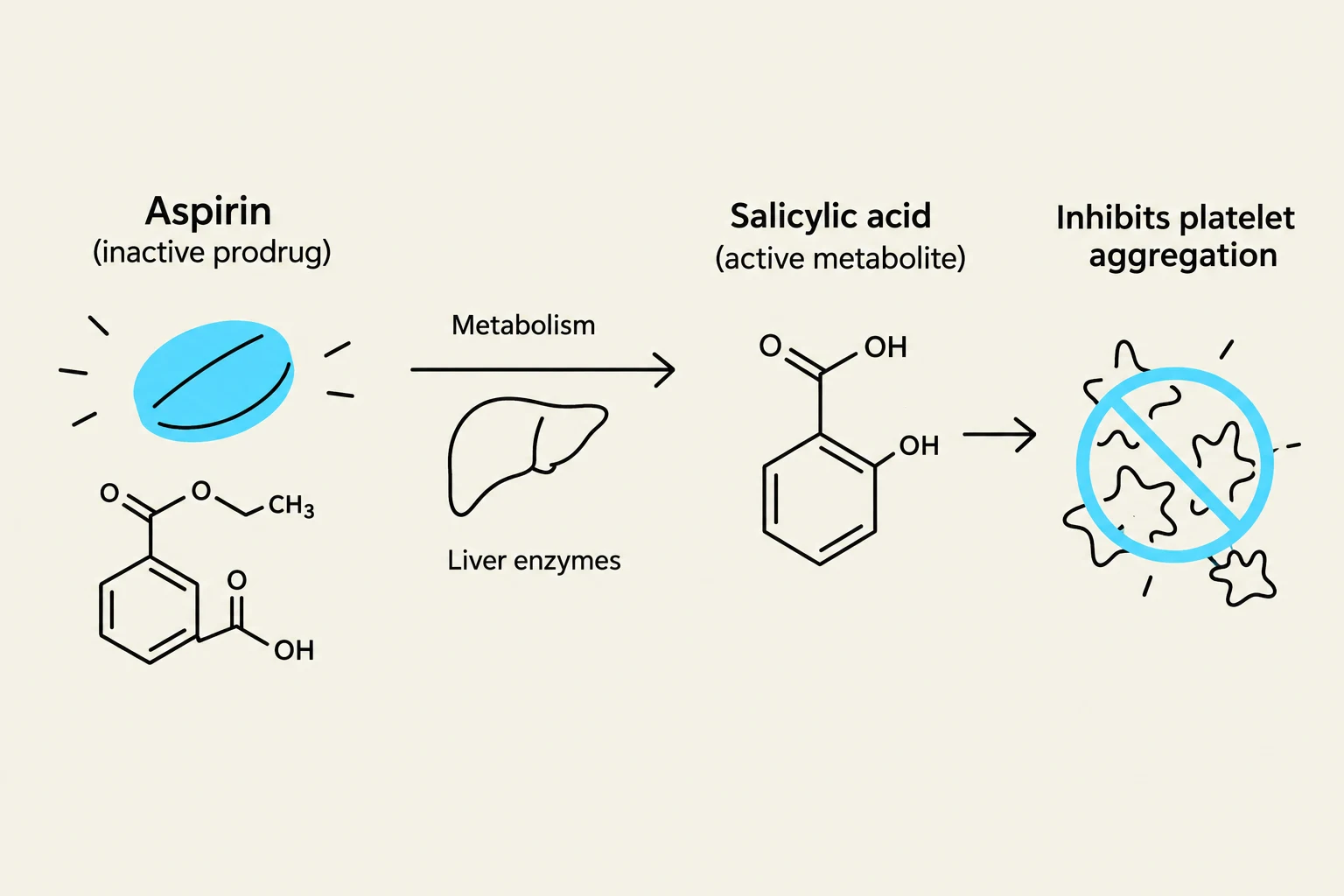
Administration and the Prodrug Concept
To ensure the fastest possible onset of action, Aspirin should be administered orally, preferably in a chewable or dispersible form. Chewing the tablet increases the surface area available for absorption, allowing the drug to be absorbed quickly in the gut and enter the bloodstream rapidly.
It is vital to understand that Aspirin functions as a prodrug. A prodrug is a substance that is pharmacologically inactive when administered but must undergo conversion or metabolism within the body to produce its active effect. Once absorbed, Aspirin is metabolized to become an active agent capable of interfering with the biochemical pathways of platelet activation.
Pharmacodynamics: Inhibiting the Thrombus
The primary mechanism of Aspirin is the irreversible inhibition of the enzyme cyclooxygenase-1 (COX-1) within platelets.
Under normal physiological conditions, COX-1 facilitates the production of Thromboxane A2 (TXA2), a potent mediator that promotes platelet aggregation and vasoconstriction. By inhibiting COX-1, Aspirin prevents the production of TXA2. This lack of TXA2 downregulates the expression of fibrin receptors on the platelet surface, which prevents fibrin from binding to the platelets. Consequently, this inhibits the formation of a stable thrombus (blood clot), thereby limiting the extent of the blockage in the coronary arteries.
Keep reading for free.
Create an account to finish this reading and make it part of your study routine.
Continue reading freeAlready have an account? Log in
Updated