Fire Suppression and Notification Systems

An overview of fire protection systems, including detection, alarm, suppression, and containment. It details modern fire alarm systems, notification appliance circuits, various types of suppression systems (water-based and specialized), and the importance of supervision and monitoring.

Save this reading to your study set

Sign up free

Fire protection is a multi-faceted discipline designed to safeguard lives, property, and mission continuity. While many people equate fire protection solely with smoke detectors, a comprehensive strategy involves three basic parts: detection and alarm systems, suppression systems, and containment. While detection and suppression are "active" components, containment is considered "passive". Modern fire alarm and signaling systems have evolved from simple bells into sophisticated management hubs that coordinate various building infrastructures to mitigate the devastating effects of fire and smoke.

The Role of Modern Fire Alarm Systems

Diagram illustrating the components connected to a Fire Alarm Control Panel (FACP), including fire pumps, security systems, suppression systems, elevators, and HVAC systems.
Modern fire alarm systems do much more than just sound an alarm. They act as the "brain" of a building's safety infrastructure, managing several critical systems simultaneously:
  • Fire Pumps: Ensuring adequate water pressure is maintained for suppression.
  • Suppression Systems: Actuating the release of extinguishing agents.
  • Security Systems: Integrating with building access and intrusion detection.
  • Elevators: Managing elevator recall and safety protocols during emergencies.
  • HVAC Systems: Controlling heating, ventilating, and air conditioning to manage smoke spread or air quality.
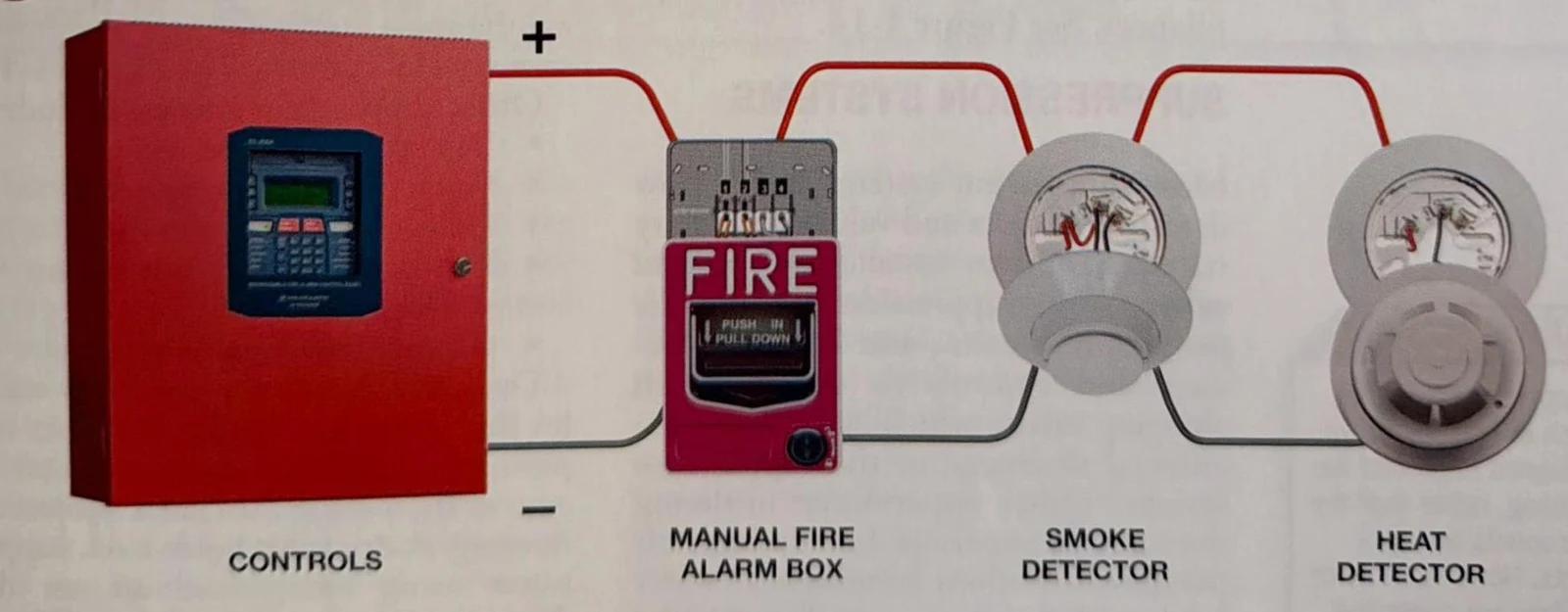
Diagram of a fire alarm system showing a control panel, manual pull station, smoke detector, and heat detector.
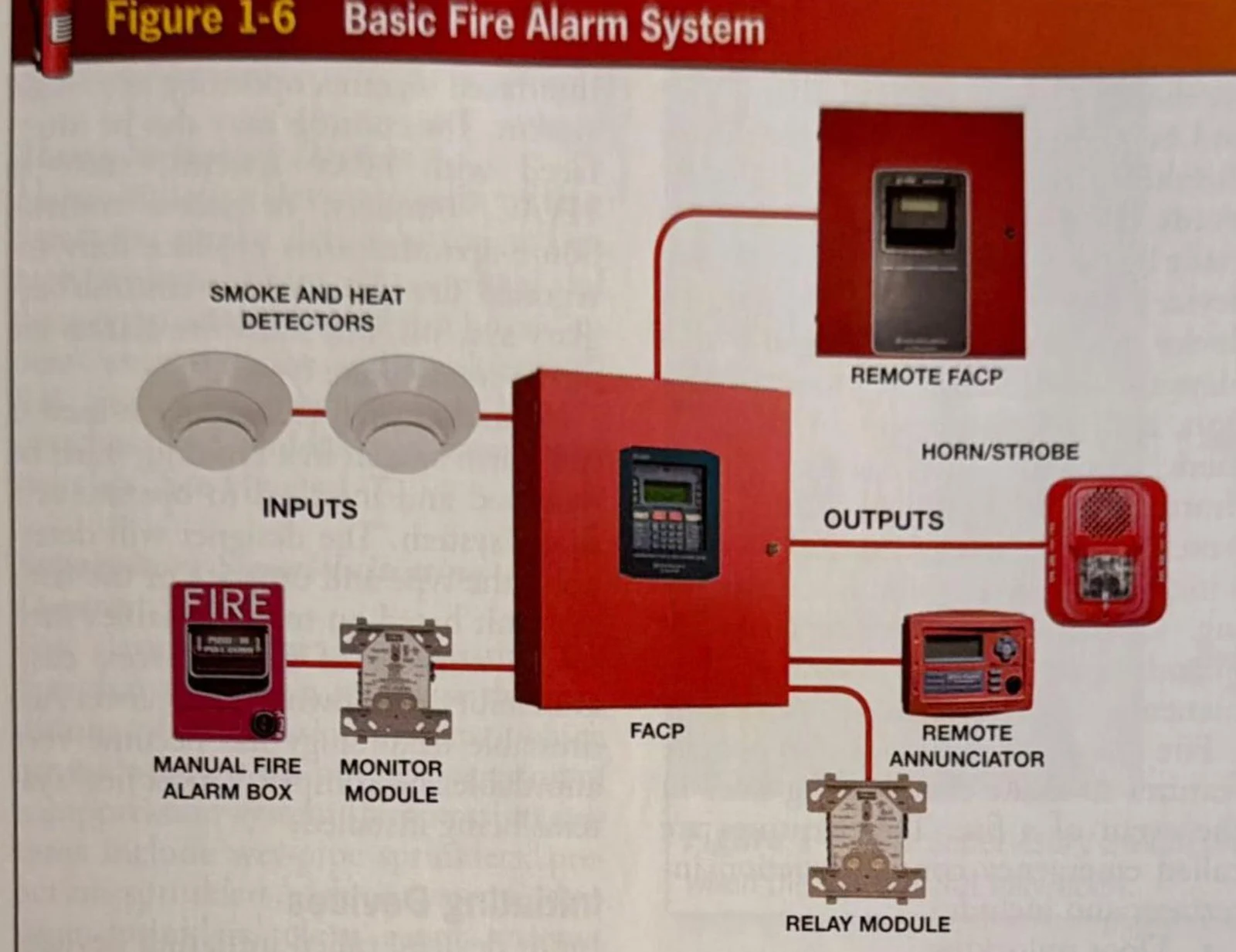
Diagram illustrating the components of a basic fire alarm system, including smoke and heat detectors, manual alarm boxes, monitor modules, a fire alarm control panel (FACP), remote FACP, remote annunciator, horn/strobe, and relay module.

Notification Appliance Circuits (NACs)

To alert occupants of an emergency, the fire alarm control unit must communicate with notification appliances, such as horns, strobes, and sirens. This communication is facilitated by Notification Appliance Circuits (NACs). These circuits allow electrical current to pass from the system controls to the notification devices, ensuring that audible and visual signals are activated when an alarm condition is met.

Keep reading for free.

Create an account to finish this reading and make it part of your study routine.

Continue reading free

Already have an account? Log in

Updated

Study it your way.

Import this reading into your study set to get started with another study mode.

Make it your own.

Keep this reading in a new study set, or add it to one you already use.