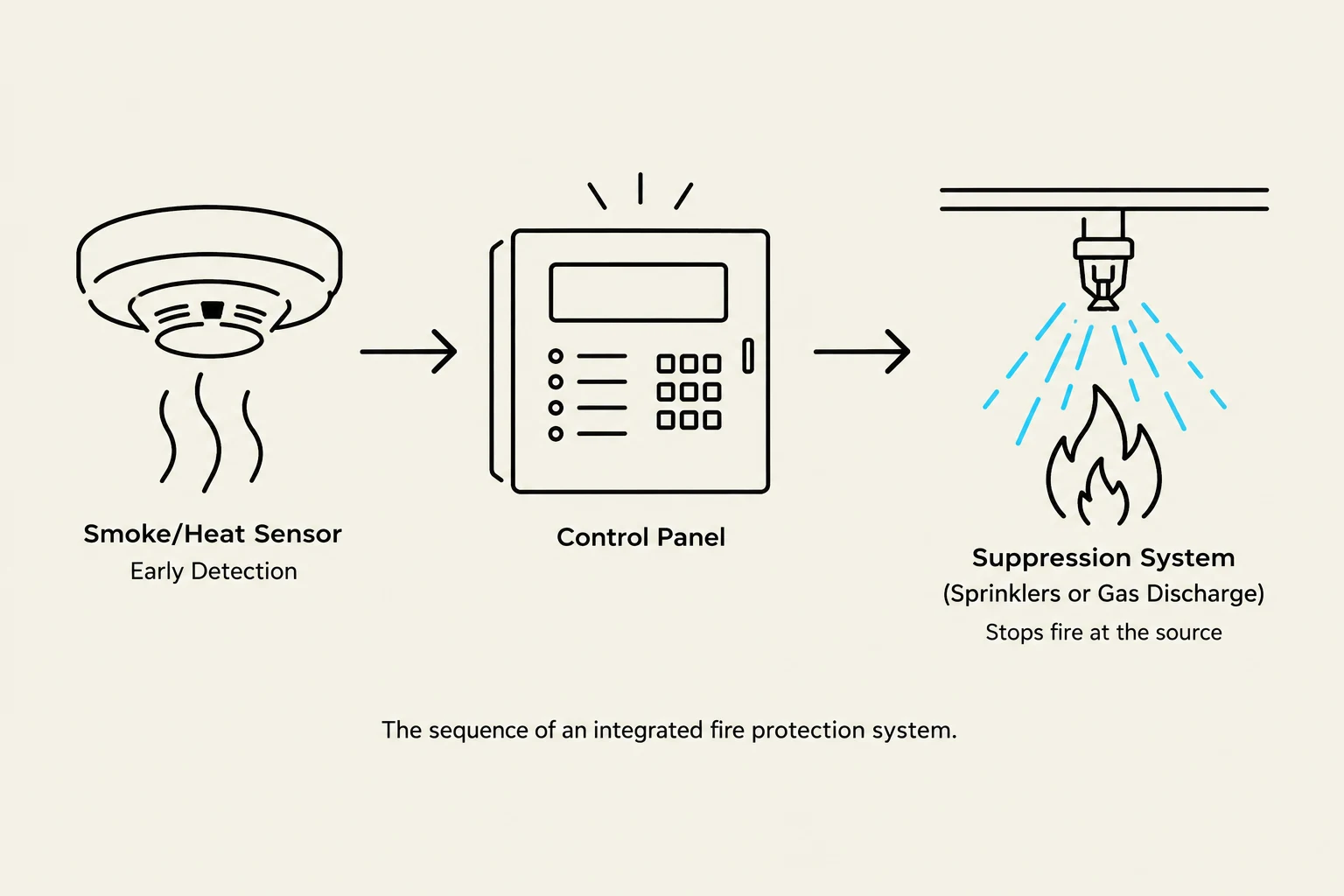
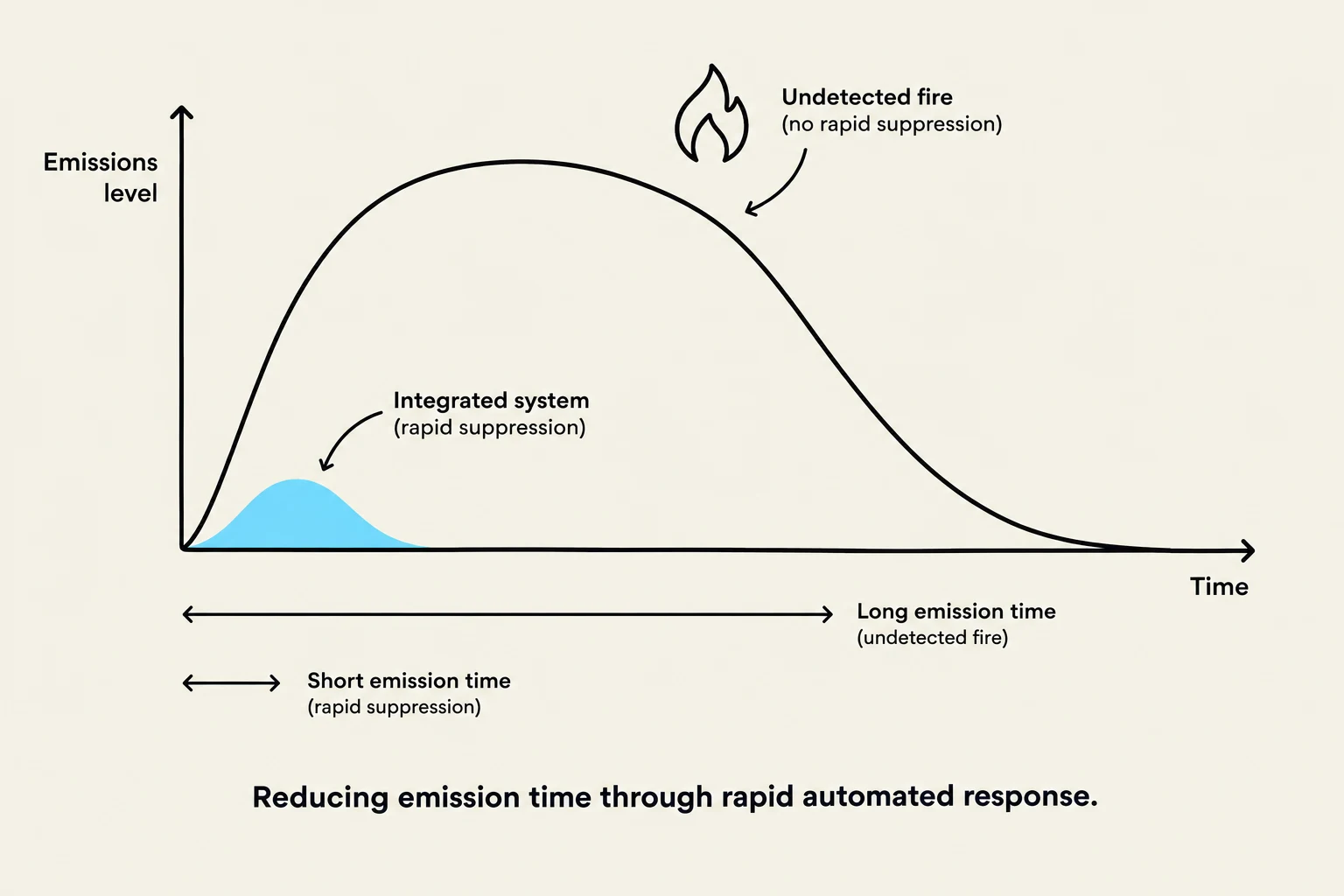
This content explains how fire alarm systems contribute to environmental protection by preventing uncontrolled combustion and mitigating the release of toxic pollutants. It details the link between combustion and pollution, and how integrated early detection and suppression systems protect the ecosystem by limiting bur
When discussing fire alarm systems, the conversation often focuses on life safety and the preservation of property. However, these systems serve a much broader purpose: they act as a vital mechanism for environmental protection. By preventing uncontrolled combustion, fire alarm technology helps mitigate the ecological damage that occurs when hazardous materials are released into the atmosphere.
The Link Between Combustion and Pollution
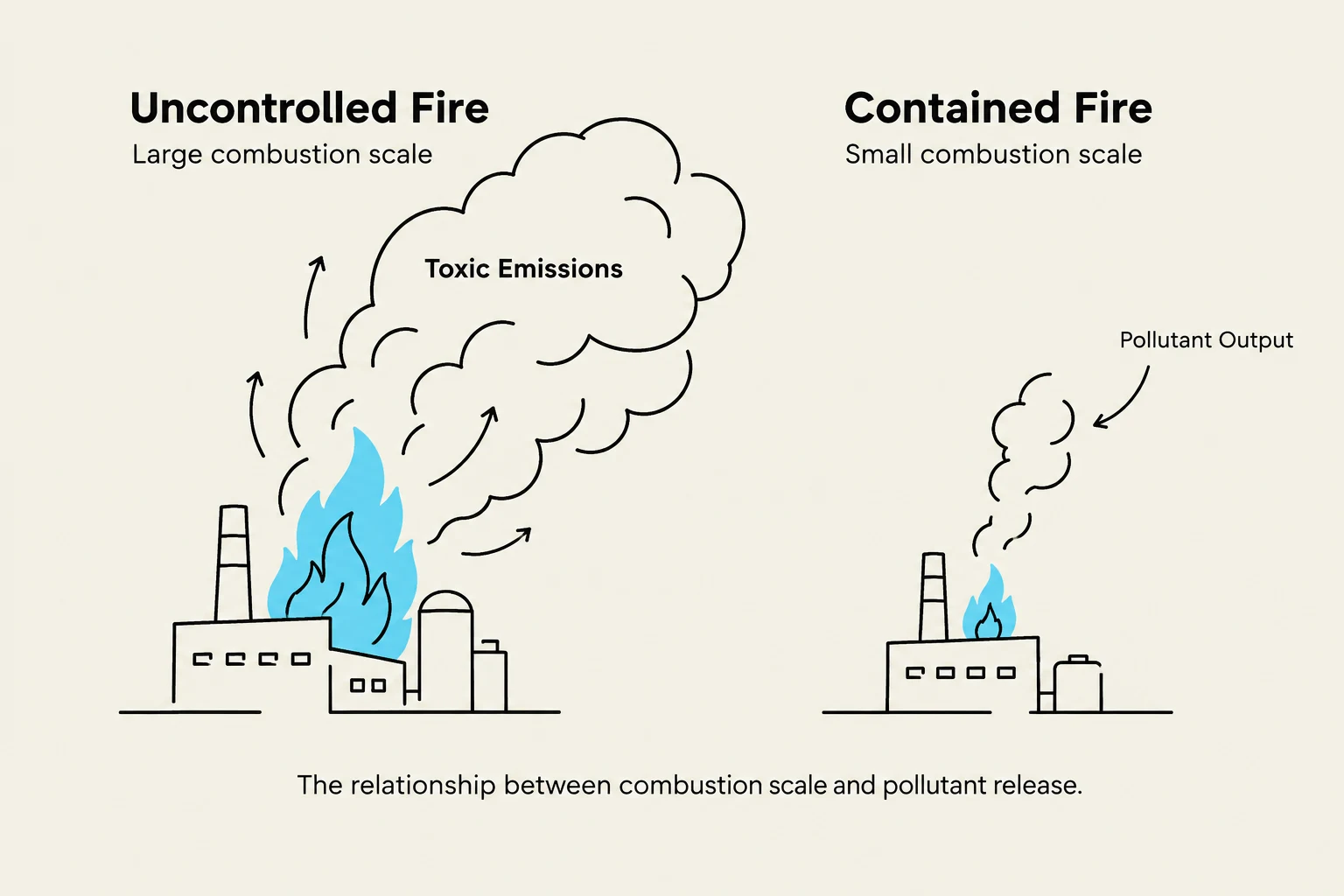
This illustration compares an uncontrolled fire with large-scale combustion and toxic emissions to a contained fire with small-scale combustion and less pollutant output, illustrating the relationship between combustion scale and pollutant release.
The relationship between fire detection and environmental health is centered on the mitigation of hazardous emissions. When certain materials undergo combustion, they release significant quantities of pollutants into the air.
A primary example of this risk involves industrial storage facilities. For instance, rubber tires produce massive volumes of toxic smoke when they burn. If a fire in a warehouse containing such materials is left undetected, the resulting smoke can lead to widespread air pollution and long-term environmental degradation.