This content explains how fire alarm systems contribute to environmental protection by preventing uncontrolled combustion and mitigating the release of toxic pollutants. It details the link between combustion and pollution, and how integrated early detection and suppression systems protect the ecosystem by limiting bur
When discussing fire alarm systems, the conversation often focuses on life safety and the preservation of property. However, these systems serve a much broader purpose: they act as a vital mechanism for environmental protection. By preventing uncontrolled combustion, fire alarm technology helps mitigate the ecological damage that occurs when hazardous materials are released into the atmosphere.
The Link Between Combustion and Pollution
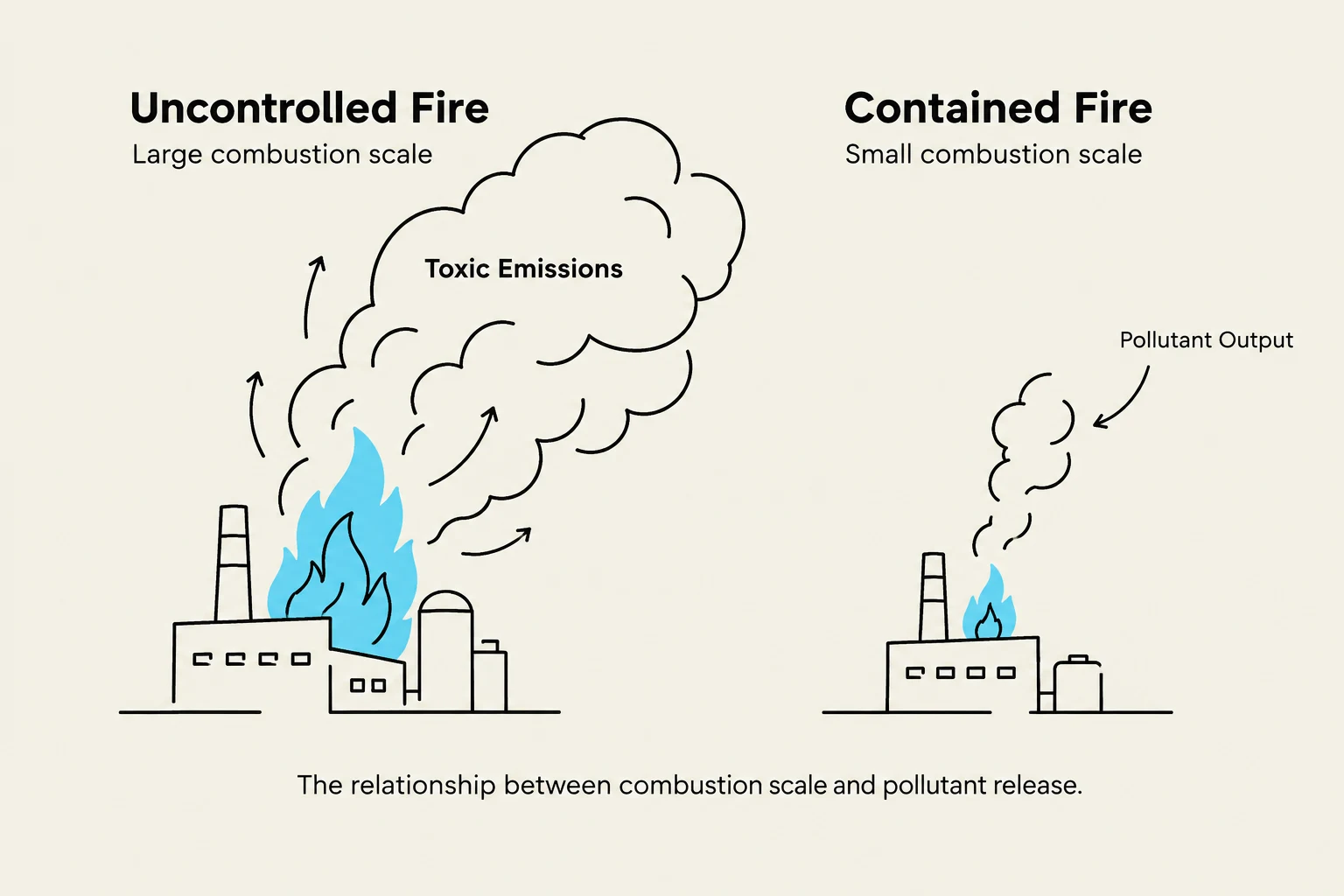
This illustration compares an uncontrolled fire with large-scale combustion and toxic emissions to a contained fire with small-scale combustion and less pollutant output, illustrating the relationship between combustion scale and pollutant release.
The relationship between fire detection and environmental health is centered on the mitigation of hazardous emissions. When certain materials undergo combustion, they release significant quantities of pollutants into the air.
A primary example of this risk involves industrial storage facilities. For instance, rubber tires produce massive volumes of toxic smoke when they burn. If a fire in a warehouse containing such materials is left undetected, the resulting smoke can lead to widespread air pollution and long-term environmental degradation.
![An industrial warehouse filled with high-density metal racking systems loaded with large stacks of tires()
How Integrated Systems Protect the Ecosystem
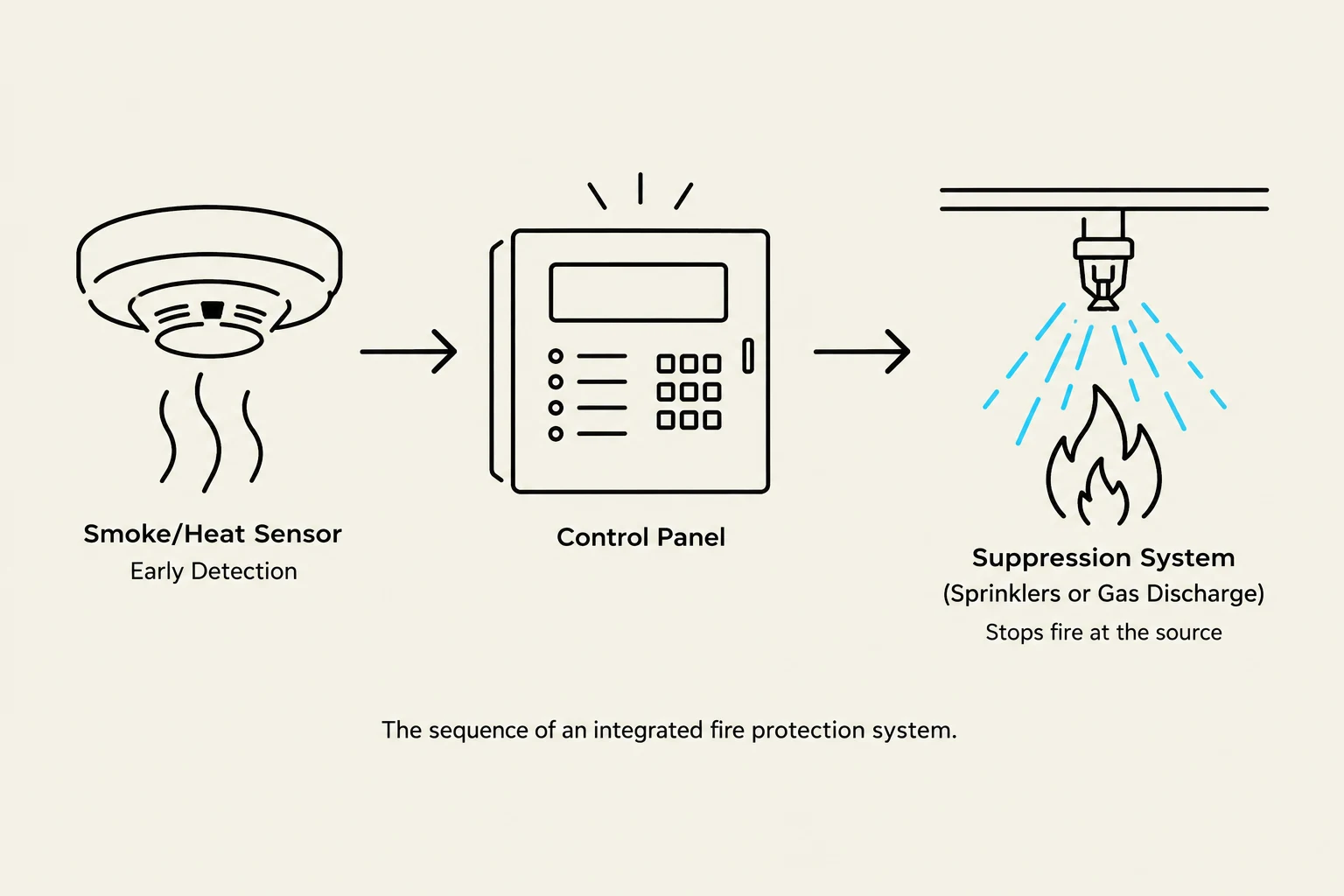
The sequence of an integrated fire protection system, showing a smoke/heat sensor, control panel, and suppression system.
To combat the risks of toxic emissions, modern fire safety relies on the integration of advanced technologies that work in a coordinated sequence. This process involves two key functional components:
1. Early Detection Systems
The first line of defense is the early detection system. These sensors are designed to identify the onset of a fire at its earliest stages—often before visible flames or heavy smoke are even present. By catching a fire in its "incipient" stage, the system prevents the fire from reaching a scale where massive amounts of pollutants are released.
2. Suppression System Actuation
Once a threat is identified, the fire alarm system does more than just sound an alarm; it can automatically trigger a suppression system. This immediate response combats the fire directly at the source, limiting the total volume of combustion.
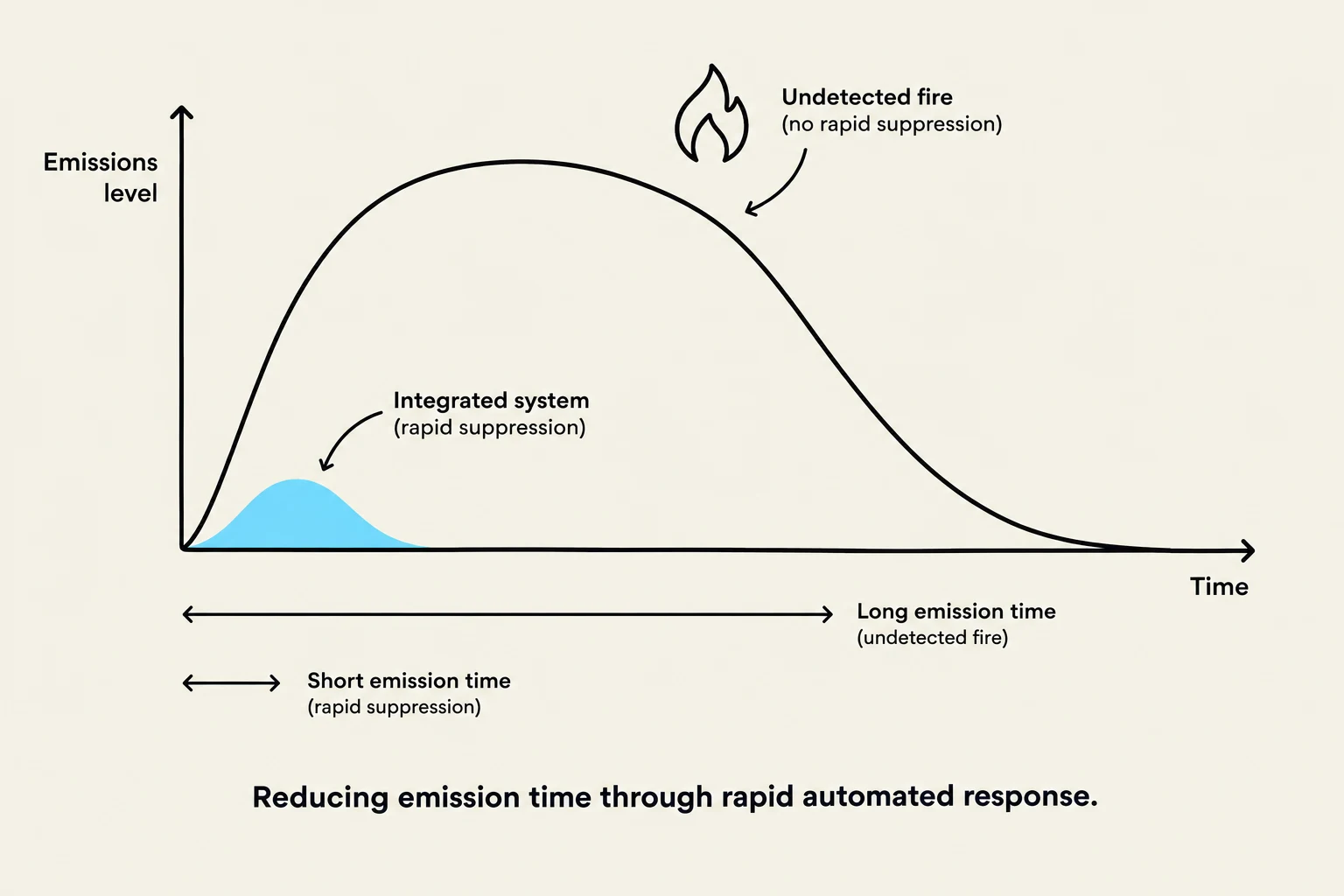
Key Concept: The goal of an integrated system is to move from detection to suppression as quickly as possible to minimize the "burn time" and, consequently, the "emission time" of toxic substances.
Limiting Losses and Mitigating Impact
A graph illustrating how an integrated system with rapid suppression reduces emission time compared to an undetected fire.
By facilitating a rapid, automated response, these systems achieve two critical goals: they limit physical and economic losses, and they significantly mitigate the impact on the environment.
By controlling a fire quickly through the automation of detection and suppression, the total volume of toxic substances released into the ecosystem is drastically reduced. This protects not only the immediate facility but also the broader environment from the devastating consequences of large-scale combustion events.
Keep reading for free.
Create an account to finish this reading and make it part of your study routine.