


In the study of biology and chemistry, understanding how substances move from one area to another is fundamental. One of the most basic yet essential physical processes used to separate substances is filtration. At its core, filtration is a method of separation that relies on the physical properties of particles—specifically their size—to distinguish between different components of a mixture.
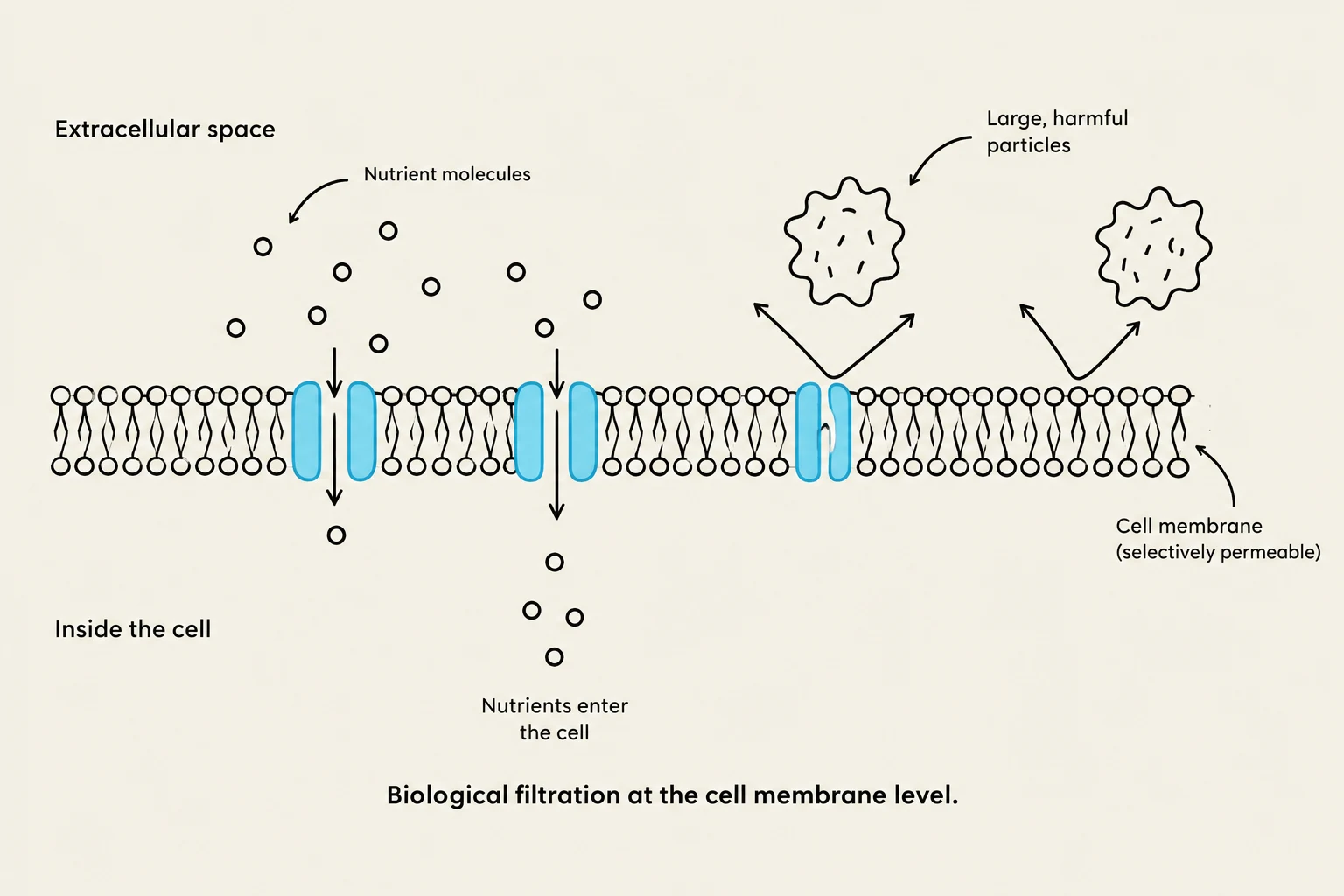
Whether in a laboratory setting using glass apparatus or within the microscopic environment of a living cell, the principles of filtration allow for the selective movement of materials, ensuring that only the necessary components pass through a barrier.
The Mechanics of Filtration
To understand how filtration works, we must look at the physical apparatus and the specific components that facilitate the separation of a mixture.
Figure 1: A diagram illustrating the filtration process using a funnel and a semipermeable membrane.
As shown in Figure 1, a standard filtration setup involves a funnel held by a stand over a receiving vessel, such as a beaker. The key to this process is the semipermeable membrane.
The Semipermeable Membrane
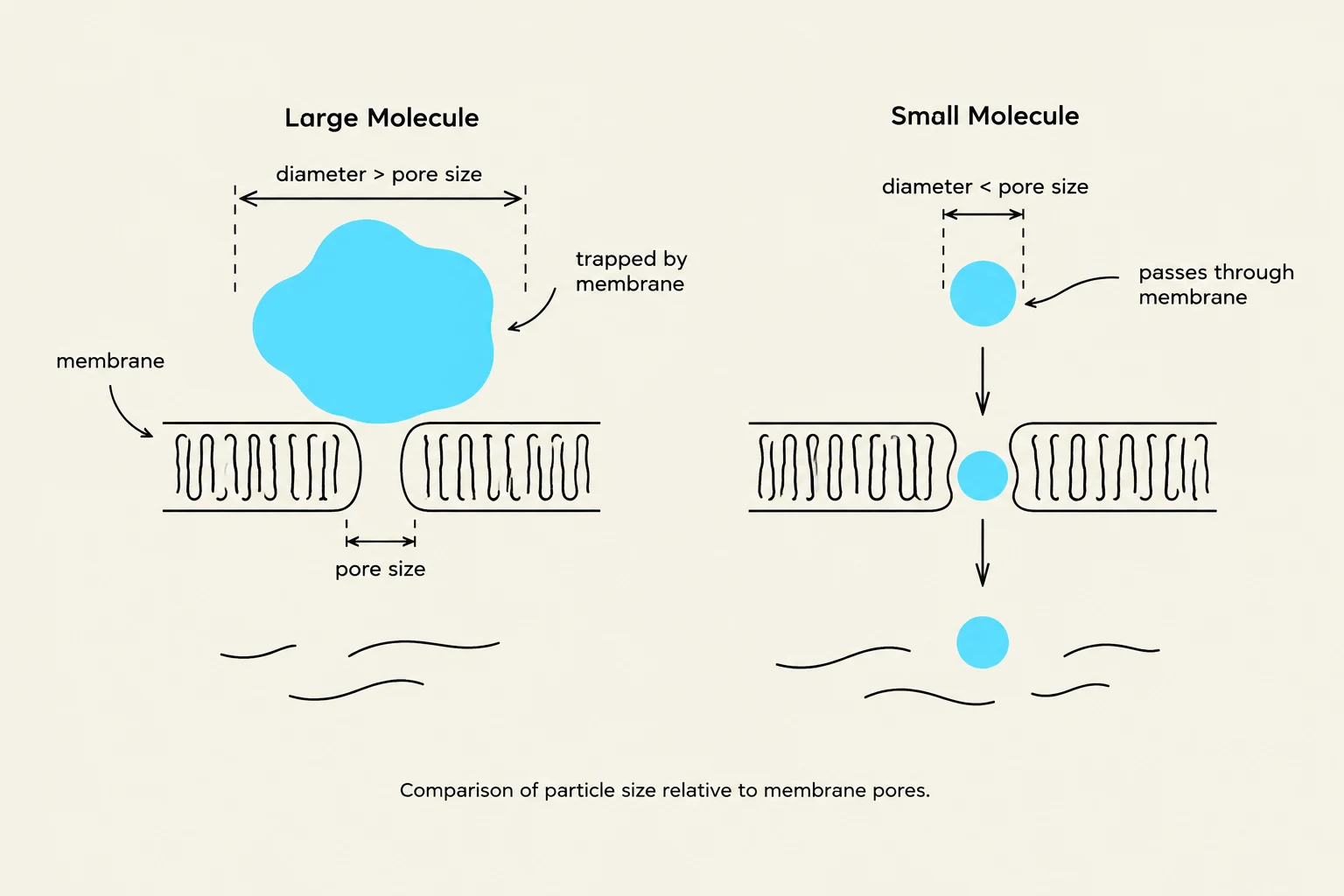
A semipermeable membrane is a specialized barrier characterized by microscopic pores. These pores are not uniform openings like a window screen, but rather tiny gaps that act as a selective gatekeeper. The "semi" in semipermeable indicates that the membrane is not completely solid, nor is it completely open; it allows some substances to pass through while blocking others based on their physical dimensions.
Large vs. Small Molecules
Keep reading for free.
Create an account to finish this reading and make it part of your study routine.
Continue reading freeAlready have an account? Log in
Updated