


In the mortgage industry, fairness and transparency are not just ethical goals; they are legal mandates. Federal anti-discrimination and disclosure laws govern how financial institutions interact with consumers to ensure that the lending process is equitable and that borrowers are fully informed about the costs and decisions affecting their financial lives. This article explores three pillars of these protections: the Equal Credit Opportunity Act (ECOA), the Fair Housing Act (FHA), and the Home Mortgage Disclosure Act (HMDA).
Equal Credit Opportunity Act (ECOA) and Regulation B
Enacted in 1974 and overseen by the Consumer Financial Protection Bureau (CFPB), the Equal Credit Opportunity Act (ECOA) is implemented through Regulation B. The primary purpose of ECOA is to ensure that all consumers have an equal chance to obtain credit without experiencing discrimination based on personal characteristics.
Prohibited Factors of Discrimination
ECOA prohibits creditors from discriminating against applicants based on nine prohibited factors:
- Race
- Color
- Religion
- National origin
- Sex (including gender identity and orientation)
- Marital status
- Age
- Receipt of public assistance
- The exercise of rights under the Consumer Credit Protection Act
Identifying Discriminatory Behavior
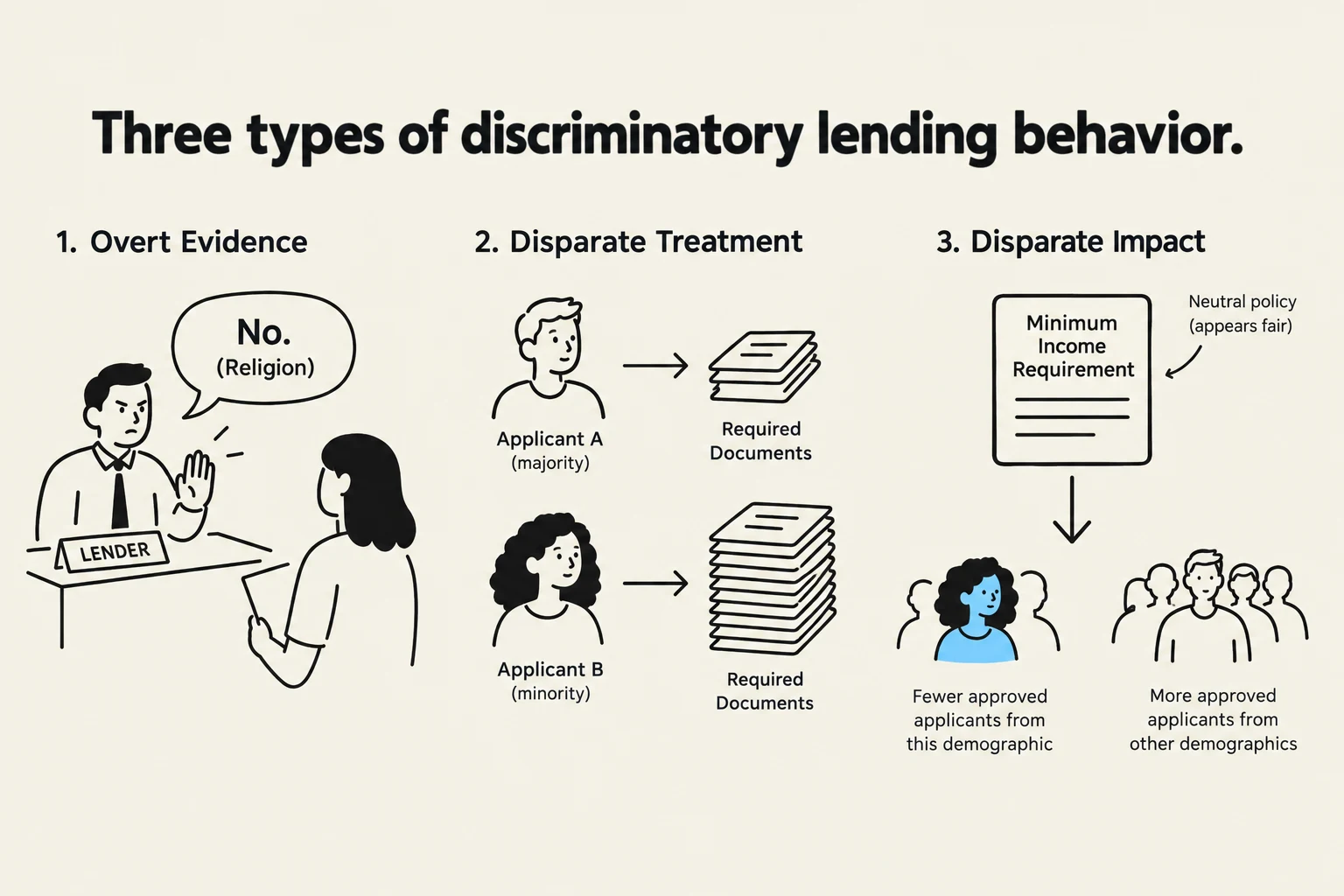
Discrimination in lending does not always look like an outright refusal to lend. It typically manifests in three distinct ways:
- Overt Evidence: This is obvious, explicit discrimination where a lender makes a statement or takes an action that clearly violates the law (e.g., stating a loan is denied because of the applicant's religion).
- Disparate Treatment: This occurs when a lender treats applicants differently based on prohibited factors. For example, if a lender requires more documentation from a minority applicant than from a non-minority applicant with the same credit profile, it is disparate treatment.
- Disparate Impact: This is more subtle. It involves seemingly neutral practices or policies that, in practice, disproportionately affect protected groups.

Keep reading for free.
Create an account to finish this reading and make it part of your study routine.
Continue reading freeAlready have an account? Log in
Updated