


Between 1450 and 1750, the world underwent a profound transformation as European empires expanded into the Americas. This era of encounter was not driven by a single cause, but rather by a complex intersection of geographic advantages, economic desperation, religious fervor, and technological superiority. While these factors allowed Europeans to establish a foothold in a "New World," they also triggered a catastrophic biological event that fundamentally altered the course of human history.
The Drivers of Expansion
The movement of Europeans across the Atlantic was facilitated by several unique advantages that set the stage for empire-building.
Geography and Economic Motives
Geography played a silent but crucial role in the success of Atlantic crossings. Compared to the long, difficult routes required to reach Asia via land or monsoon-driven Indian Ocean routes, the Atlantic offered relatively smooth currents and closer proximity for certain European powers.
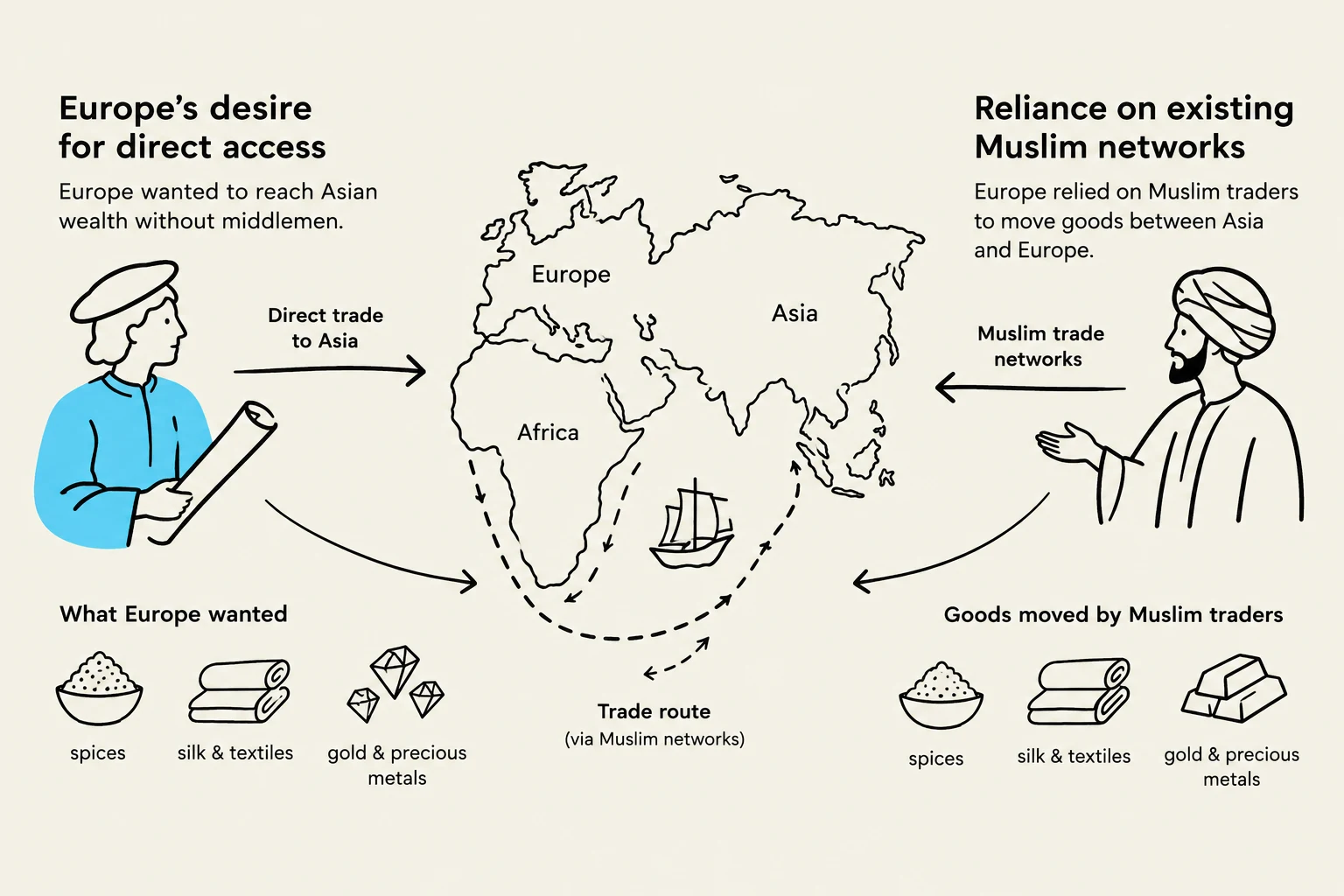
Economically, the motivation was driven by a desire for autonomy. Initially, the rich markets of Asia provided little incentive for Europeans to venture into the Americas. However, as European powers sought to bypass Muslim intermediaries who controlled much of the existing wealth and trade routes, the search for direct access to riches became a primary driver for exploration.
Religion and Resource Mobilization
Beyond gold and spices, religion acted as a powerful social engine. Many Europeans, particularly religious minorities facing persecution in their homelands, viewed the Americas as a frontier where they could seek freedom.
Keep reading for free.
Create an account to finish this reading and make it part of your study routine.
Continue reading freeAlready have an account? Log in
Updated