Explore the evolutionary journey of plants from their aquatic origins to terrestrial dominance. This content covers primary endosymbiosis, the green lineage (chlorophytes and charophytes), and the key adaptations of embryophytes, including water conservation, gas exchange, structural support, and the alternation of gen
The history of life on Earth is marked by dramatic transitions, none more significant than the movement of photosynthetic organisms from the water to the land. This journey transformed the planet's surface, creating complex ecosystems and paving the way for terrestrial animal life. To understand how plants became the dominant life forms on land, we must look back at their microscopic ancestors and the cellular innovations that made survival in a dry, gravity-bound world possible.
The Origins: Archaeplastida and Primary Endosymbiosis
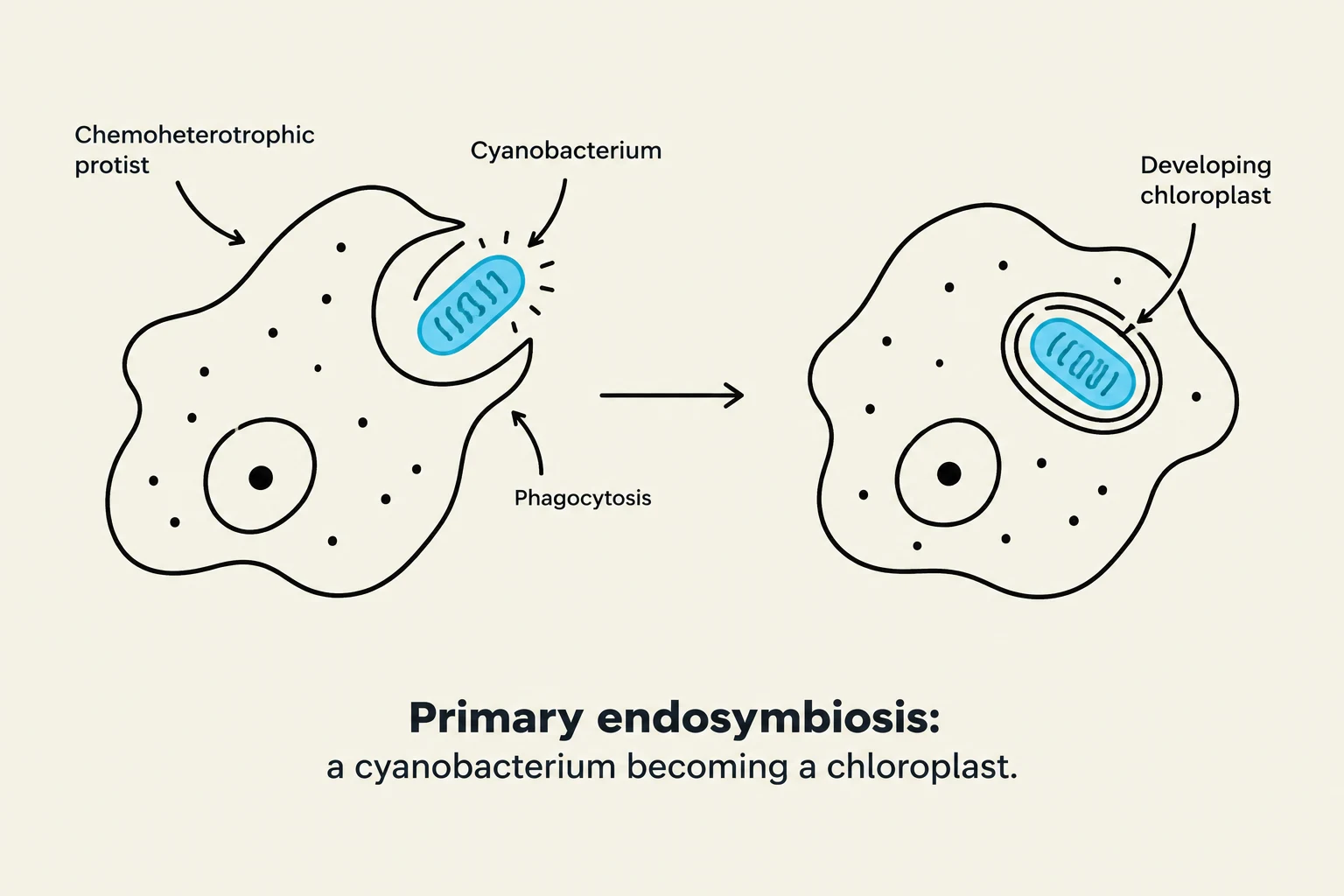
Diagram illustrating primary endosymbiosis where a cyanobacterium is phagocytosed by a chemoheterotrophic protist, eventually developing into a chloroplast.
The story of plants begins with the evolution of photosynthesizing eukaryotes. All these organisms share a fundamental commonality: they contain chlorophyll a. This specific pigment is a legacy of their evolutionary history.
The lineage belongs to a massive supergroup called Archaeplastida. The defining moment for this group was primary endosymbiosis. In this process, a chemoheterotrophic protist engulfed a cyanobacterium. Instead of being digested, the cyanobacterium became a permanent resident within the cell, eventually evolving into the chloroplast. This event provided the metabolic machinery necessary for photosynthesis, forming the foundation for all future plant life.
From Algae to Land: The Green Lineage
Within the Archaeplastida, we see a clear divergence in lineages. Red algae (Rhodophyta) represent the basal taxon of this supergroup. Unlike the green plants we see today, red algae split off before the evolution of chlorophyll b. Consequently, they lack chlorophyll b and instead utilize reddish pigments like phycoerythrin and phycocyanin, which they inherited from their cyanobacterial ancestors.
The "green" lineage is divided into two main groups: chlorophytes and charophytes. While both groups contain both chlorophyll a and b, they differ significantly in their complexity:
Chlorophytes: These are mostly unicellular or simple multicellular organisms. Their multicellular structures are often simple "sheets" that lack an apical meristem (a specialized growth point). Crucially, their cells lack plasmodesmata, meaning they have limited ability for complex cellular communication.
Charophytes: These are more closely related to land plants. They exhibit complex multicellularity and possess plasmodesmata—microscopic channels that connect cells, allowing for efficient communication and the development of complex tissues. They also utilize an apical meristem to grow directionally.
The Rise of Embryophytes: Adapting to Land
The transition to land, which began roughly 500–600 million years ago, presented two massive challenges: desiccation (drying out) and gravity. The organisms that successfully colonized these environments are known as embryophytes (land plants).
To survive without the constant immersion of water, embryophytes evolved several key adaptations:
Water Conservation and Gas Exchange
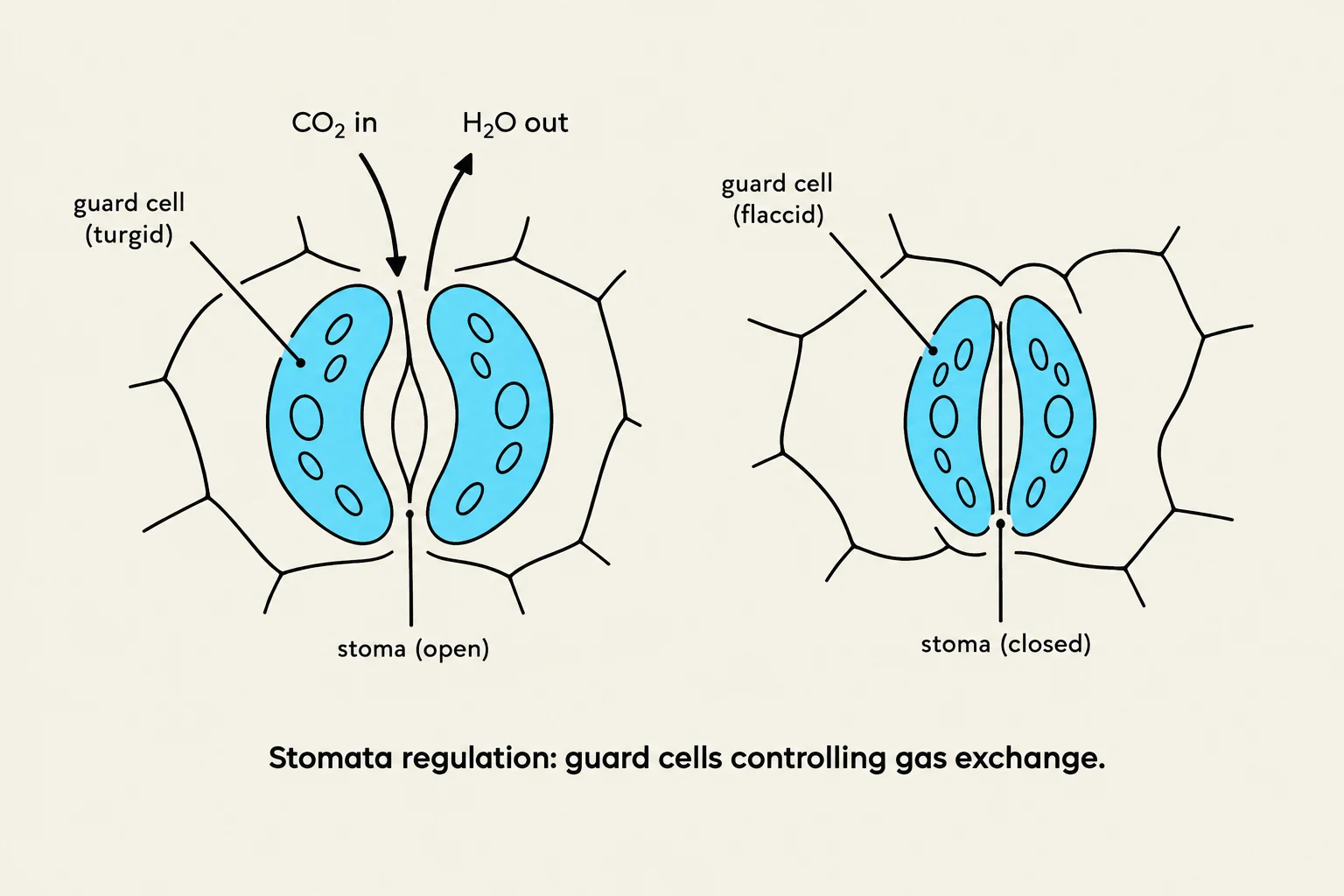
Diagram illustrating the opening and closing of stomata, regulated by guard cells, which controls gas exchange in plants.
Cuticle: A waxy, protective outer layer that covers leaves and stems to prevent water loss and protect against UV radiation.
Stomata and Guard Cells: Because a thick cuticle blocks gas exchange, plants evolved stomata—tiny pores in the epidermis. These pores are regulated by guard cells, which open and close the pore to balance the need for CO2 (for photosynthesis) against the risk of losing too much water.
Structural Support and Nutrient Transport
Vascular Tissue: As plants grew larger, they needed a way to move water and nutrients against gravity. This led to the evolution of xylem (which transports water and nutrients) and phloem (which transports sugars and amino acids).
Roots: Unlike early bryophytes that use simple rhizoids for anchorage, most vascular plants developed true roots to absorb water and nutrients from the soil.
Apical Meristems: These regions of rapid cell division at the tips of shoots and roots allow plants to grow toward light and deeper into the soil.
Exam Tip: The Bryophyte Exception
While most plants have a thick cuticle, bryophytes (like liverworts and mosses) do not. Because they lack a thick cuticle and true roots, they must live in moist environments to allow water and nutrients to diffuse directly through their leaves.
Life Cycles: Alternation of Generations
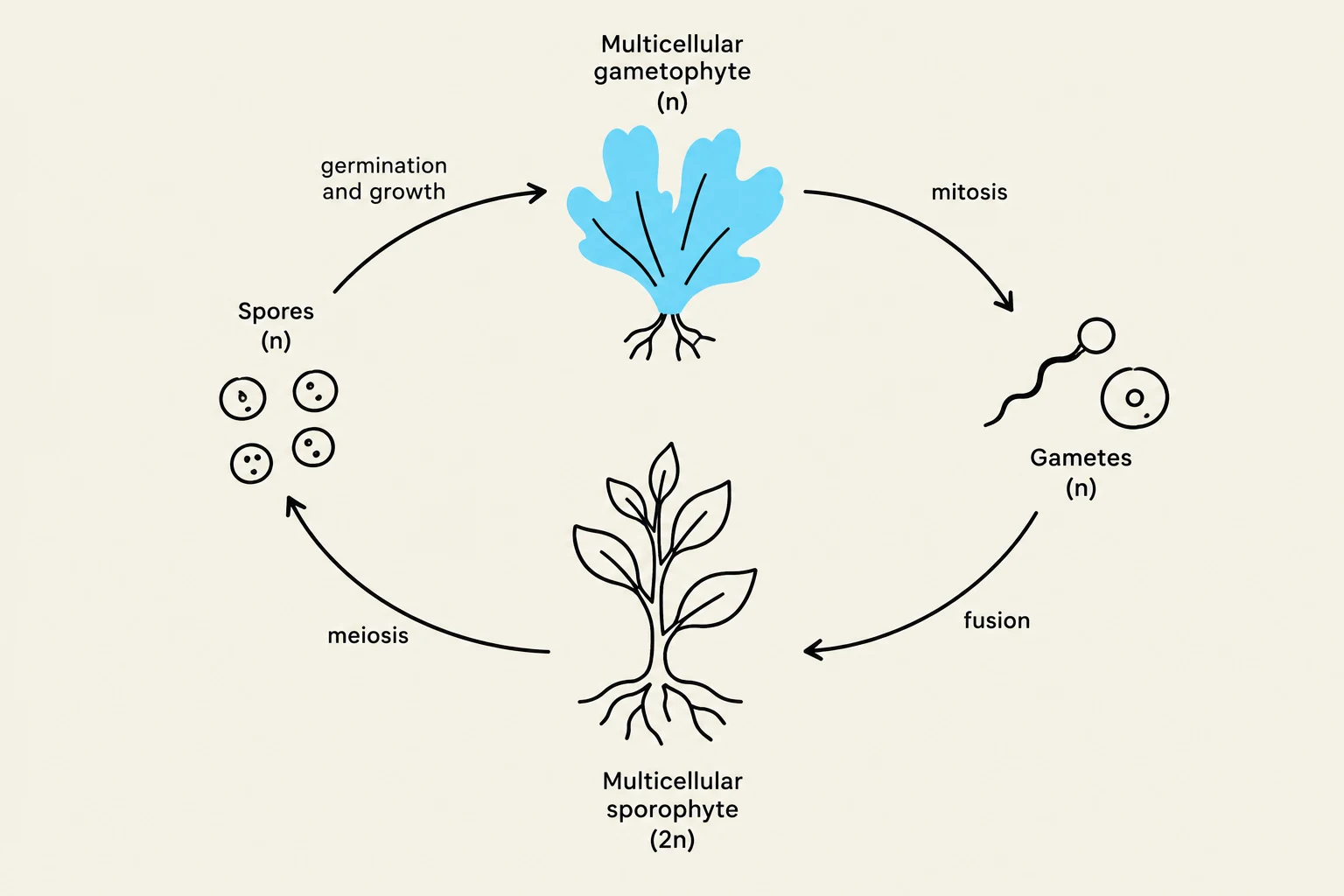
Diagram illustrating the alternation of generations in a plant's life cycle, showing the transition between the multicellular gametophyte (haploid) and sporophyte (diploid) stages through processes like meiosis, mitosis, and fusion.
A defining characteristic of all plants is their haplodiplontic life cycle, also known as alternation of generations. Unlike animals, which are multicellular diploid organisms that produce haploid gametes via meiosis, plants alternate between two distinct multicellular stages:
Gametophyte: The multicellular haploid (n) stage. This stage produces gametes (sperm and eggs) via mitosis.
Sporophyte: The multicellular diploid (2n) stage. This stage produces spores via meiosis.
As plants evolved from non-vascular bryophytes to complex angiosperms, the relationship between these two stages shifted dramatically. In bryophytes, the gametophyte is the dominant, photosynthetic stage, while the sporophyte is small and dependent. However, in seed plants (gymnosperms and angiosperms), the sporophyte has become the dominant stage, while the gametophyte has been greatly reduced in size and often remains protected within the sporophyte.
The Evolution of Reproduction: From Spores to Seeds
The method of dispersal has been a major driver of plant evolution.
Seedless Plants
Early land plants and seedless vascular plants (like ferns) disperse via spores. These spores are protected by a tough wall of sporopollenin, which helps them resist desiccation and UV radiation. However, because these plants produce flagellated sperm, they still require a film of water for fertilization to occur.
Seed Plants: Gymnosperms and Angiosperms
The evolution of heterospory (producing different types of spores: male microspores and female megaspores) and megaspore retention allowed plants to move into much drier environments.
Pollen: The male gametophyte is packaged into pollen grains, which protect the sperm and eliminate the need for external water for fertilization.
Seeds: The female gametophyte and the embryo are housed within a seed. Seeds provide protection via a seed coat, contain nutrients for the developing embryo, and can remain dormant until environmental conditions are favorable.
Gymnosperms (like conifers) were dominant about 300 million years ago, especially in cold, dry climates. They often feature needles and thick cuticles to reduce evaporation. Finally, angiosperms (flowering plants) evolved advanced structures like flowers and fruits to further facilitate reproduction and dispersal.
Keep reading for free.
Create an account to finish this reading and make it part of your study routine.