Explore the historical changes in Earth's atmospheric composition, from its early stages with a primary and secondary atmosphere to the Great Oxidation Event and its modern state. Learn about the major and minor gases, other constituents, and the atmosphere's role in climate regulation through the greenhouse effect.
Earth is a complex, interconnected system composed of five major spheres: the lithosphere (rocks and minerals), the hydrosphere (water), the biosphere (life), the magnetosphere (magnetic field), and the atmosphere. The atmosphere is a layer of gases surrounding the solid Earth, held in place by gravity. While it may seem static, the atmosphere has undergone profound transformations over billions of years, evolving from a primitive mix of gases into the oxygen-rich environment that supports life today.
The Early Stages: Primary and Secondary Atmospheres
The history of our atmosphere begins with two distinct stages: the primary and secondary atmospheres.
The Primary Atmosphere
During the formation of the early Solar System, Earth was surrounded by a primary atmosphere consisting of the most abundant gases in the cosmos: hydrogen (H) and helium (He). However, because these gases are very light, Earth's gravity was unable to retain them effectively, and they eventually escaped into space.
The Secondary Atmosphere and Volcanic Activity
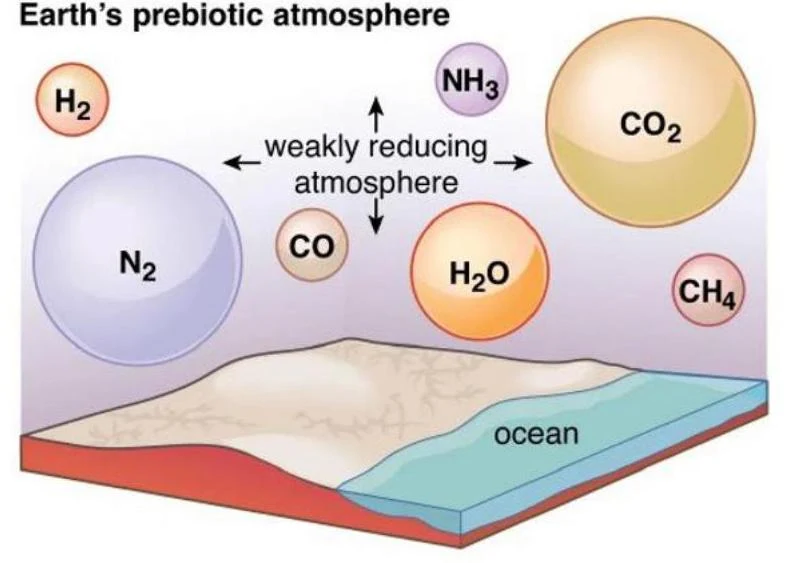
As the primary atmosphere escaped, a secondary atmosphere began to form through intense volcanic activity. Gases from Earth's interior were released into the surroundings, creating a "prebiotic" environment. This early atmosphere was characterized by a different chemical makeup, dominated by gases such as:
Methane (CH4)
Carbon dioxide (CO2)
Sulphur dioxide (SO2)
Water vapour (H2O)
Diagram illustrating the composition of Earth's prebiotic atmosphere, including gases like H2, N2, CO, NH3, H2O, CO2, and CH4, in relation to a primitive ocean and landmass.
This prebiotic atmosphere was "weakly reducing," meaning it lacked the high levels of oxygen we see today.
The Great Oxidation Event
The most significant turning point in atmospheric history was the transition from a reducing atmosphere to an oxidizing one. This change was driven by the evolution of life.
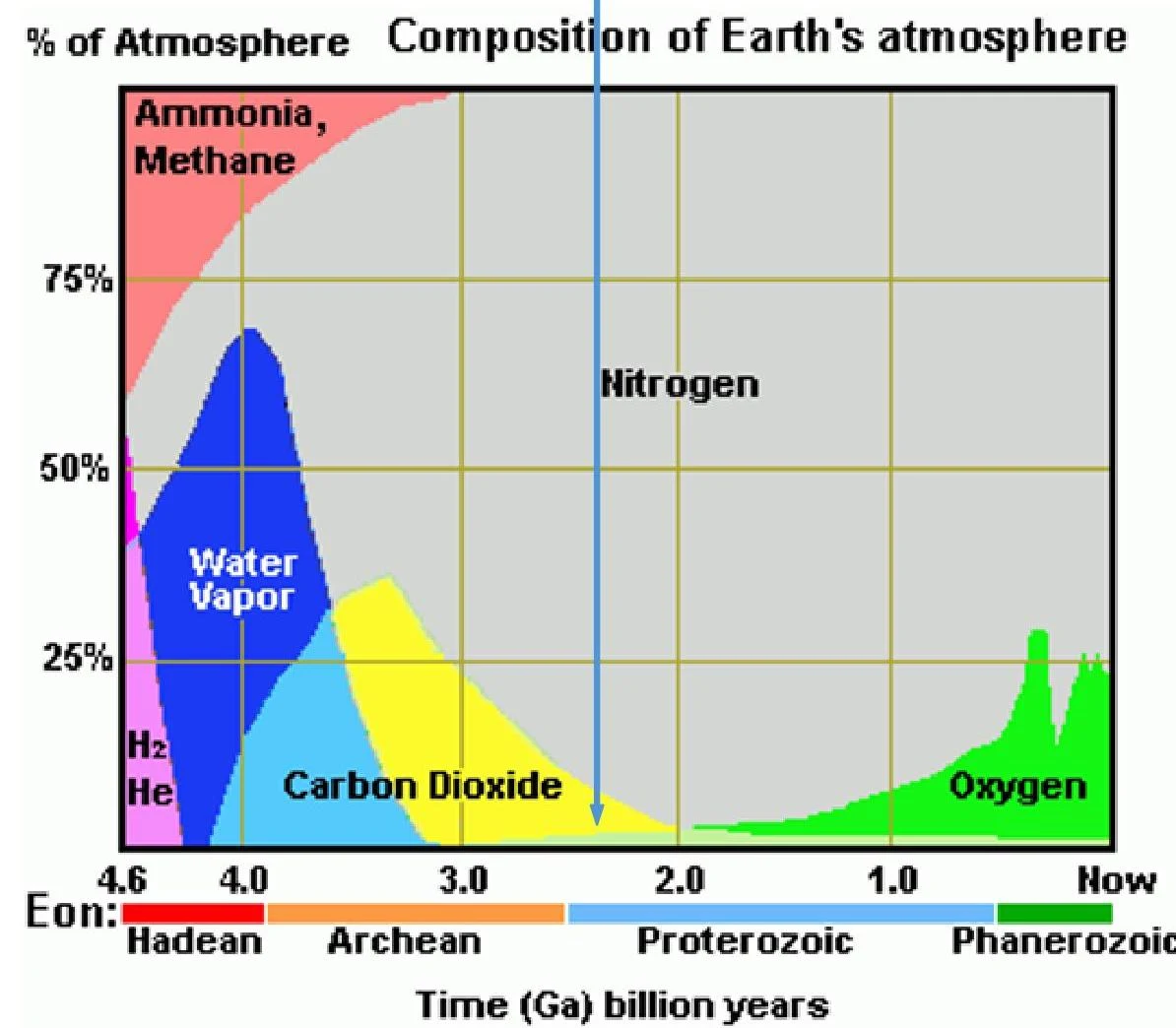
More than 3.5 billion years ago, organisms began to emerge in the oceans. These early life forms eventually began producing oxygen as a byproduct of their biological processes. This led to the Great Oxidation Event during the early Proterozoic era (approximately 2.4 Ga).
During this period, the oxidation of the atmosphere and hydrosphere occurred. Initially, the oxygen produced by life was likely absorbed by the oceans and minerals, but eventually, it began to accumulate in the atmosphere, increasing to about 1 wt. %. By the early Proterozoic (around 540 Ma), the atmosphere had transitioned into a state much closer to its modern composition.
This graph illustrates the changing composition of Earth's atmosphere over billions of years, showing the relative percentages of gases like Nitrogen, Oxygen, Carbon Dioxide, Water Vapor, Ammonia, and Methane across different geological eons.
Modern Atmospheric Composition
Today, Earth possesses a unique atmosphere that is highly oxidizing and contains large amounts of oxygen, a feature that distinguishes it from any other known planet in the Solar System.
Major and Minor Gases
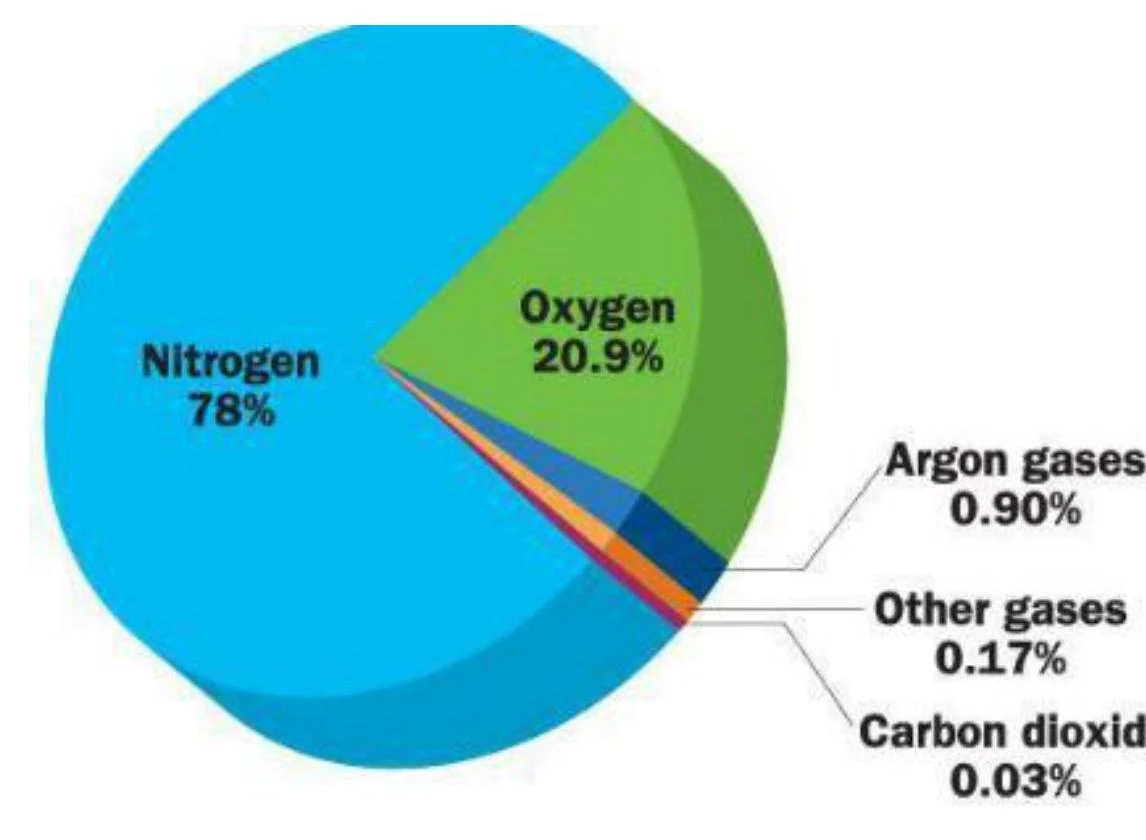
The modern atmosphere is composed of several key gases that maintain the planet's habitability. The major gases include:
Nitrogen (N2): 78%
Oxygen (O2): 21%
Argon (Ar): 0.93%
There are also minor gases present in smaller concentrations, such as carbon dioxide (CO2), neon, helium (He), and methane (CH4).
A pie chart illustrating the composition of Earth's atmosphere, showing Nitrogen at 78%, Oxygen at 20.9%, Argon gases at 0.90%, Other gases at 0.17%, and Carbon dioxide at 0.03%.
Other Constituents
Beyond the primary gases, the atmosphere contains other vital components:
Water vapour: Essential for weather and the hydrological cycle.
Ozone (O3): Located in the stratosphere, it absorbs 97–99% of the Sun's harmful UV radiation, protecting life on Earth.
Dust and aerosols: Small particles suspended in the air that influence cloud formation and radiation.
Study Tip: When analyzing atmospheric composition, remember that while CO2 is a "minor gas" by percentage, it plays a massive role in regulating Earth's temperature through the greenhouse effect.
The Role of the Atmosphere in Climate
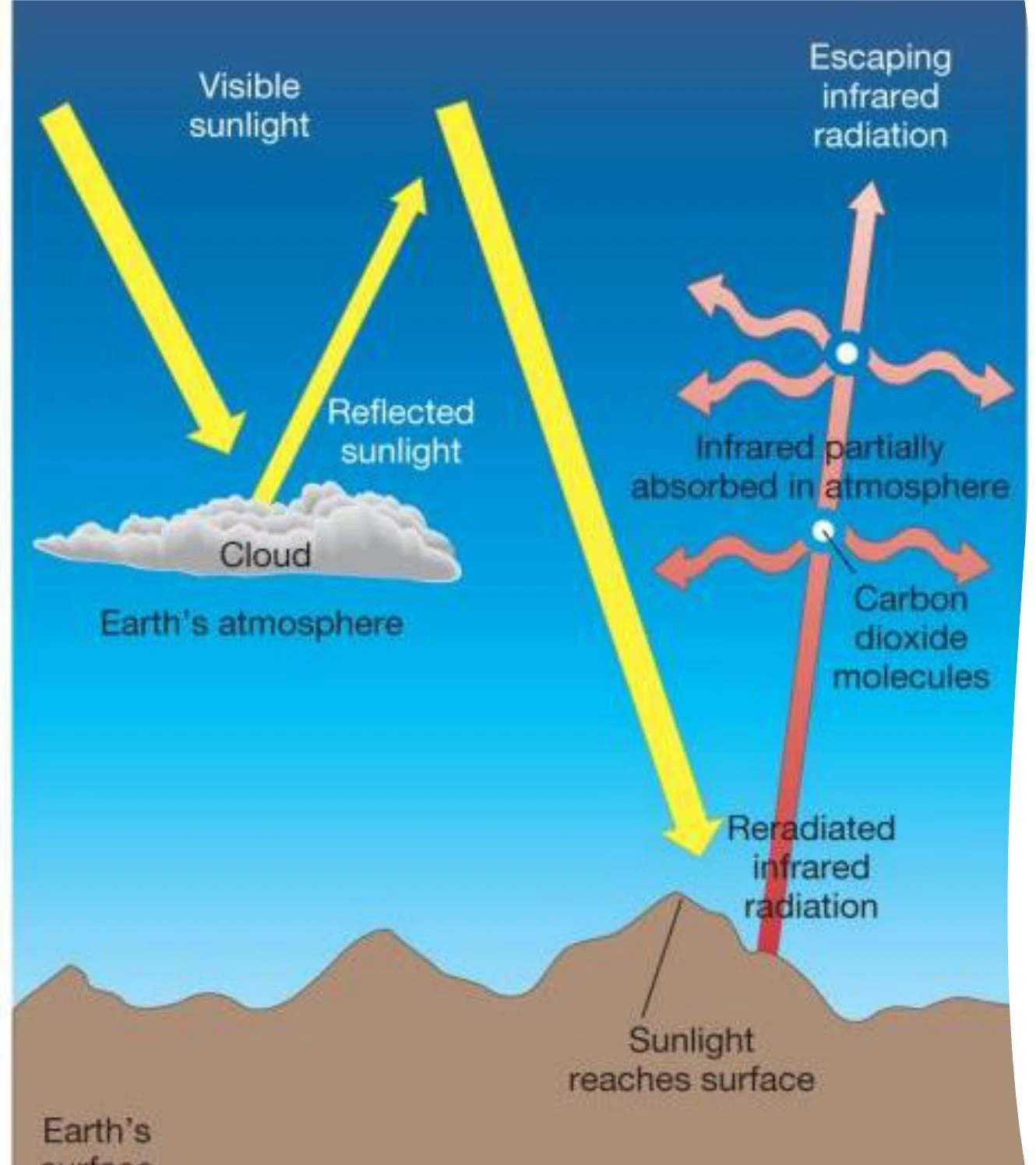
The composition of the atmosphere directly influences Earth's temperature. Greenhouse gases, such as CO2, H2O, and CH4, absorb infrared thermal radiation reradiated from the Earth's surface. This process, known as the greenhouse effect, warms the planet and prevents it from becoming too cold for life.
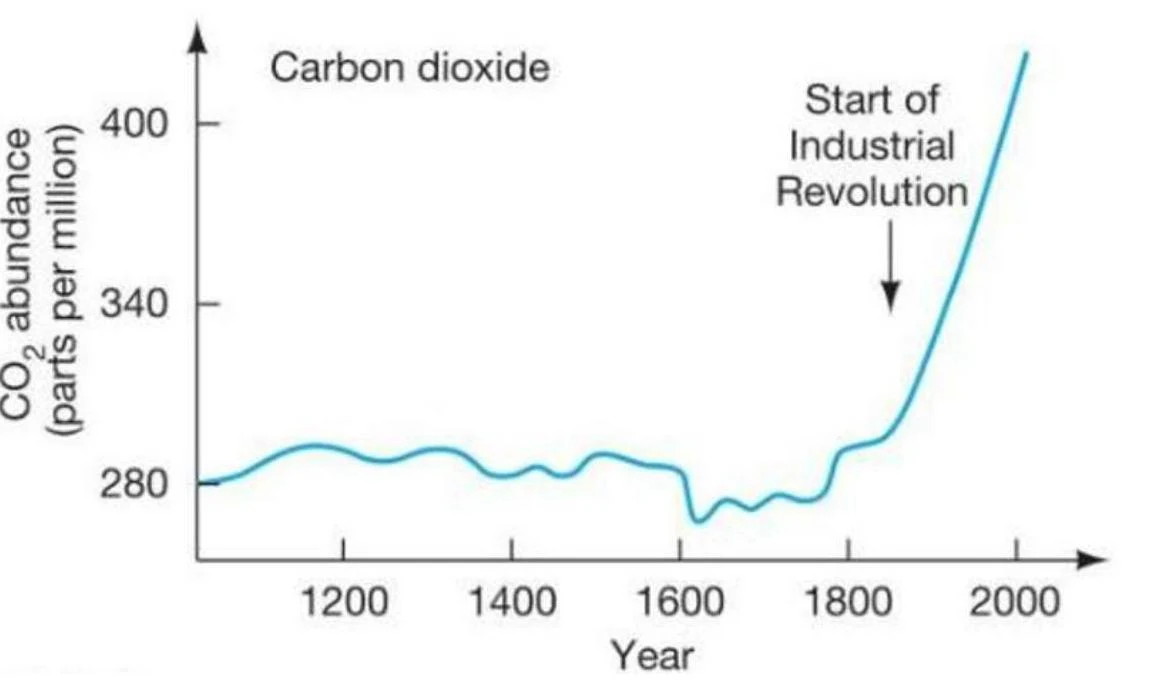
However, human activities—particularly the burning of fossil fuels—have significantly increased the levels of CO2 in the atmosphere. This intensification of the greenhouse effect is a primary driver of modern climate change, leading to rising global temperatures, melting glaciers, and more severe weather patterns.
This diagram illustrates how visible sunlight interacts with Earth's atmosphere and surface, and how infrared radiation is absorbed and re-emitted by greenhouse gases like carbon dioxide.
A graph showing the increase in carbon dioxide abundance in parts per million from the year 1200 to 2000, with a notable acceleration starting around the Industrial Revolution.
Keep reading for free.
Create an account to finish this reading and make it part of your study routine.