


In the modern business landscape, leaders are often overwhelmed by a deluge of information, ranging from cutting-edge research to flashy marketing claims. This abundance of data does not necessarily lead to better decisions; in fact, many managers fall into the trap of relying on intuition, outdated habits, or popular trends rather than proven facts. To avoid leadership failure, which can cost organizations millions of dollars, managers must adopt Evidence-Based Management (EBM). EBM is the practice of making decisions through the conscientious use of the best available evidence, rather than relying on "gut feeling" or unverified assumptions.
The High Cost of Leadership Failure
Leadership is defined as the ability to influence, motivate, and enable others toward the achievement of common goals. When this influence is misapplied or based on flawed reasoning, the consequences are severe. Research suggests that leadership failure ranges from 40% to 60%, representing a massive financial drain on organizations.
One common psychological trap is the "romance of leadership," where observers overestimate how much a single leader's behavior determines success or failure, often ignoring market factors, timing, or the collective decisions of thousands of employees. Despite this, effective leadership can be measured through indicators such as high group performance, improved processes, and employee engagement.
Barriers to Evidence-Based Decision Making
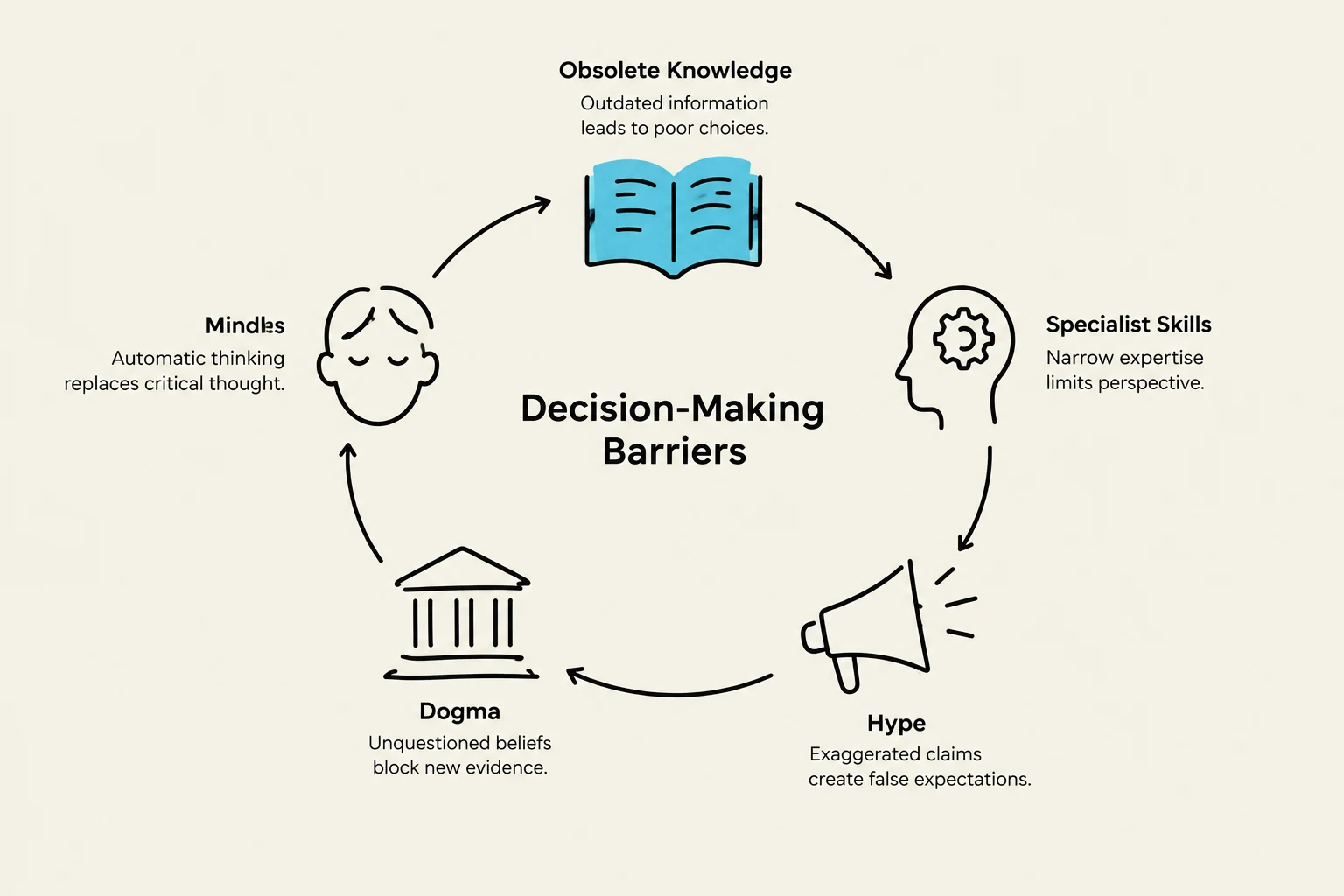
Why do managers struggle to be evidence-based? Even in fields like medicine, where evidence is paramount, only about 15% of decisions are strictly evidence-based; managers are often even less rigorous. Several key obstacles prevent the adoption of EBM:
- Obsolete Knowledge: Managers often trust their own past experiences more than new research, leading them to rely on methods that may no longer be effective.
- Specialist Skills: There is a tendency to make decisions that capitalize on a practitioner's existing strengths rather than what the situation actually requires.
- Hype and Marketing: Busy practitioners are often targeted by aggressive marketing that presents unproven trends as revolutionary breakthroughs.
- Dogma and Belief: Ideologies and cultural values can be "sticky," resisting disconfirmation even when evidence proves them wrong.
- Mindless Mimicry: Instead of analyzing what works, many leaders simply copy the behaviors of top performers without understanding the underlying context.

Keep reading for free.
Create an account to finish this reading and make it part of your study routine.
Continue reading freeAlready have an account? Log in
Updated