


The respiratory system is a vital complex responsible for gas exchange, a process driven by the rhythmic contraction and relaxation of muscles like the diaphragm. To accurately assess a patient's pulmonary health, clinicians must employ a systematic, evidence-based approach that integrates a detailed subjective history, a structured physical examination, and objective diagnostic monitoring.
Respiratory History Assessment
A thorough assessment begins with the subjective history, focusing on the patient's chief concerns. The most common respiratory complaints include dyspnea (shortness of breath), cough, chest pain, and hemoptysis (coughing up blood). When evaluating these symptoms, clinicians should investigate the timing, triggers, and severity—for instance, asking if a cough is productive or nonproductive.
Beyond the immediate symptoms, a complete history must include:
- Past Medical History: Previous illnesses, current medications, allergies, and immunization status.
- Family History: Chronic lung problems or history of apnea.
- Social History: Environmental exposures (such as secondhand smoke) and lifestyle behaviors like smoking or vaping.
Clinical Tip: Identifying Red Flags Certain symptoms in the history indicate high-risk conditions that require immediate intervention. For Pulmonary Embolus (PE), watch for sudden pleuritic chest pain, dizziness, recent long-distance travel, or recent lower extremity trauma/pelvic surgery. For Acute Respiratory Distress, look for labored breathing, cyanosis, or inadequate chest rise.
Physical Examination: Inspection and Palpation
The physical examination begins with a general survey. Observe the patient's breathing rate, rhythm, depth, and effort. Note their ability to speak in full sentences and look for signs of central cyanosis or pursed-lip breathing.
Inspection of the Thorax
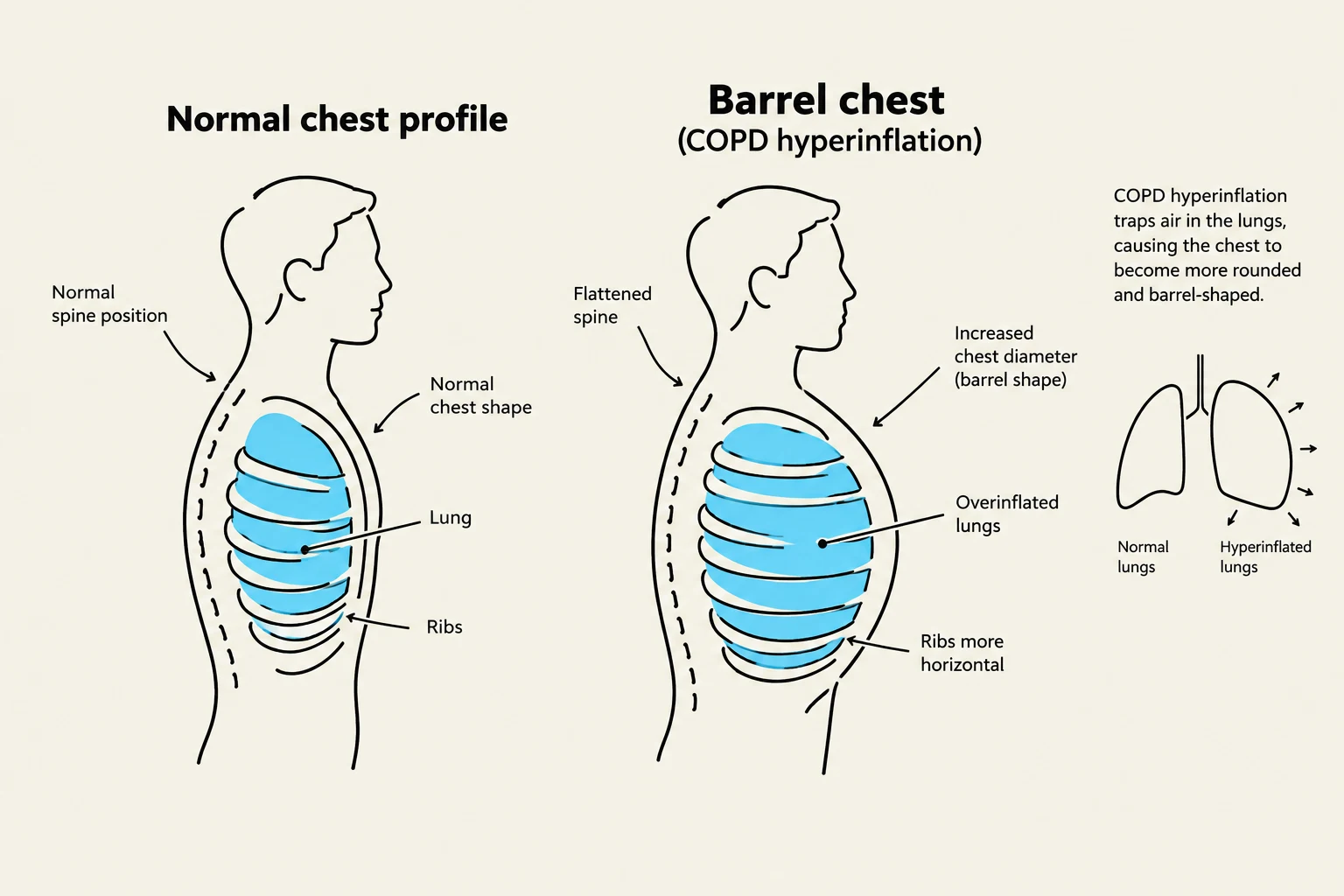
Inspection extends to the physical structure of the chest and the condition of the extremities:
Keep reading for free.
Create an account to finish this reading and make it part of your study routine.
Continue reading freeAlready have an account? Log in
Updated