Eukaryotic Transcription: RNA Polymerases, Initiation, Elongation, and Termination
Explore the intricate process of eukaryotic transcription, detailing the roles of RNA Polymerase I, II, and III, the assembly of the pre-initiation complex, enhancer-driven regulation, co-transcriptional processing, and distinct termination mechanisms.
Transcription in eukaryotes is not a monolithic process; rather, it is a highly specialized division of labor distributed among different enzyme complexes. While prokaryotes often use a single RNA polymerase to handle various RNA types, eukaryotes utilize three distinct RNA polymerase (RNAP) complexes, each dedicated to specific classes of genes. This specialization allows the cell to independently regulate the production of structural RNAs, messenger RNAs, and small regulatory RNAs, ensuring that the massive demand for ribosomal components is met while simultaneously allowing for the precise, nuanced control of protein-coding genes.
The Three RNA Polymerase Complexes
The eukaryotic cell employs three primary RNA polymerase enzyme complexes, categorized by the types of RNA they synthesize and their cellular localization.
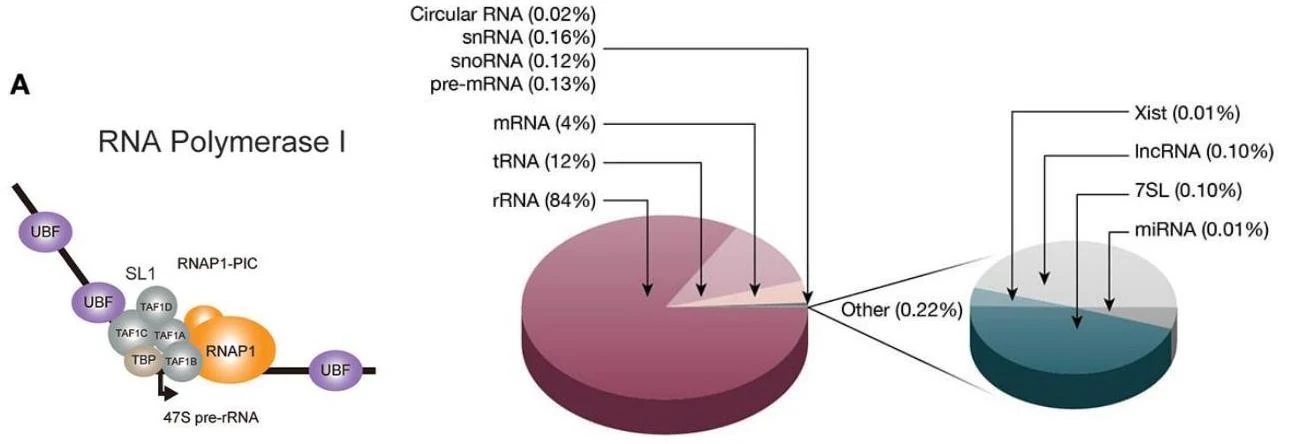
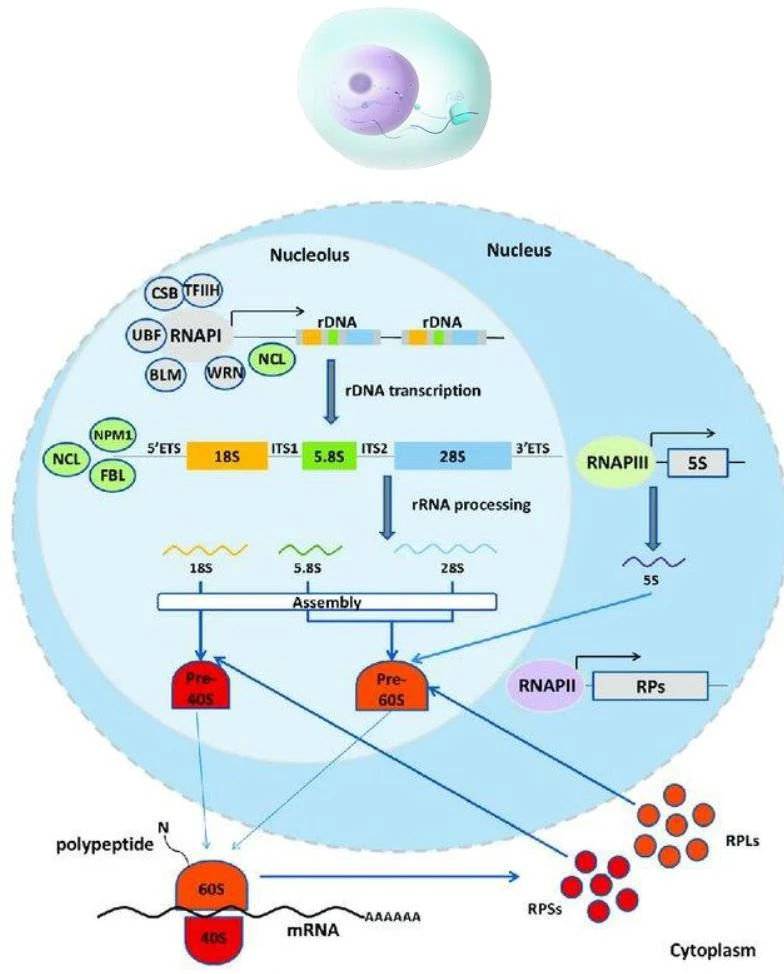
RNA Polymerase I (RNAP I): This is the "busiest" polymerase in the cell. It is localized within the nucleolus and is responsible for synthesizing the majority of ribosomal RNA (rRNA). Because rRNA makes up the vast majority of total RNA in a cell, RNAP I exhibits the highest level of activity.
Diagram illustrating RNA Polymerase I complex and a pie chart showing the relative abundance of different RNA types transcribed.This diagram illustrates the process of ribosomal RNA (rRNA) synthesis and processing within a eukaryotic cell, involving transcription in the nucleus and assembly in the cytoplasm.
RNA Polymerase II (RNAP II): This complex works in the nucleoplasm and is responsible for synthesizing messenger RNA (mRNA), as well as snRNA, miRNA, piRNA, and lncRNA. Although mRNA only accounts for about 4% of total cellular RNA at any given time, RNAP II is extremely active because mRNA molecules have much higher degradation rates than other RNA types.
RNA Polymerase III (RNAP III): Operating in the nucleoplasm, this polymerase has the lowest activity of the three. It specializes in synthesizing small, essential RNAs such as tRNA, snRNA, snoRNA, and specific rRNAs.
Transcription Initiation and the Pre-Initiation Complex (PIC)
Unlike prokaryotic sigma factors, which bind to the polymerase before it finds the DNA, eukaryotic General Transcription Factors (GTFs) must first assemble at the promoter sequences to recruit the RNA polymerase. These GTFs do not perform the actual transcription themselves; instead, they act as loaders or modulators that help or inhibit the polymerase.
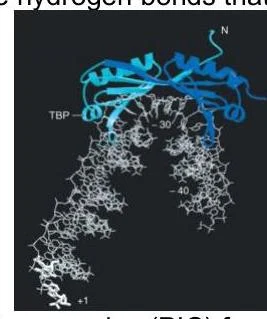
A critical component shared by all three polymerase sets is the TATA-binding protein (TBP). TBP recognizes and binds to the TATA box, a specific promoter sequence, causing a significant kink in the DNA. This structural distortion is essential because it helps melt the hydrogen bonds between the DNA strands, allowing the transcription machinery to access the template.
A diagram illustrating the TATA-binding protein (TBP) interacting with DNA.
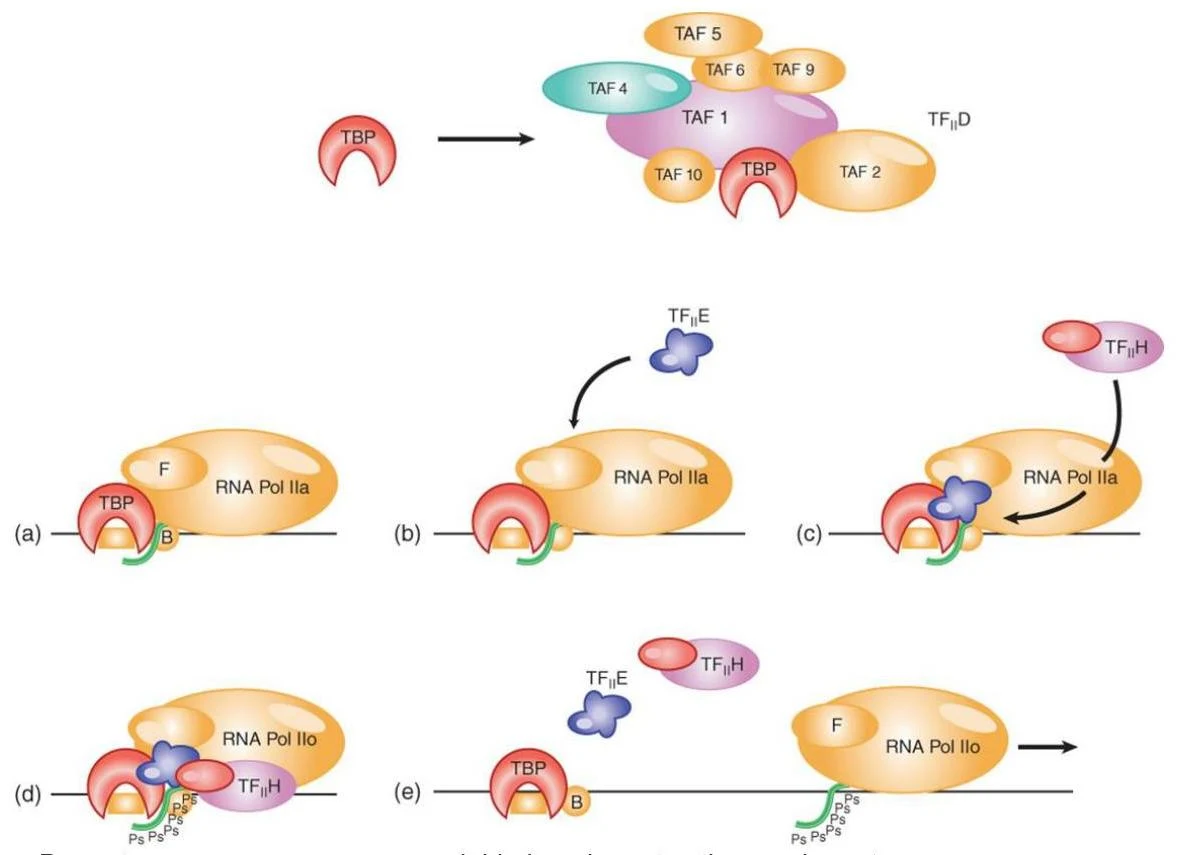
Once the GTFs have assembled at the promoter, the RNA polymerase is recruited, forming the Pre-Initiation Complex (PIC). The composition of the PIC varies depending on the polymerase:
RNAP II utilizes a large complex called TFIID (which contains TBP and TAFs) and other factors like TFIIB and TFIIH.
RNAP I utilizes the SL1 complex and Upstream Binding Factor (UBF).
RNAP III utilizes TFIIIA, B, and C.
This diagram illustrates the assembly of the transcription initiation complex, involving TBP, TAFs, RNA Polymerase II, TFIIE, and TFIIH, which is crucial for gene transcription in eukaryotes.
Exam Tip: GTFs vs. TFs
Remember that General Transcription Factors (GTFs) are essential for the basal transcription of all genes and bind near the promoter. In contrast, Transcription Factors (TFs)—often called "master regulators"—are more specific, binding to enhancers or repressors to regulate specific sets of genes.
Enhancer-Driven Regulation and DNA Looping
For genes transcribed by RNAP II, the basal machinery is often insufficient for precise control. Instead, transcription is heavily influenced by enhancer and repressor elements. These regulatory elements are bound by specific transcription factors that can either stimulate or inhibit the recruitment of the transcriptional machinery.
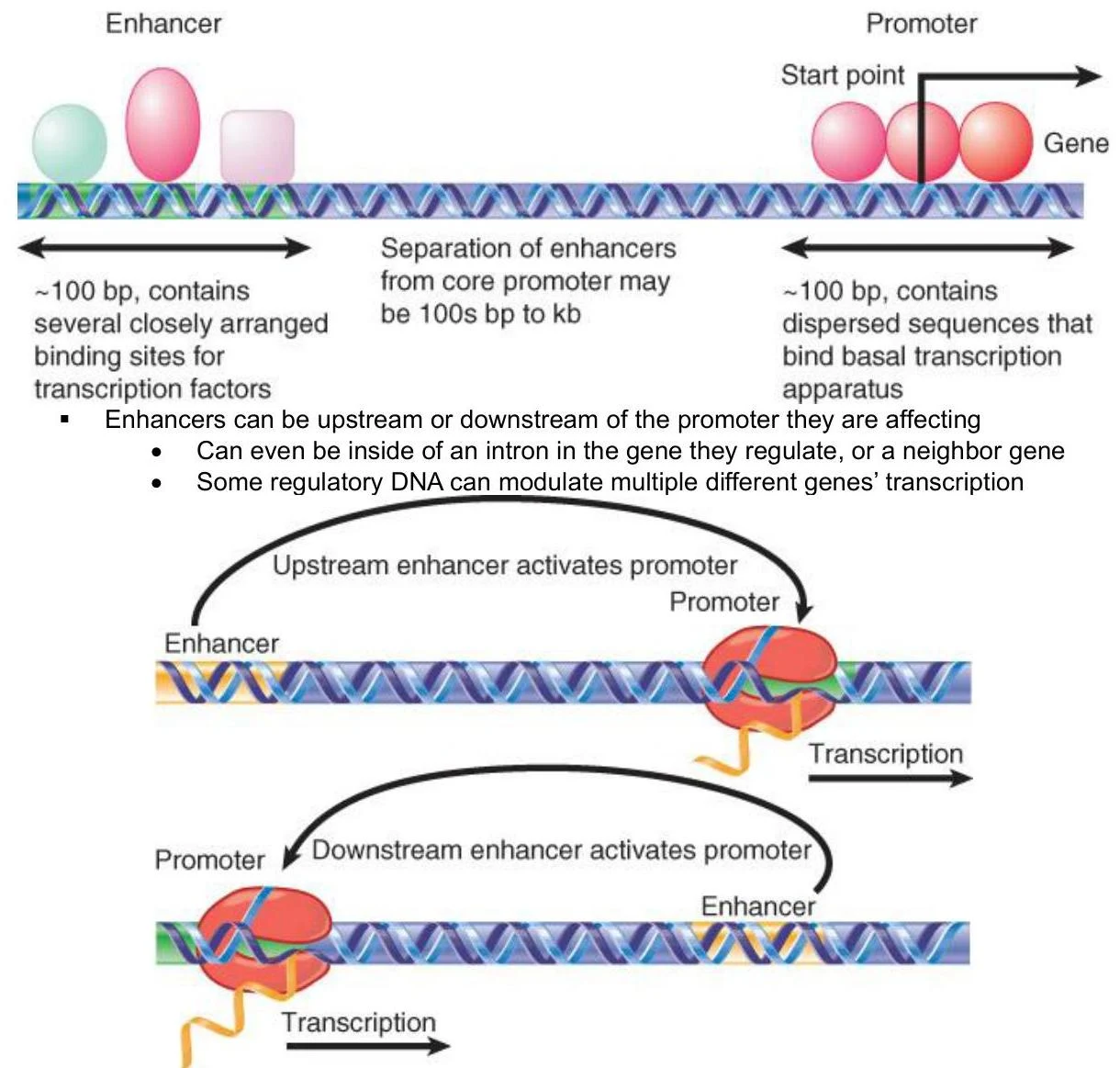
The physical distance between an enhancer and a promoter is often quite large. To bridge this gap, the cell utilizes DNA looping. Through this mechanism, the DNA bends so that the enhancer-bound transcription factors can come into physical contact with the promoter region. This interaction is mediated by the Mediator complex, which acts as a bridge between the regulatory TFs at the enhancer and the GTFs/RNAP II at the promoter.
This diagram illustrates the function of enhancers in gene transcription. Enhancers are DNA sequences that can bind transcription factors and regulate gene expression. They can be located upstream or downstream of a gene's promoter, or even within an intron or in a neighboring gene. The diagram shows how both upstream and downstream enhancers can activate a promoter, leading to transcription.
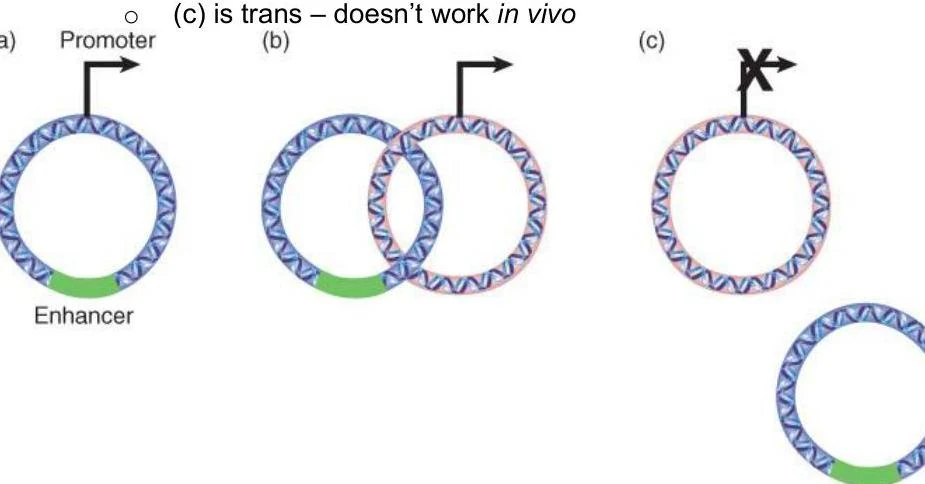
Diagrams illustrating gene regulation, showing a promoter and enhancer on a plasmid in (a), two interacting plasmids in (b), and a blocked promoter in (c).
Most of these interactions occur in cis (on the same chromosome). The stability and organization of these loops are supported by proteins like Cohesion and CTCF. Furthermore, some enhancers produce enhancer RNAs that may play a role in this regulatory process, though their exact functionality is still being studied.
Mechanisms of Elongation and Co-transcriptional Processing
Once the polymerase successfully moves away from the promoter—a process known as promoter clearance—it enters the elongation phase. During this stage, most GTFs dissociate from the DNA, though some, such as Spt5, travel with the polymerase to stabilize it and assist in termination.
RNAP II is unique among the three polymerases because it undergoes extensive phosphorylation of its C-terminal domain (CTD). The phosphorylation state of the CTD acts as a regulatory code:
Initiation/Clearance: TFIIH phosphorylates a serine on the CTD to help the polymerase escape the promoter.
Elongation: Further phosphorylation by various kinases occurs as the polymerase moves along the gene.
Termination: Dephosphorylation occurs as elongation nears completion.
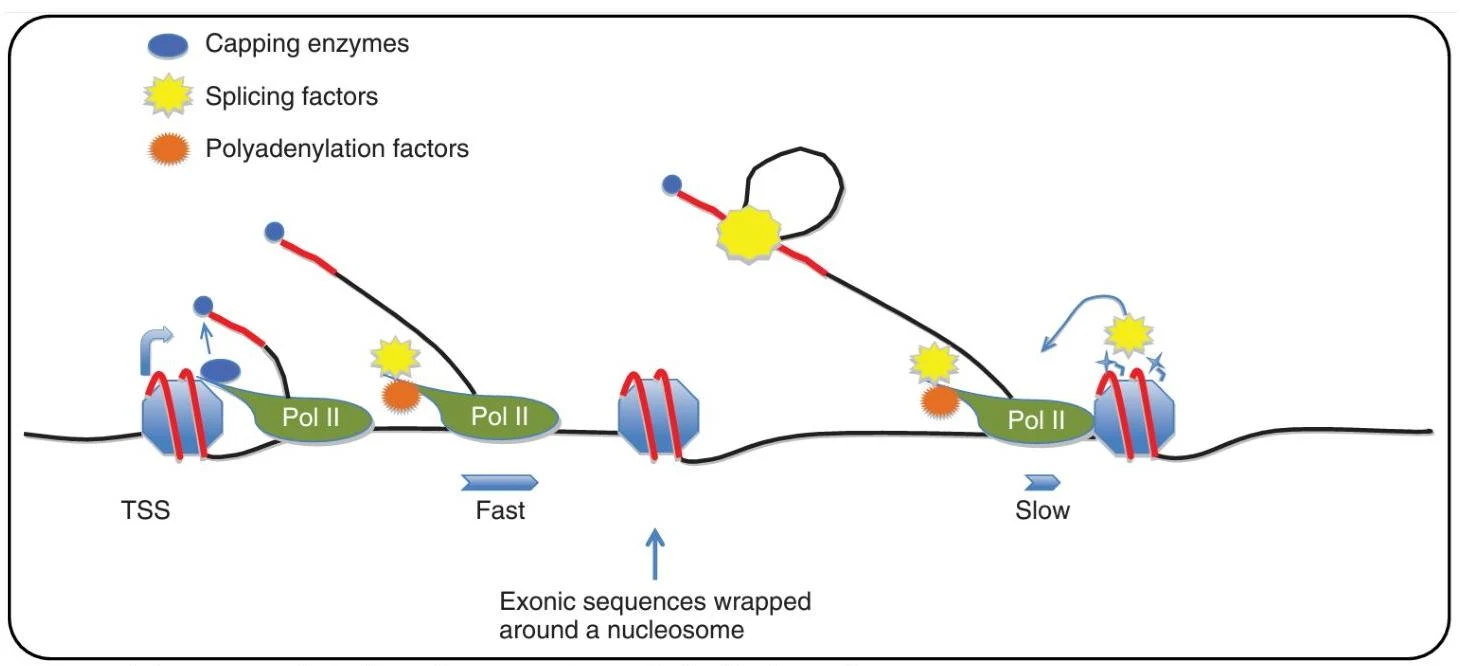
This CTD phosphorylation is not just for movement; it serves as a docking site for processing enzymes, enabling co-transcriptional processing. This means that as the RNA is being synthesized, it is simultaneously modified:
5' Capping: Guanylyltransferase binds the CTD to add the 7meG cap to the start of the RNA.
Splicing: Splicing factors bind the CTD and are stationed at histones associated with exons to facilitate intron removal via the spliceosome.
Polyadenylation: This occurs at the end of the transcript.
Diagram illustrating the process of transcription, showing the roles of capping enzymes, splicing factors, and polyadenylation factors in relation to RNA polymerase II (Pol II) activity at different speeds.
Termination: Distinct Pathways for Different Polymerases
The way transcription ends varies significantly across the three polymerases.
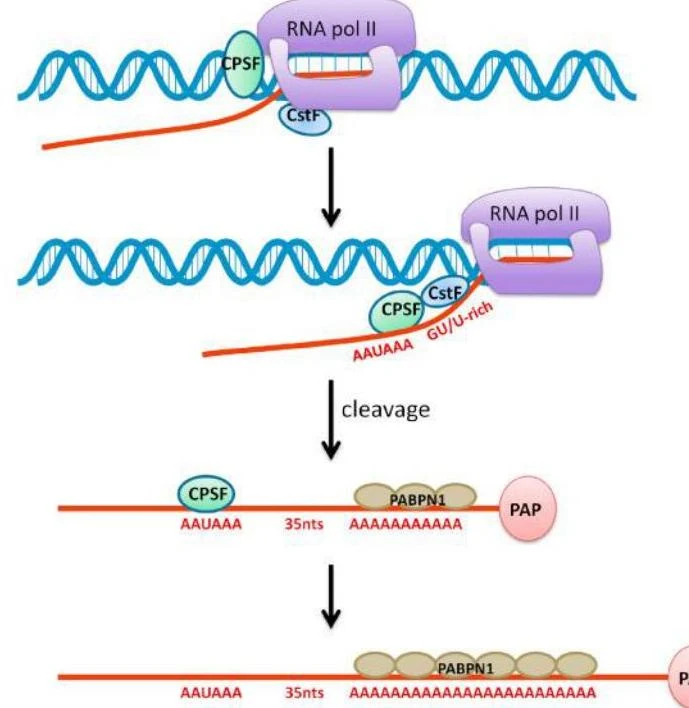
RNA Polymerase II utilizes a signal-dependent mechanism. It recognizes a poly A signal sequence (AAUAAA) in the RNA. This signal is recognized by the cleavage and polyadenylation specificity factor (CPSF), which leads to the cleavage of the transcript. To ensure the polymerase is actually released, an exonuclease called Xrn2 grabs the remaining RNA attached to the polymerase and "chews" it up, effectively knocking the polymerase off the DNA template.
This diagram illustrates the process of polyadenylation, where RNA polymerase II transcribes RNA, and cleavage factors like CPSF and CstF bind to specific sequences on the RNA. Following cleavage, a poly-A tail is added to the 3' end of the RNA by PAP, and PABPN1 binds to this tail.
RNA Polymerase I termination is managed by the TTF-1 protein, which binds to a specific terminator sequence (the Sal Box) on the DNA, stalling the polymerase until it eventually falls off.
RNA Polymerase III employs a mechanism similar to intrinsic termination in bacteria. It does not require blocking proteins or exonucleases; instead, it recognizes a poly U sequence in the newly synthesized RNA. This sequence creates a weak association between the RNA and the DNA template, causing the RNAP III to spontaneously disengage.
Keep reading for free.
Create an account to finish this reading and make it part of your study routine.