An exploration of ethics, morality, and philosophical frameworks in construction management, including the impact of corruption and bribery, and the role of codes of conduct.
In the high-stakes world of construction management, the ability to deliver complex infrastructure on time and within budget is often viewed as the ultimate measure of success. However, there is a deeper, more fundamental metric that determines the long-term viability of the industry: the moral integrity of its practitioners. Ethics and corruption, including the pervasive issue of bribery, serve as a profound moral test of an individual's personal beliefs and their professional integrity. For a construction professional, navigating this landscape requires more than just technical skill; it requires a robust understanding of the philosophical and professional frameworks that govern human conduct.
Defining the Moral Landscape: Ethics and Morality
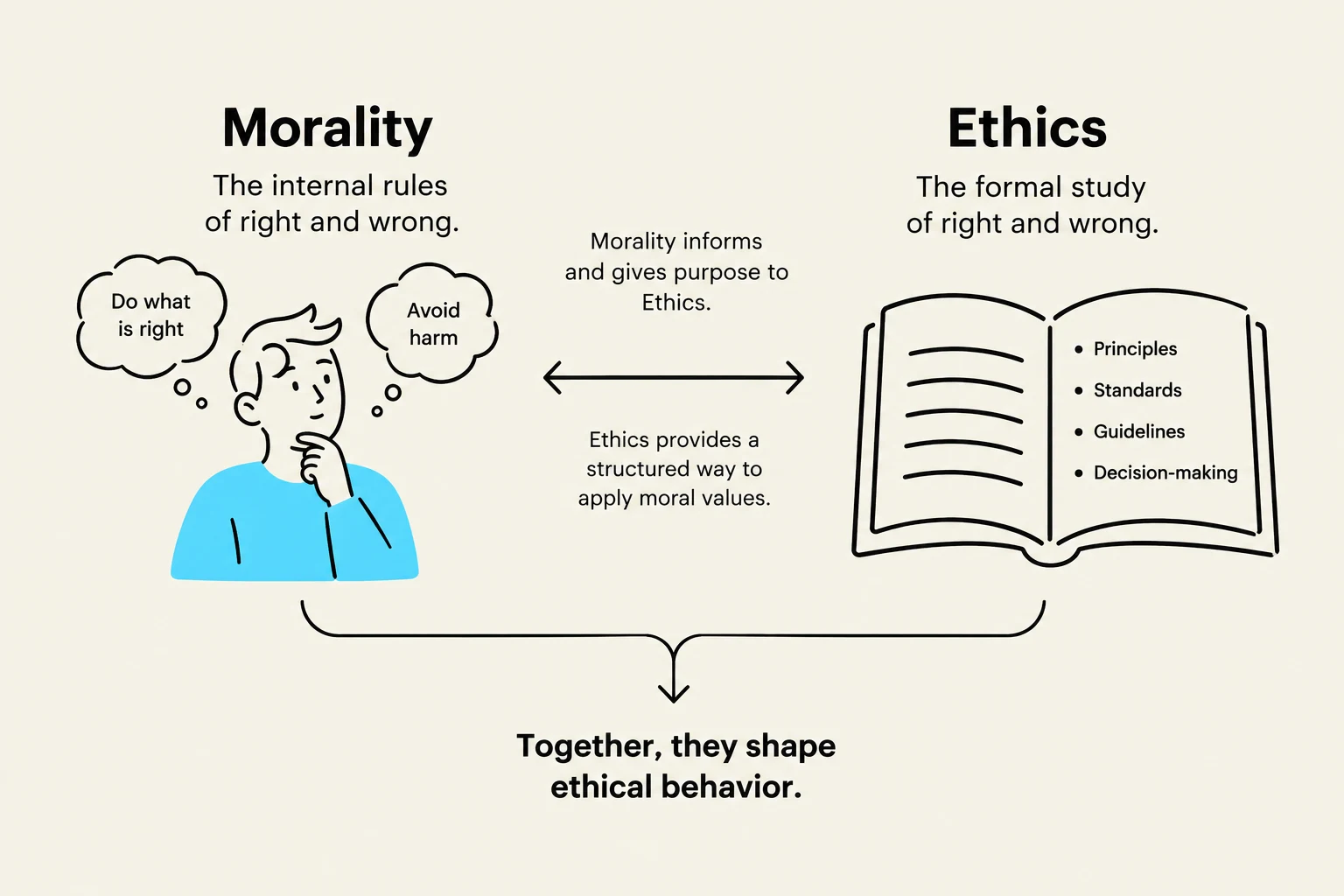
To understand professional conduct, we must first distinguish between ethics and morality. While often used interchangeably, they represent different layers of human behavior. Morality refers to the specific principles, rules, or systems of conduct that define what is considered right or wrong within a particular context. Ethics, conversely, is often viewed as the "science" of these morals—the formal study of the principles of human duty and the rules of conduct.
In the construction industry, these concepts are not merely academic. They manifest in the "ethos" or the characteristic spirit of the professional community. When we speak of the industry's standards, we are discussing the collective adherence to honesty, justice, fairness, and trust.
This diagram illustrates the relationship between morality and ethics, showing how morality informs ethics and how ethics provides a structured way to apply moral values, ultimately shaping ethical behavior.
The Pillars of Professionalism
Professionalism in construction is built upon a foundation of specific ethical tenets. These are not optional "soft skills" but are essential requirements for protecting the public and maintaining the dignity of the profession.
Core Professional Values
Integrity: The cornerstone of all professional conduct. It involves being honest and having strong moral principles, specifically avoiding dishonesty, corruption, or bribery.
Objectivity: The ability to deal with project issues without bias. This means reviewing facts impartially and making informed decisions rather than "taking sides".
Professional Competence: Ensuring you possess the necessary skills and knowledge to perform your role. Using unqualified personnel—such as employing a professional technician in a role requiring a registered engineer—is a severe ethical breach.
Due Care: This involves "doing the right thing at the right time for the right reasons". It is the diligent application of one's skills to ensure safety and quality.
Confidentiality: Protecting sensitive information, particularly when its disclosure could impact an individual's professional status or employment.
Professional Behavior: Maintaining a high standard of conduct in all settings, from the construction site to formal business communications. This includes respecting fellow professionals and maintaining clear, formal documentation for all instructions.
Exam Tip: If a case study asks about a professional who ignores a structural flaw to save a client money, they are violating multiple tenets: Integrity (dishonesty), Due Care (failing to act at the right time), and Professional Competence (failing to uphold safety standards).
Philosophical Frameworks for Decision Making
When faced with an ethical dilemma, professionals often rely on different philosophical lenses to determine the "correct" course of action. These frameworks help us understand why we feel certain actions are right or wrong.
Deontology vs. Consequentialism
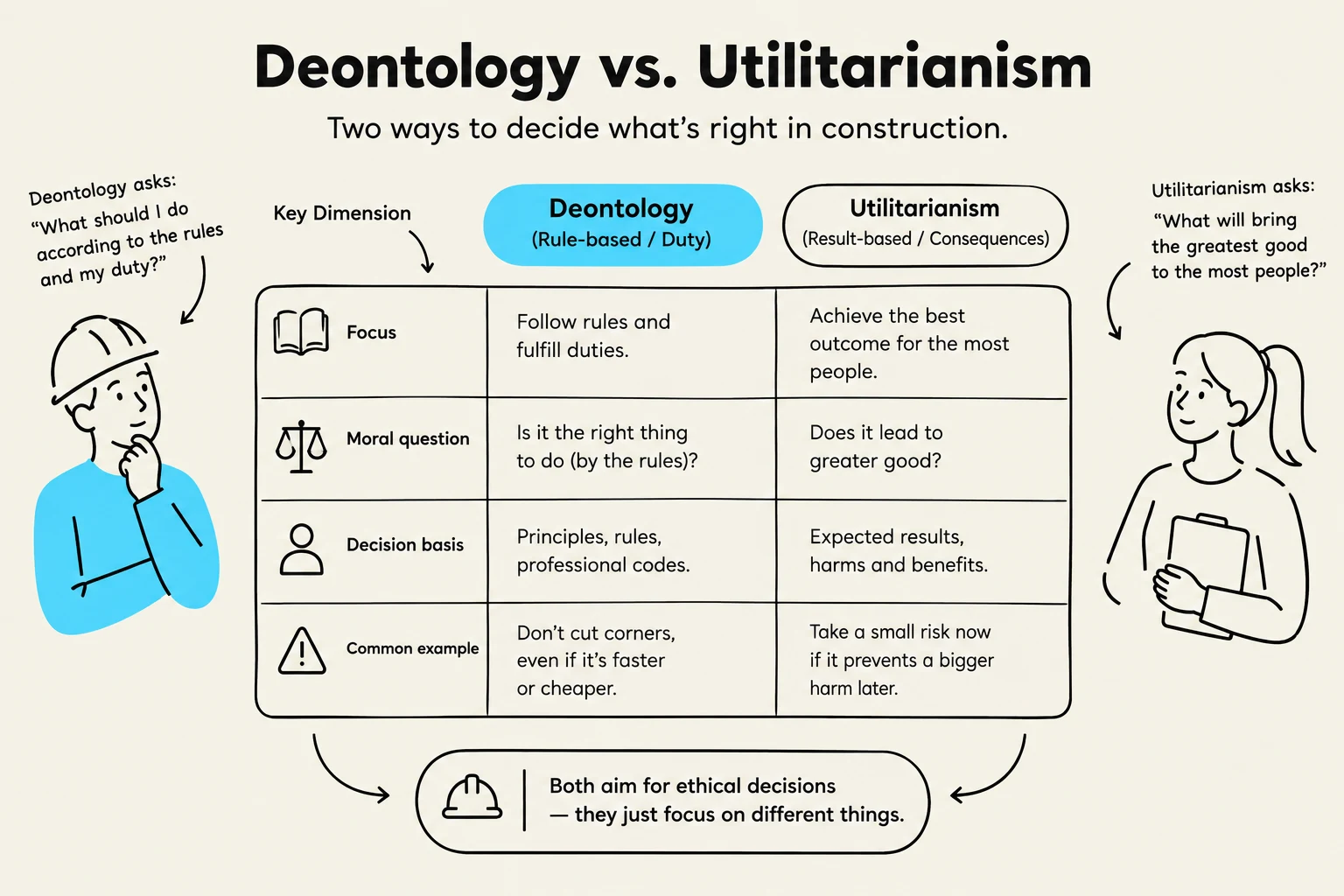
Deontology (derived from the Greek word for "duty") suggests that an action is right if it conforms to a proper moral rule, regardless of the outcome. For a deontologist, lying is wrong because it violates a rule, even if that lie might produce a "good" result.
Consequentialism, specifically Utilitarianism, takes the opposite approach. It argues that the rightness or wrongness of an action is determined solely by its consequences. A utilitarian seeks the "greatest good for the greatest number," meaning the end can justify the means.
The African Context: Ubuntu
In many regions, particularly in Africa, ethical behavior is informed by the philosophy of Ubuntu. This philosophy emphasizes humaneness, compassion, empathy, and the idea of a community of shared values. Ubuntu views the professional not as an isolated actor, but as part of an extended "family" or community where honesty and humility are essential for social harmony.
This diagram compares Deontology and Utilitarianism, two ethical frameworks, by examining their focus, moral questions, decision basis, and common examples.
The Shadow of Corruption: Bribery and Misconduct
Despite these frameworks, the construction industry is frequently plagued by corruption. Corruption often stems from fierce competition between contractors and professionals, which can trigger misconduct in relationships with clients and the supply chain.
Understanding Bribery
Bribery is one of the most common forms of corruption. It is important to note that a bribe (or gratification) is not limited to cash. It can include:
Avoiding a loss or disadvantage.
Releasing an obligation or liability.
Providing any unauthorized favor or advantage.
Crucially, the bribe does not even need to be exchanged; the mere offer or agreement to provide a bribe is sufficient to constitute the act.
The Impact of Unethical Behavior
The consequences of corruption are devastating and far-reaching:
Economic and Democratic Impact: Bribery weakens democracy, slows economic growth, and creates barriers for honest businesses.
Project Performance: It leads to poor workmanship, use of substandard materials, and high maintenance costs.
Public Safety: Unethical oversight can lead to catastrophic failures, such as the George Building collapse, where professional roles were not properly fulfilled.
Industry Reputation: It erodes trust, making it difficult for the industry to attract top talent and causing clients to lose confidence in professional advice.
This diagram illustrates the ripple effect of corruption, starting with an individual act like bribery, leading to short-term gains for a few, systemic problems in sectors like construction, and ultimately a wider negative impact on society, characterized by less trust, fewer opportunities, and poorer communities.
The Role of the Code of Conduct
To combat these issues, professional bodies like the SACPCMP implement a Code of Conduct. The primary objective of such a code is to uphold a standard of behavior that goes beyond what is strictly required by law.
A robust code of conduct serves as a catalyst for a company's reputation and provides a central guide for individuals to judge their own actions. By adhering to these standards, the industry can protect the public interest, ensure health and safety, and maintain the dignity and standing of the profession.
While individual greed remains a significant challenge to following these codes, the collective commitment to ethics is the only way to ensure the construction industry remains a pillar of safe and reliable societal development.
Keep reading for free.
Create an account to finish this reading and make it part of your study routine.