


Designing an effective aerobic exercise program is a cornerstone of improving cardiorespiratory fitness. However, "fitness" is not a one-size-fits-all concept; a healthy lifestyle looks different for everyone depending on their unique physiological profile. To optimize health outcomes, clinicians and fitness professionals must accurately estimate exercise intensity, volume, and duration to create a personalized prescription.
Measuring Intensity: Absolute vs. Relative
When prescribing exercise, we must distinguish between absolute and relative intensity. Absolute intensity refers to the actual energy demand of the activity, regardless of the person performing it. This can be measured using:
- Metabolic Equivalents (METs): A unit used to describe the energy cost of physical activities.
- Absolute Oxygen Uptake (): Measured in or .
- Caloric Expenditure: Measured in .
While absolute measures are useful for categorizing activities, they fail to account for individual differences such as sex, body weight, and baseline fitness levels. For example, running at 6 mph is much more intense for a sedentary individual than for an elite athlete. Therefore, relative measures—which scale the intensity to the individual's capacity—are generally more appropriate for personalized prescription.
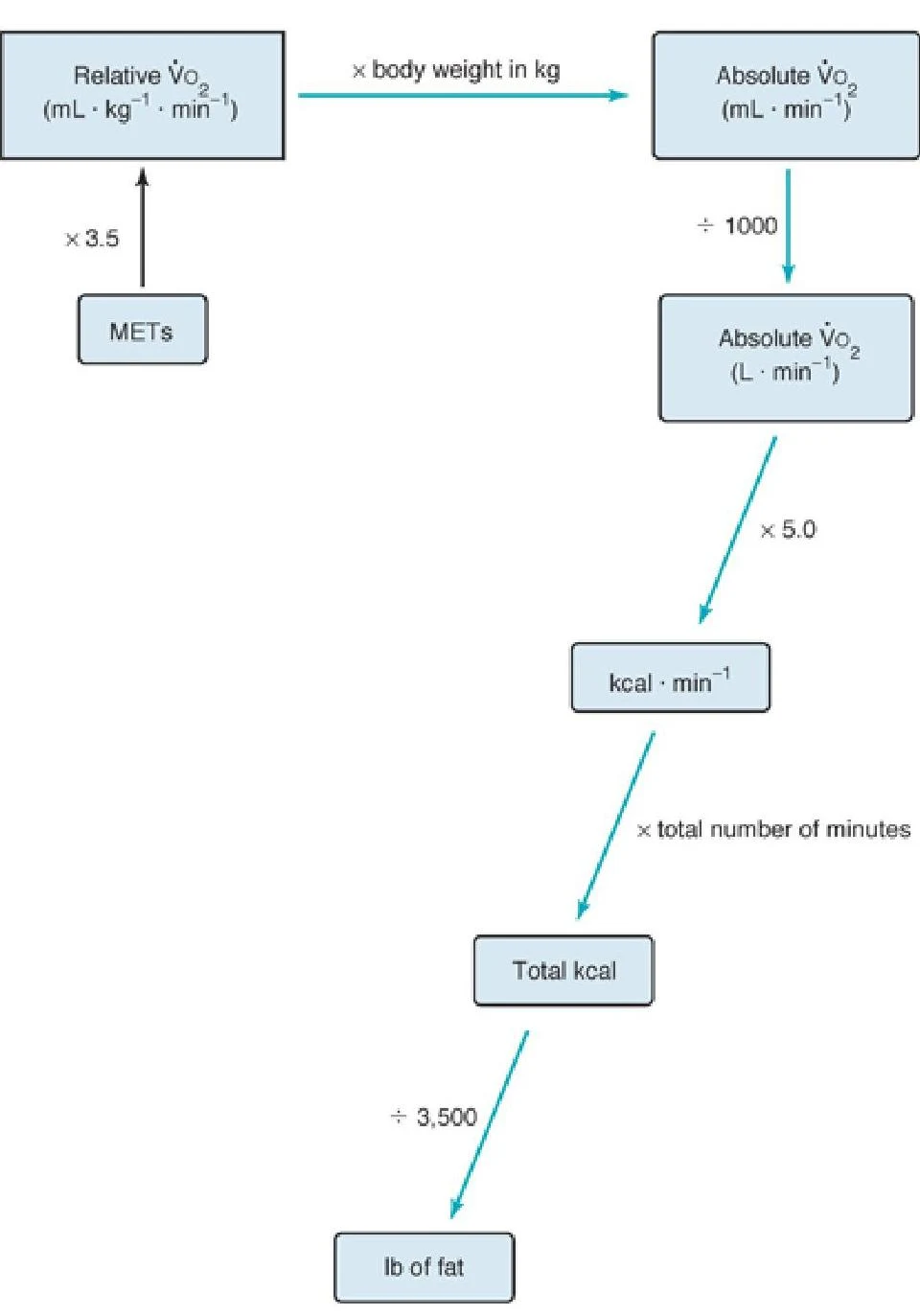
Key Concept: The MET Standard At rest, is defined as the oxygen cost of .
Estimating Caloric Expenditure
A fundamental relationship in metabolic physiology is that approximately are burned for every of consumed. By understanding this ratio, we can estimate how much energy an individual uses during a specific activity.
To calculate gross energy expenditure (the total calories burned during an activity), we must account for the oxygen consumed. This involves calculating the based on the specific mode of exercise. For instance, walking and running intensities depend on both speed and the grade (incline) of the treadmill.
Keep reading for free.
Create an account to finish this reading and make it part of your study routine.
Continue reading freeAlready have an account? Log in
Updated