


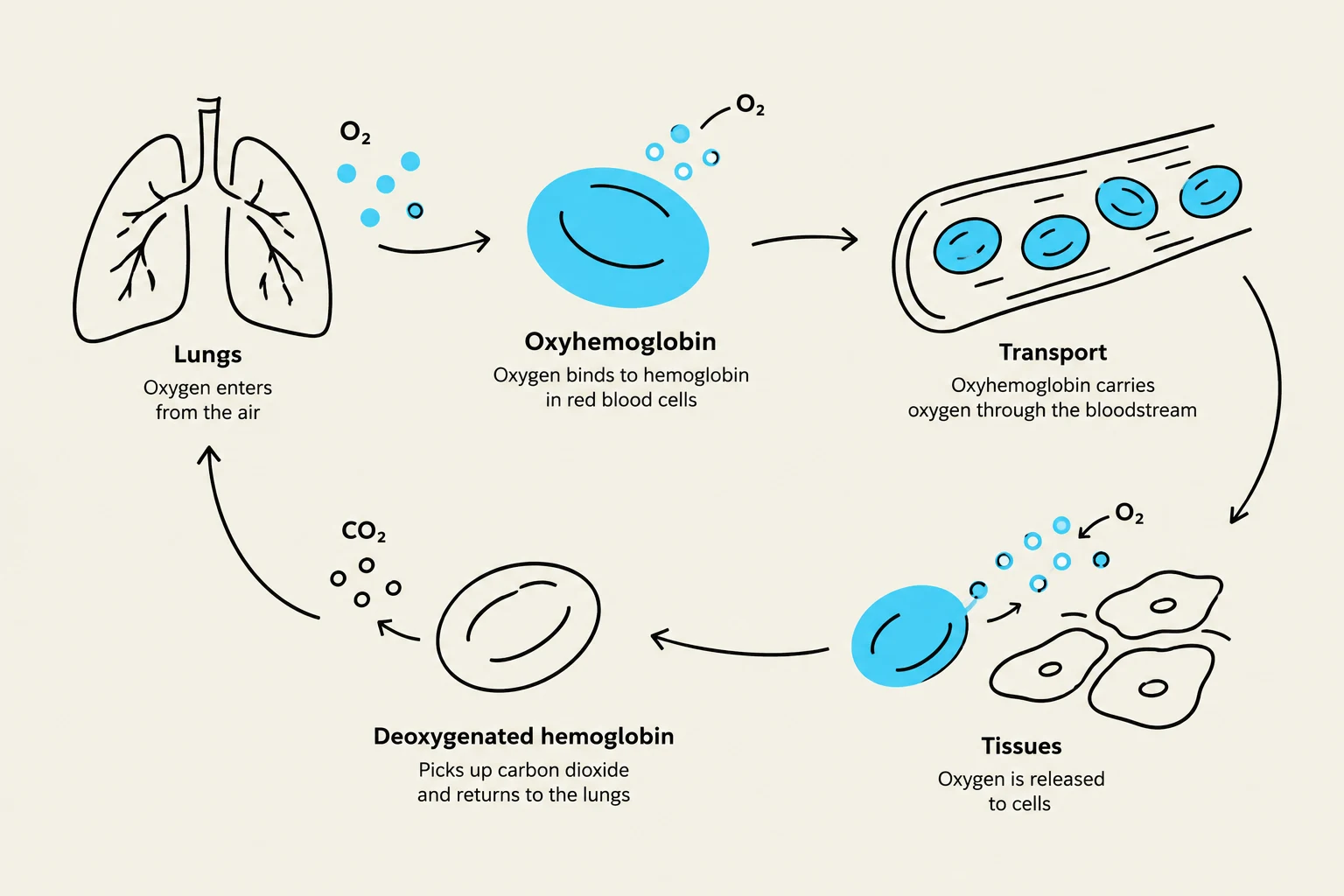
The primary mission of the circulatory system is to ensure that every cell in the body receives the nutrients it needs and disposes of the waste it produces. Among the various components of blood, the erythrocyte (red blood cell) is the specialized workhorse dedicated to gas exchange. By utilizing a highly optimized structure and a sophisticated protein called hemoglobin, erythrocytes facilitate the transport of oxygen () to tissues and the removal of carbon dioxide () from them.
The Optimized Structure of the Erythrocyte
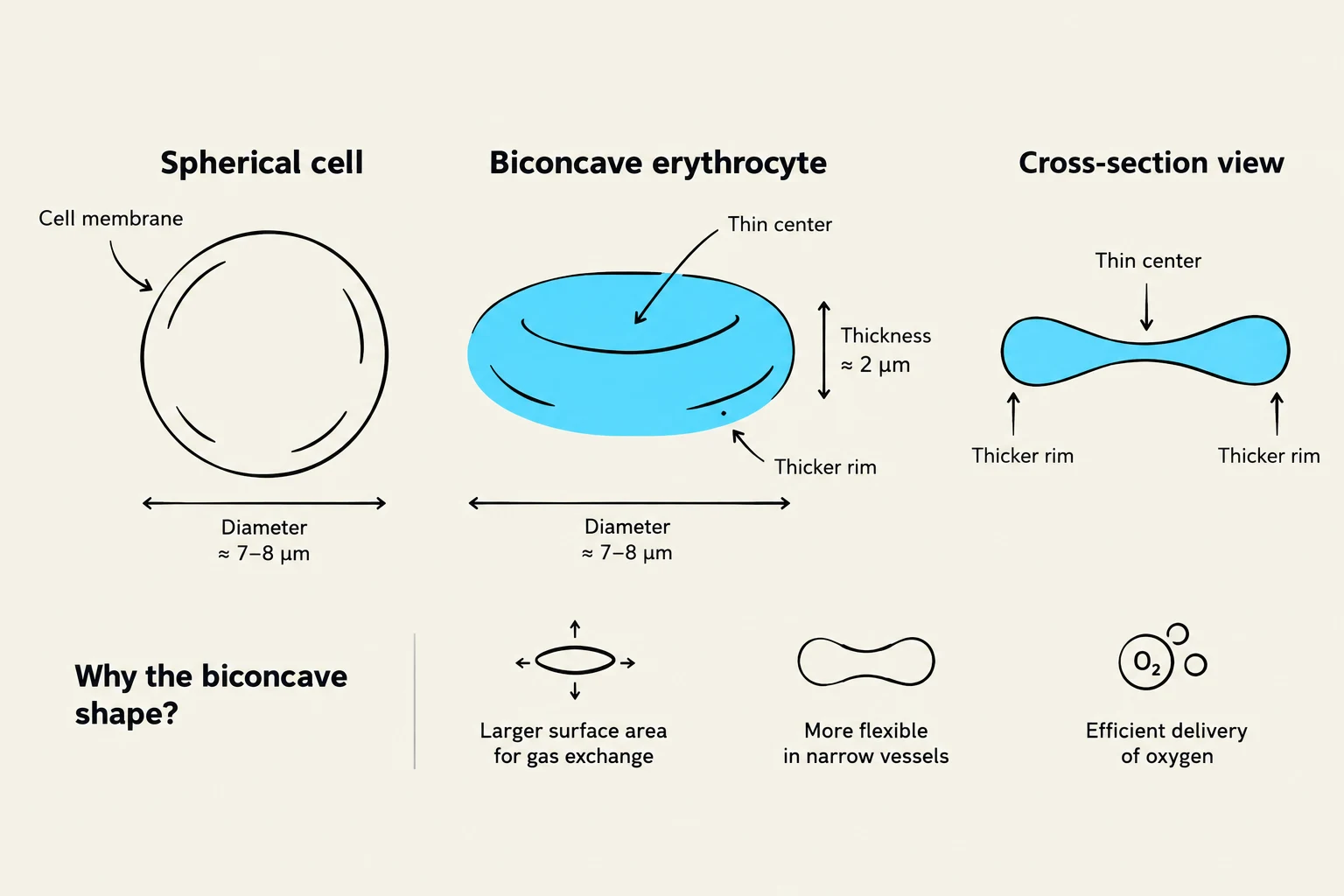
To maximize efficiency in gas exchange, the erythrocyte has undergone significant structural modifications during its development. Unlike most cells in the human body, a mature erythrocyte is anucleated, meaning it lacks a nucleus, and it also lacks most other organelles.
This loss of internal structures is not a deficiency, but a vital adaptation. By removing the nucleus and organelles, the cell creates maximum internal volume to be packed with hemoglobin. Furthermore, erythrocytes possess a unique biconcave disc shape. This geometry provides a much larger surface area-to-volume ratio compared to a sphere, which allows gases to diffuse into and out of the cell much more rapidly.
Hemoglobin: The Molecular Engine of Gas Transport
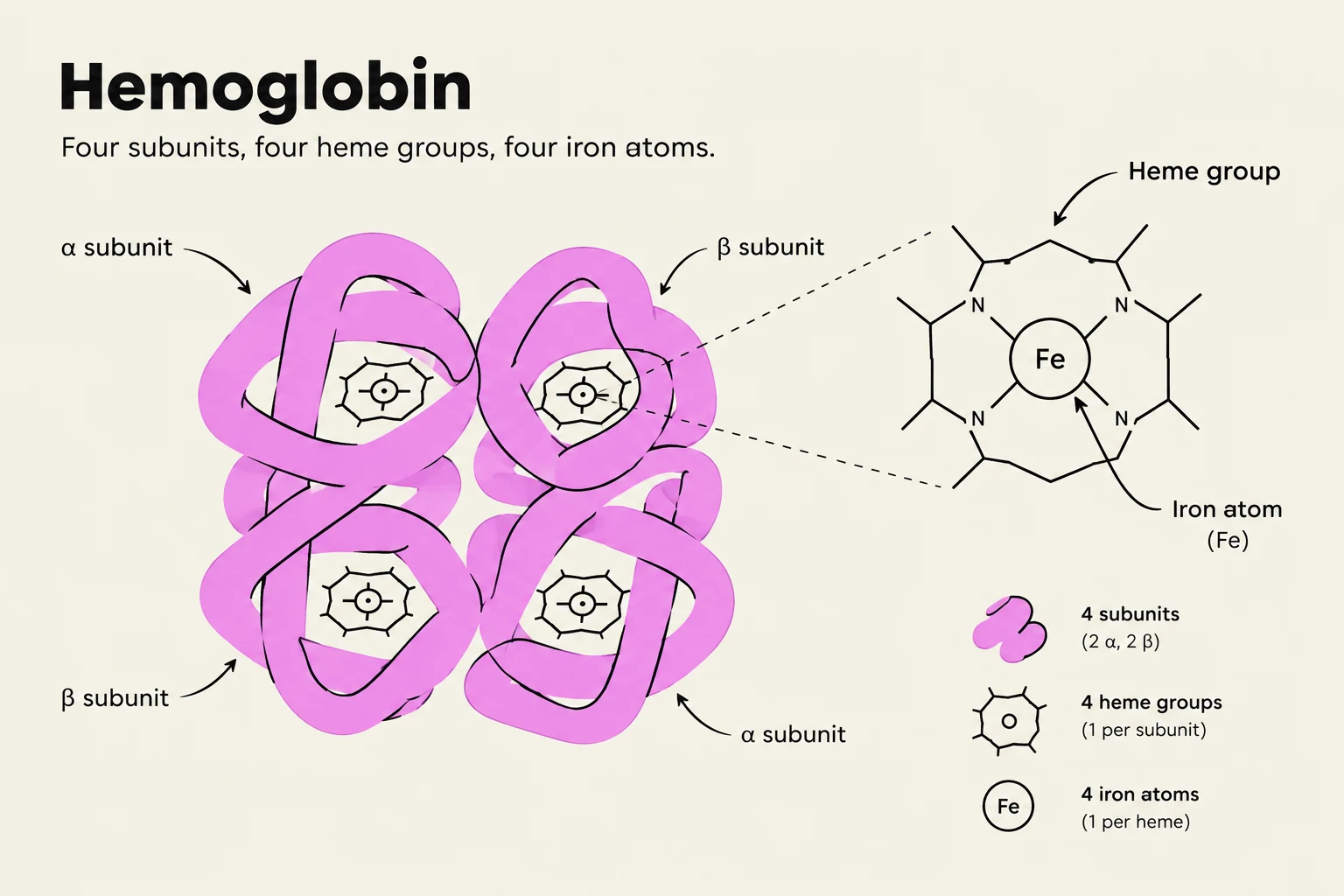
The functional core of the erythrocyte is hemoglobin (Hb), a complex protein that acts as the primary oxygen-binding molecule. Hemoglobin is composed of four subunits: two alpha chains and two beta chains. Each of these four subunits is bound to a specialized structure known as a heme group.
Keep reading for free.
Create an account to finish this reading and make it part of your study routine.
Continue reading freeAlready have an account? Log in
Updated