


In the study of genetics, the goal of cell division is often to ensure the precise transmission of hereditary information. While mitosis focuses on creating identical copies of somatic cells for growth and repair, meiosis is a specialized form of cell division designed to produce gametes—sperm and egg cells. Under normal circumstances, meiosis ensures that each gamete receives exactly half of the parent's genetic material, maintaining the stability of the species' genome across generations. However, the very processes that create genetic diversity can sometimes go wrong, leading to significant chromosomal abnormalities.
The Foundation: Normal Meiosis and Random Assortment
To understand errors, we must first understand the "correct" process. Meiosis involves two successive nuclear divisions: Meiosis I and Meiosis II.
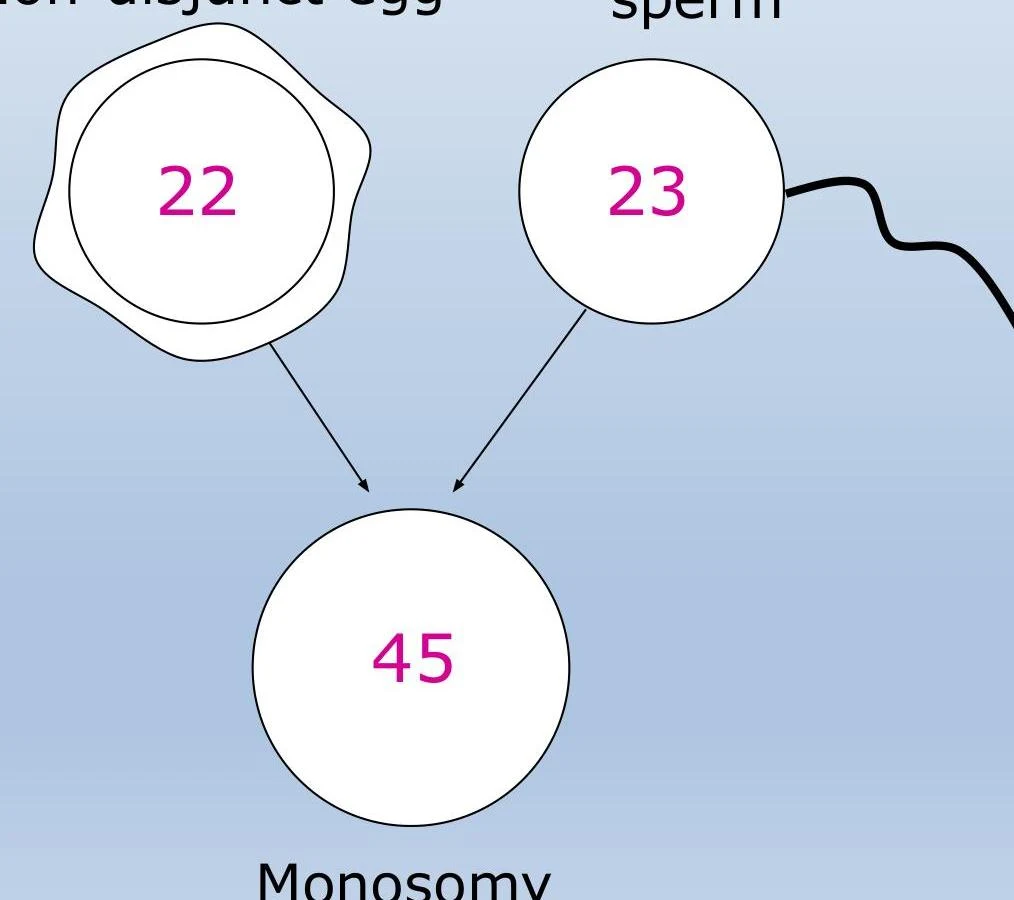
In a normal human cell, there are 46 chromosomes (diploid, ). For reproduction to work, these must be reduced to a haploid number () of 22 or 23 chromosomes per gamete. This reduction is achieved through several key mechanisms:
- Crossing-over: During Prophase I, homologous chromosomes align and exchange segments of DNA, creating recombinant chromosomes that ensure no two gametes are identical.
- Random Assortment: During Metaphase I, homologous pairs align at the center of the cell. The orientation of these pairs is random, meaning the specific combination of maternal and paternal chromosomes that end up in a daughter cell is a matter of chance.
- Segregation: During Anaphase I, homologous pairs are pulled to opposite poles, and during Anaphase II, sister chromatids are separated.
Exam Tip: Remember that "diploid" means two sets of chromosomes (found in somatic cells), while "haploid" means one set (found in gametes).


Keep reading for free.
Create an account to finish this reading and make it part of your study routine.
Continue reading freeAlready have an account? Log in
Updated