


Understanding neurological disturbances requires a clear distinction between a single event and a chronic condition. A seizure is a sudden, temporary disturbance in normal brain function caused by abnormal electrical signals within the brain. When a patient experiences two or more unprovoked seizures, the condition is diagnosed as epilepsy, a chronic neurological disorder. Some patients may experience an aura—a sensory warning sign—immediately preceding the seizure activity.
Pathophysiology and Clinical Manifestations
The underlying pathophysiology of epilepsy involves a disruption in the brain's electrical equilibrium. This electrical "storm" can manifest in various ways depending on which part of the brain is involved. Clinical manifestations vary widely, ranging from subtle staring spells to violent physical convulsions.
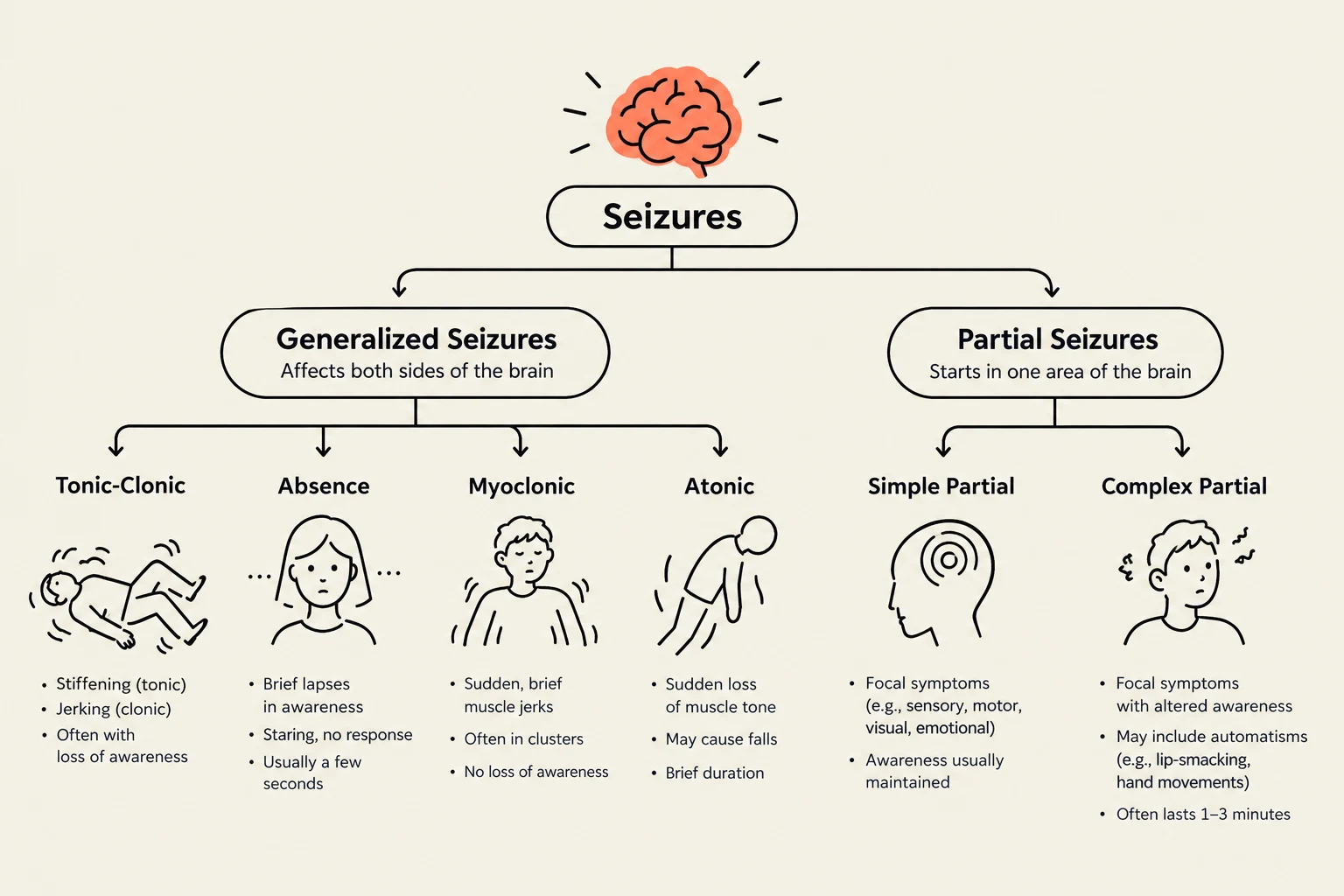
Seizures are primarily classified into two categories: generalized and partial.
Generalized Seizures
Generalized seizures involve both hemispheres of the brain simultaneously. Common types include:
- Tonic-Clonic (Grand Mal): Characterized by a loss of consciousness, body stiffening (tonic phase), and rhythmic shaking (clonic phase).
- Absence (Petit Mal): Characterized by sudden staring and a brief loss of consciousness, often seen in children.
- Myoclonic: Sudden, brief jerks or twitches of the arms or legs.
- Atonic (Akinetic): Also known as "drop attacks," these involve a sudden loss of muscle tone, causing the patient to collapse.
Partial Seizures
Partial seizures originate in a specific area of the brain and are divided into:
- Simple Partial: The patient remains conscious and aware during the event.
- Complex Partial: The patient may experience altered consciousness or impaired awareness.
Exam Tip: If a question describes a patient "staring into space" without falling or shaking, think Absence Seizure. If they "suddenly drop to the floor" without shaking, think Atonic Seizure.
Keep reading for free.
Create an account to finish this reading and make it part of your study routine.
Continue reading freeAlready have an account? Log in
Updated