Explore the fundamental concepts of epigenetics, including histone modification, DNA methylation, and the mechanisms of intergenerational and transgenerational inheritance. Understand how environmental factors can influence gene expression without altering the DNA sequence.
While the DNA sequence provides the fundamental blueprint for life, it does not act alone. The way genes are expressed—whether they are "turned on" or "turned off"—is governed by a complex layer of control known as epigenetics. Epigenetic regulation involves heritable changes in gene expression that do not alter the underlying DNA sequence. Instead, these changes function by modifying the physical structure of chromatin or the chemical state of the DNA itself, effectively dictating the accessibility of the genetic code to the cellular machinery responsible for transcription.
Histone Modification: Controlling DNA Accessibility
DNA does not float freely within the nucleus; it is tightly wrapped around proteins called histones. The way these histones are modified determines how tightly or loosely the DNA is packed, which directly regulates gene transcription.
Acetylation and Deacetylation
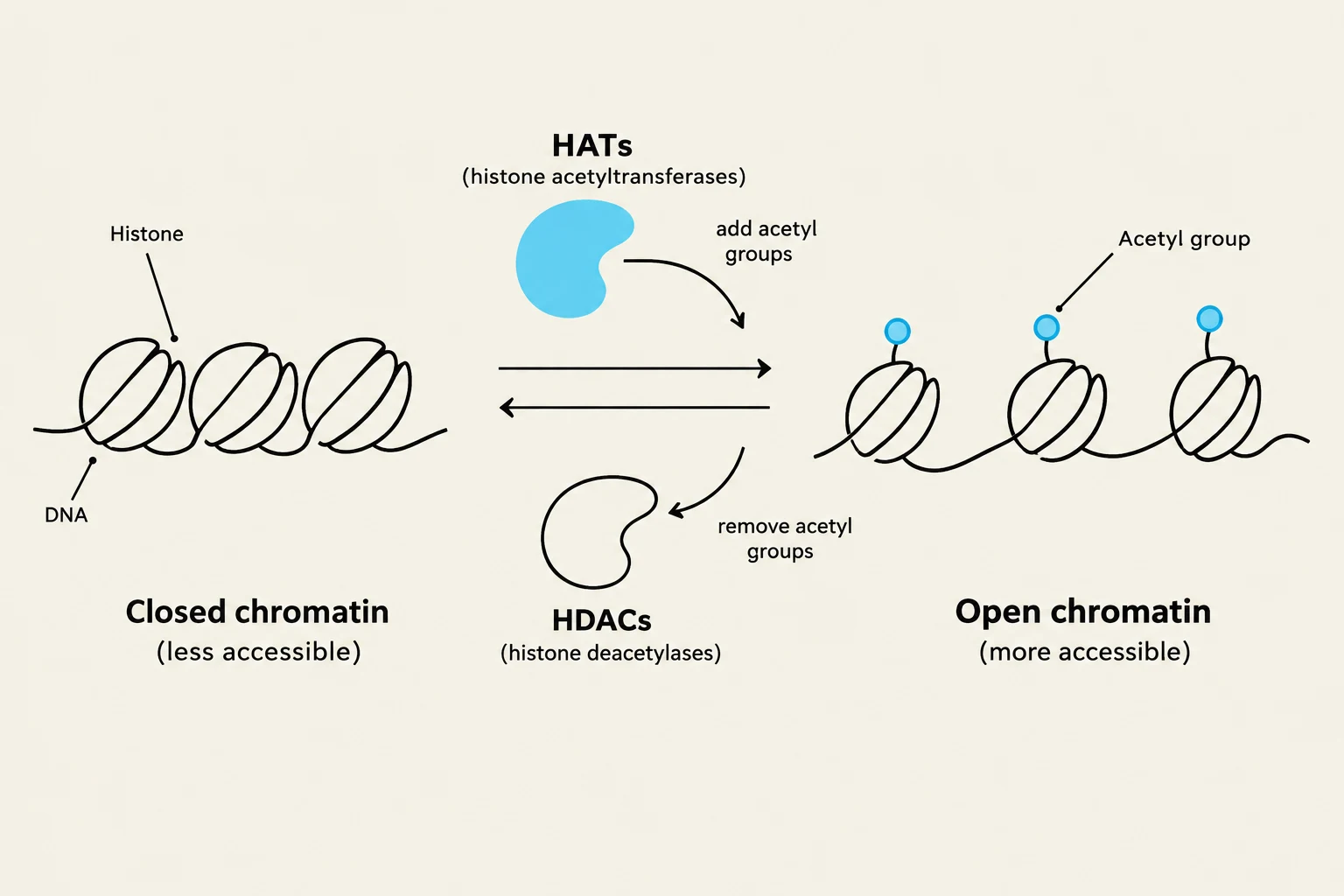
One of the most common ways to regulate chromatin is through acetylation. This process involves the addition of acetyl groups to lysine residues on histone tails. This modification is performed by enzymes known as Histone acetyltransferases (HATs), which act as "writers". Acetylation neutralizes the positive charge of the histones, weakening their attraction to the negatively charged DNA. This results in "open" chromatin, making the DNA more accessible for gene expression.
Conversely, the process can be reversed by Histone deacetylases (HDACs), which act as "erasers" by removing these acetyl groups, leading to a more condensed, repressed chromatin state.
This diagram illustrates the process of chromatin remodeling, where HATs add acetyl groups to histones, leading to open chromatin that is more accessible for transcription, and HDACs remove these groups, resulting in closed chromatin that is less accessible.
Methylation
Histone methylation is a more nuanced regulatory mechanism. It involves the addition of methyl groups to lysine or arginine residues by Histone methyltransferases (HMTs) (writers). Unlike acetylation, which almost always promotes expression, the effect of methylation depends entirely on the specific location and the number of methyl groups added; it can either activate or repress a gene. This process is reversible through the action of Histone demethylases (HDMs) (erasers).
DNA Methylation: The Chemical Mark on the Code
While histone modification targets the "spools" the DNA is wrapped around, DNA methylation targets the DNA molecule itself. This involves the addition of methyl groups directly to the DNA, a process critical for establishing and maintaining gene expression patterns during development.
The Writers and Maintainers
The regulation of DNA methylation relies on specific enzymes:
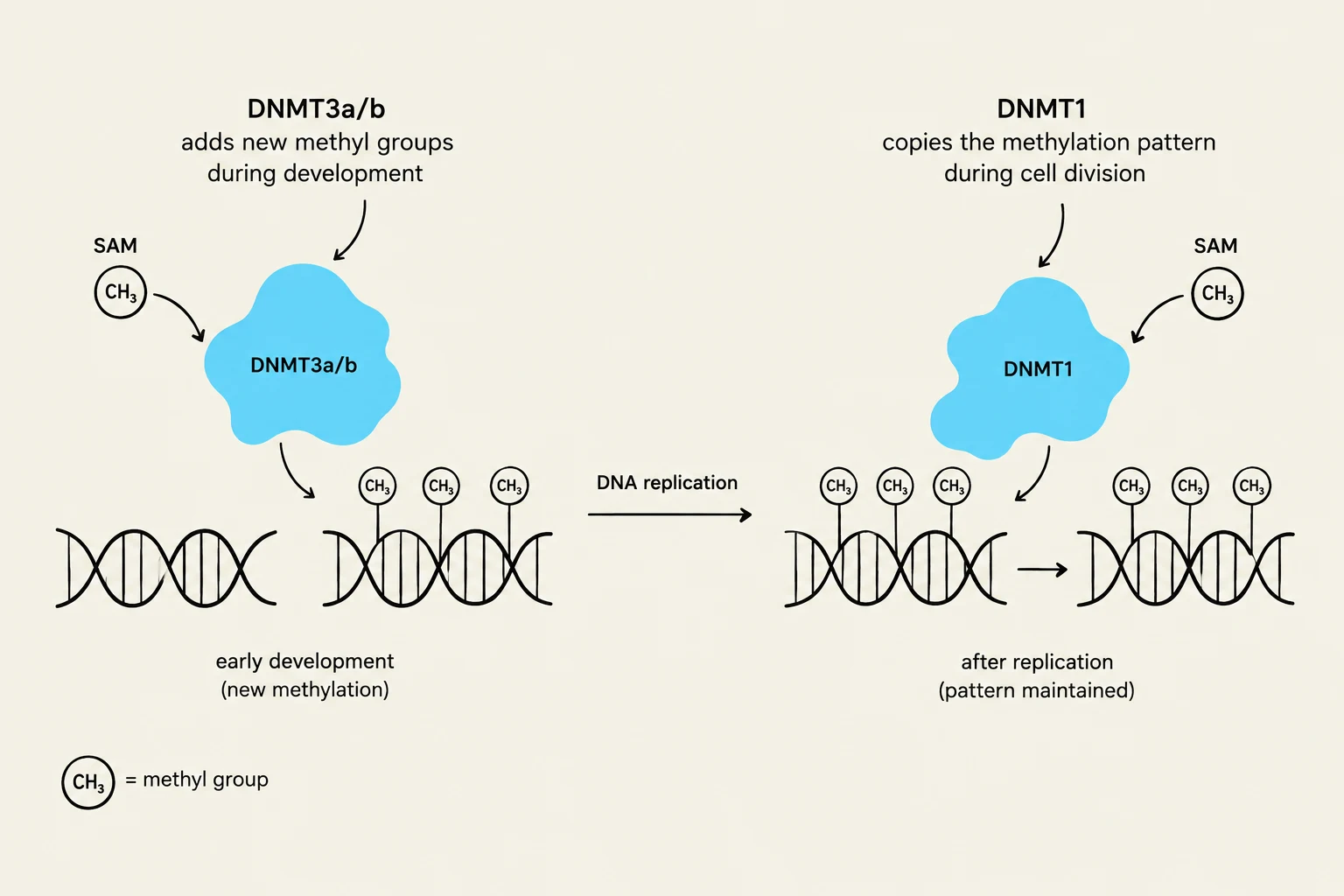
DNMT3a/b: These are responsible for establishing new DNA methylation patterns during embryonic development.
DNMT1: This enzyme is the "maintenance" methyltransferase. It ensures that existing methylation patterns are copied to new strands during cell division, allowing epigenetic information to persist through multiple cell divisions in proliferating cells.
Environmental Influence and the Agouti Gene
Epigenetic marks are sensitive to external factors, including nutrition. A classic example is the Agouti gene in mice. The expression of this gene is influenced by the methylation of an IAP promoter located upstream of the transcription start site. Maternal diet can induce phenotypic changes by altering this methylation status, demonstrating how environmental inputs can "program" a phenotype without changing the DNA sequence.
Exam Tip: Remember the distinction between the enzymes. DNMT3a/b establishes patterns (de novo), while DNMT1 maintains them during mitosis.
This diagram illustrates DNA methylation. DNMT3a/b adds new methyl groups during development, while DNMT1 copies the methylation pattern during cell division to maintain it after replication.
Inheritance Mechanisms: Intergenerational vs. Transgenerational
A central question in epigenetics is how these modifications are passed from one generation to the next. Scientists distinguish between two types of inheritance based on whether the offspring were directly exposed to the initial environmental stimulus.
Intergenerational Epigenetic Inheritance
Intergenerational effects occur when an environmental exposure (the F0 generation) directly affects the developing organism or its germ cells.
In the maternal line: If a pregnant female (F0) is exposed to a stimulus, the developing fetus (F1) and the germ cells within that fetus (which will become the F2 generation) are both directly exposed.
In the paternal line: An exposure to the father (F0) directly affects the sperm (germ cells) that will form the child (F1).
Transgenerational Epigenetic Inheritance
To prove true transgenerational inheritance, the epigenetic phenotype must persist in generations that were never directly exposed to the initial stimulus.
For a maternal line, this requires observing the effect in the F3 generation (since F0, F1, and F2 were all technically exposed while in utero or as germ cells).
For a paternal line, this requires observing the effect in the F2 generation.
Clinical Implications: The HPA Axis and Disease
Epigenetic changes can have profound impacts on health, particularly regarding the HPA (Hypothalamic-Pituitary-Adrenal) axis, which regulates the body's response to stress. For example, certain DNA methylation patterns can lead to "fearful" phenotypes characterized by heightened HPA responses to stress.
Furthermore, the concept of Developmental Programming suggests that insults during "critical windows" of development can lead to lasting structural or functional changes. This is often explained by the Thrifty Phenotype Hypothesis, where an organism adapts to a nutrient-scarce environment in utero, only to face metabolic disease when the postnatal environment provides an abundance of nutrients—a phenomenon known as Developmental Mismatch.
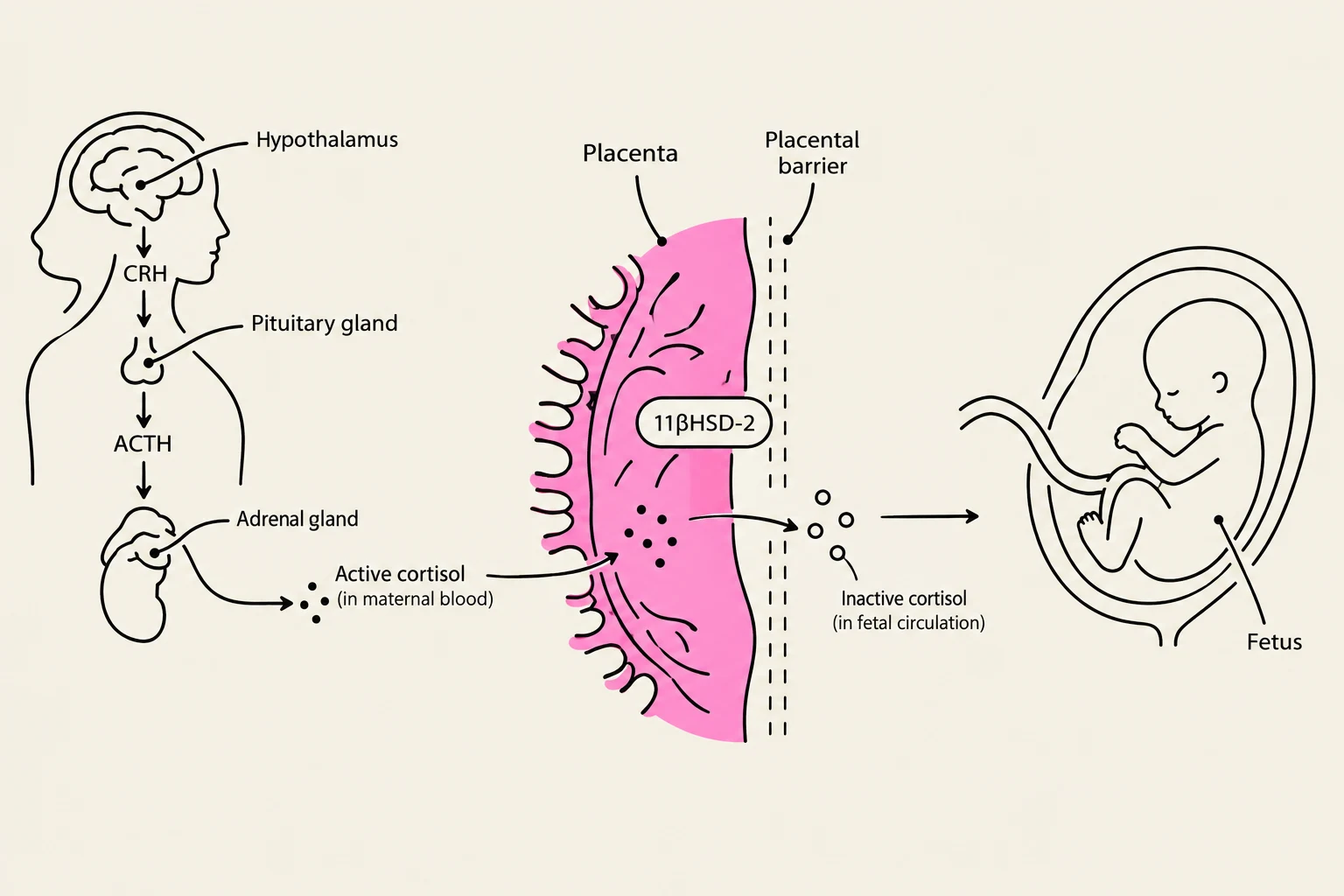
Diagram illustrating the maternal-fetal cortisol regulation pathway, showing the role of the placenta and 11βHSD-2 in converting active cortisol to inactive cortisol before it reaches the fetus.
Keep reading for free.
Create an account to finish this reading and make it part of your study routine.