This guide explores the principles of motor learning, distinguishing between learning and performance, and detailing strategies to optimize skill acquisition through practice schedules, feedback, and psychological foundations like goal setting and motivation.
In the pursuit of athletic excellence, the difference between a good athlete and a great one often lies in how effectively they acquire and refine new motor skills. Whether it is a basketball player perfecting a jump shot or a gymnast mastering a floor routine, the process of moving from conscious effort to fluid, automatic execution is a complex psychological and physiological journey. To optimize this journey, coaches and practitioners must understand the underlying principles of motor learning and apply strategic interventions to training.
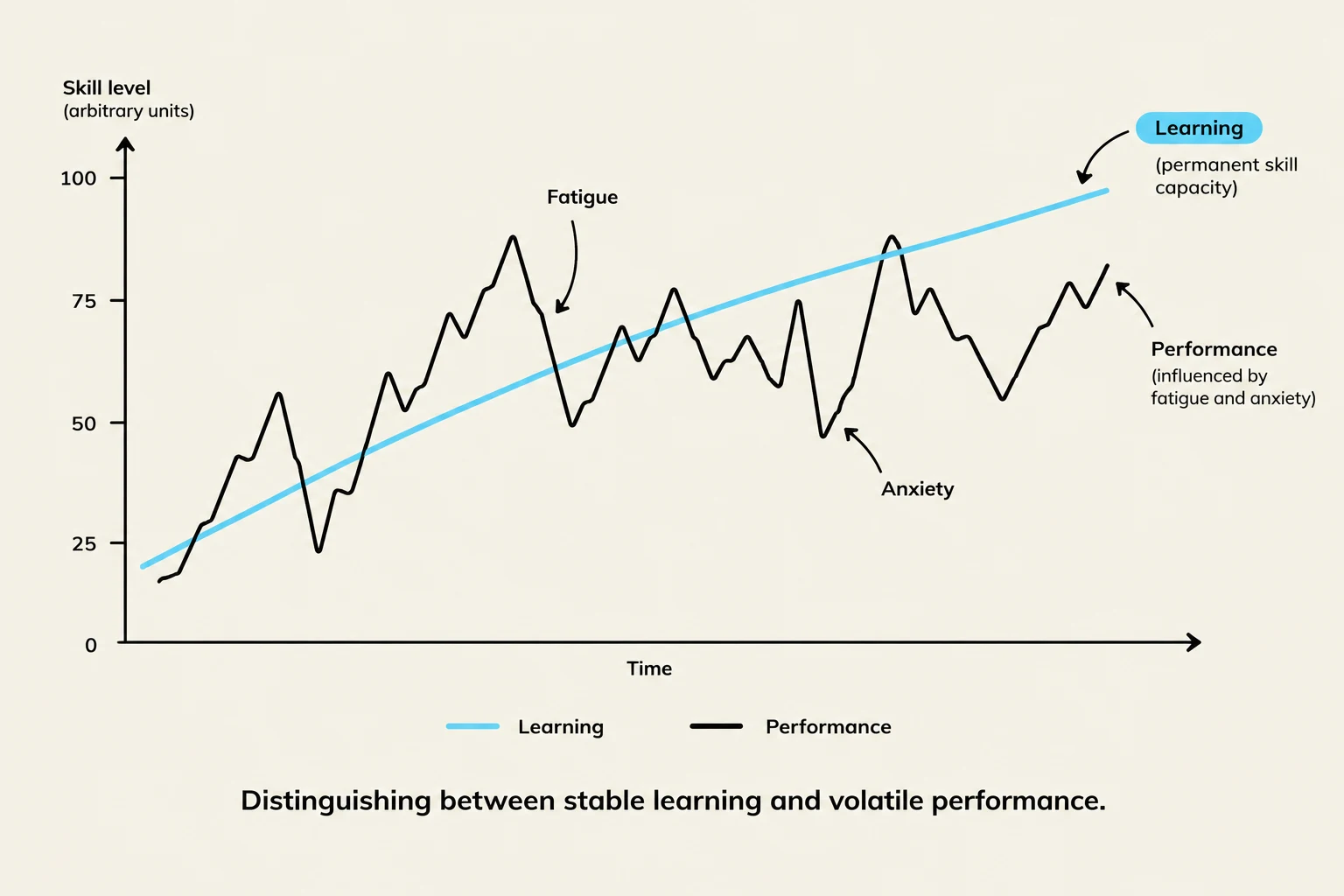
This graph illustrates the difference between stable learning, represented by a consistent upward trend, and volatile performance, which fluctuates over time due to factors like fatigue and anxiety.
Learning vs. Performance: A Critical Distinction
One of the most common mistakes in athletic assessment is assuming that how an athlete performs during a single practice session is a direct reflection of their true skill level. To design effective training, we must distinguish between learning and performance.
Learning refers to a relatively permanent change in the athlete's capacity to perform a motor skill. It is the "internalized" skill that remains even when the athlete is tired or under pressure.
Performance is the execution of a skill within a specific, current environment.
Performance is highly volatile and can be influenced by external and internal factors such as motivation, arousal, fatigue, or anxiety. For example, an athlete might perform a skill perfectly during a low-stress drill (high performance) but fail to execute it during a championship game (low performance), even though their actual skill level (learning) has not changed.
The Constraints of Skill Acquisition
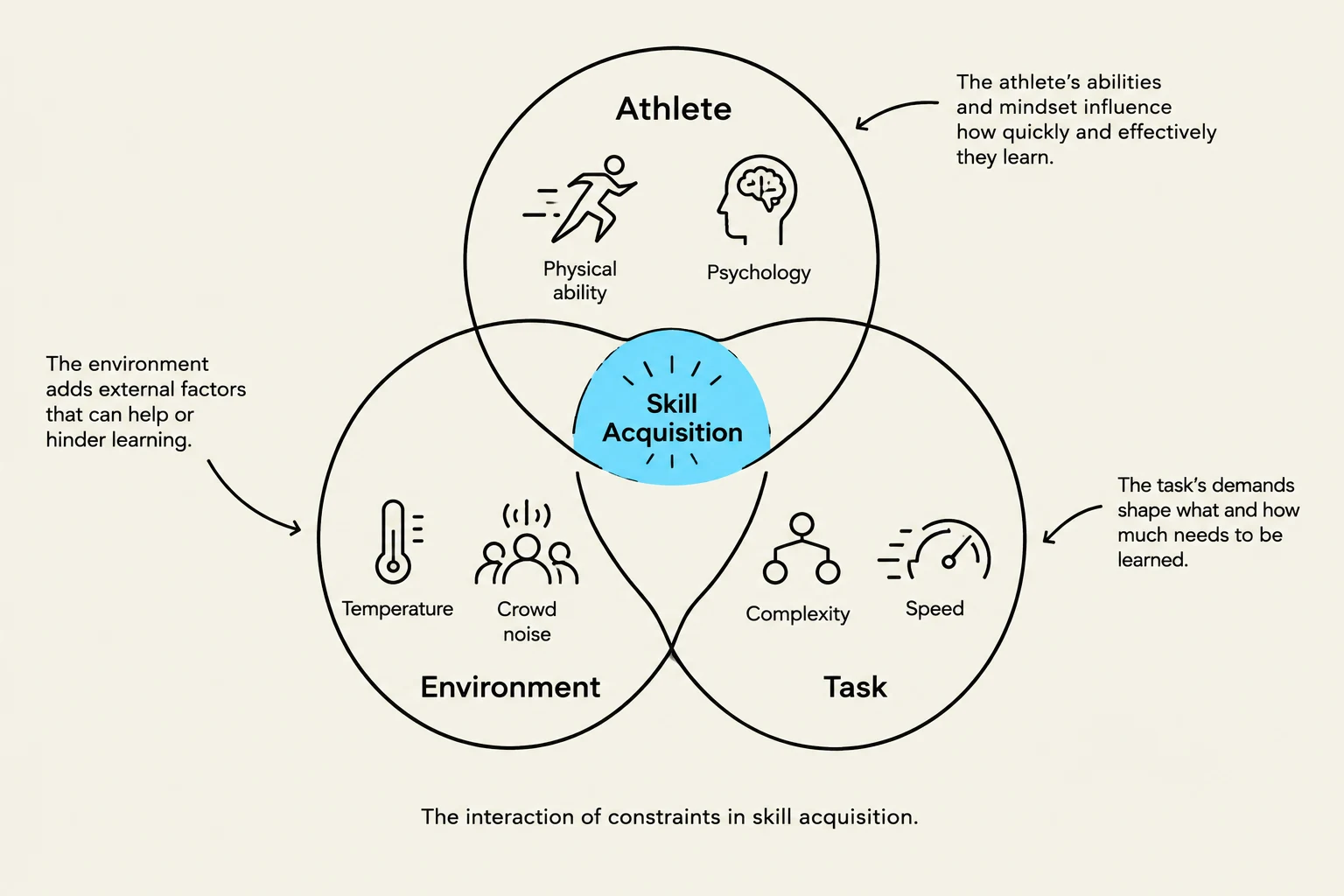
This diagram illustrates the key factors influencing skill acquisition, including athlete characteristics (physical ability, psychology), environmental conditions (temperature, crowd noise), and task demands (complexity, speed).
The process of acquiring a skill does not happen in a vacuum. Instead, it is shaped by a complex interplay of three primary constraints:
The Athlete: This includes the individual's physical capabilities, psychological state (such as self-efficacy and motivation), and their current level of skill.
The Task: The specific requirements of the movement, such as its complexity, the speed required, or the precision needed.
The Environment: The setting in which the skill is performed, ranging from the physical surroundings (temperature, surface) to the social context (crowd noise, competition level).
Exam Tip: When analyzing why an athlete is struggling with a new skill, always evaluate these three pillars. Is the task too complex for their current ability? Is the environment too distracting? Or is the athlete's psychological state hindering their focus?
Manipulating Practice Schedules
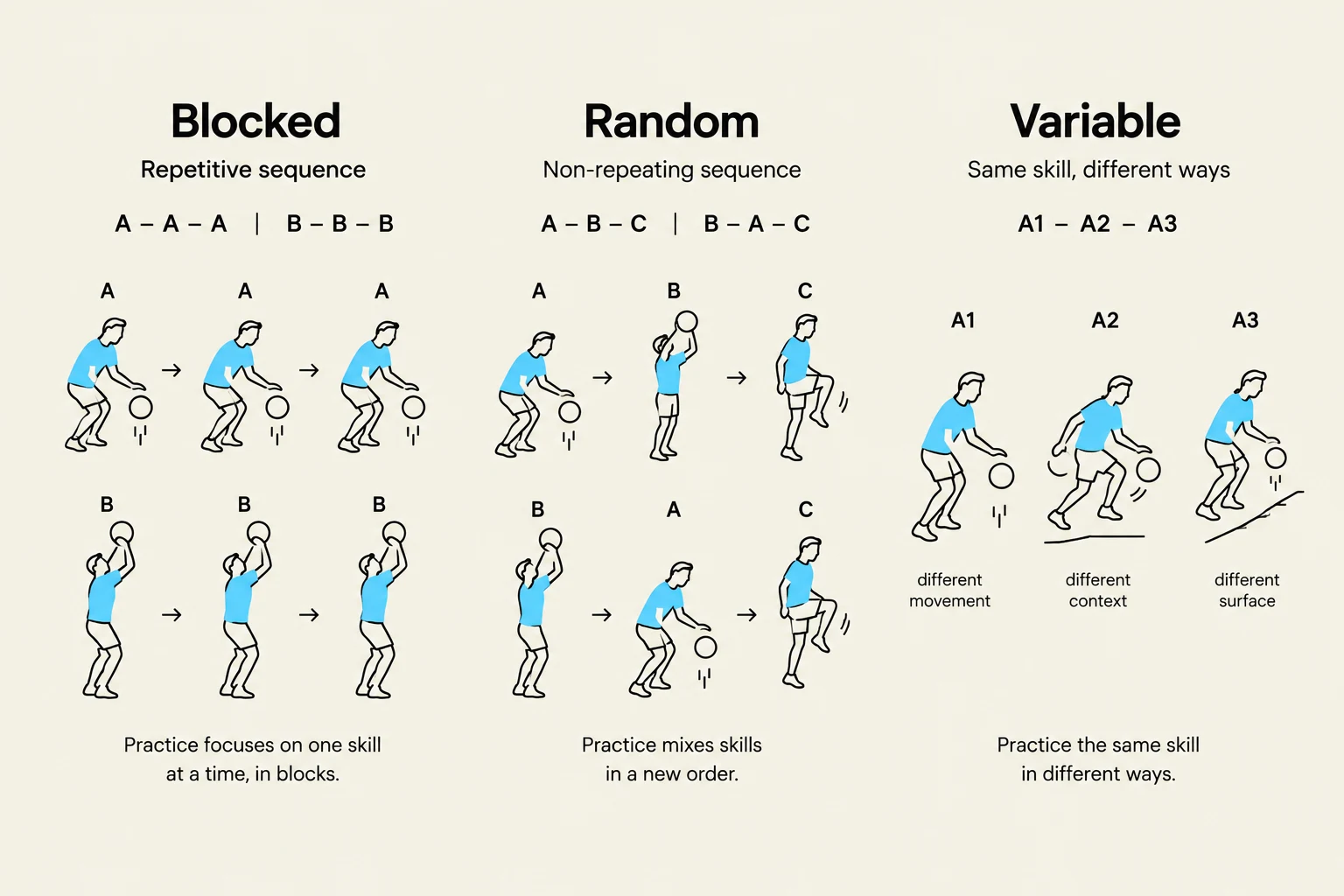
This illustration compares three practice methods: blocked, random, and variable. Blocked practice involves repeating the same skill in sequence. Random practice mixes different skills in a new order. Variable practice involves performing the same skill in different ways, such as with different movements, contexts, or surfaces.
Simply repeating a movement over and over is rarely the most efficient way to learn. To facilitate deeper learning, coaches can manipulate the structure of practice sessions using several different methods.
Whole vs. Part Practice
Practitioners can choose to teach a skill in its entirety or break it down into manageable pieces.
Whole Practice: The athlete practices the entire movement from start to finish. This is often better for simple, highly integrated skills.
Part Practice: The skill is broken down into smaller components. This can be achieved through several sub-strategies:
Segmentation: Breaking a skill into distinct parts and practicing them sequentially.
Fractionalization: Breaking a skill into parts and practicing them simultaneously or in a more integrated manner.
Simplification: Reducing the complexity of the task (e.g., slowing down the movement or using lighter equipment) to make it easier to master.
The goal is to eventually reintegrate these parts into a "whole" movement through progressive training.
Advanced Practice Methods
To ensure that skills are not just learned in a vacuum but are adaptable to real-world scenarios, two advanced methods are highly effective:
Random Practice: Instead of practicing one skill repeatedly (blocked practice), the athlete practices multiple different skills in a non-repeating, unpredictable order. While this may feel more difficult during the session, it significantly enhances long-term retention.
Variable Practice: This involves introducing variations of the same skill within a single session (e.g., practicing free throws from different spots on the floor). This forces the athlete to constantly adjust, improving their adaptability.
Observational Practice: Learning can also be enhanced by observing others, such as through video analysis or watching a coach perform the skill.
The Role of Feedback
Feedback is the information provided to the athlete regarding their performance, and it is essential for making necessary corrections. Feedback is categorized into two main types:
Intrinsic Feedback: Sensory information that comes from the athlete's own body (e.g., feeling the tension in a muscle or the balance of a landing).
Augmented Feedback: External information provided by a coach, a video replay, or electronic sensors.
Managing Feedback Frequency
A critical nuance in coaching is the frequency of augmented feedback. While frequent feedback can help an athlete acquire a skill quickly in the beginning, providing too much feedback can lead to dependency.
As an athlete's skill level increases, the frequency of external feedback should decrease. This encourages the athlete to rely more on their own intrinsic feedback, which is vital for long-term mastery and performance under pressure.
Psychological Foundations: Goal Setting and Motivation
Effective motor learning is deeply intertwined with psychology. Successful programs prioritize proper goal setting to maintain high levels of motivation and self-efficacy.
Rather than focusing solely on outcome goals (e.g., "I want to win the race"), coaches should encourage process-oriented goals (e.g., "I want to maintain a specific elbow angle during my stroke"). Process goals are more controllable and help prevent frustration when outcomes are not immediate.
Furthermore, understanding the athlete's motivation is key. Athletes with high achievement motivation—a desire to challenge themselves and master tasks—tend to perform better and engage more deeply with training. Conversely, an athlete with a high motivation to avoid failure may struggle with anxiety and avoid challenging situations to protect their ego.
Coaching Strategy: To enhance self-efficacy, especially during injury rehabilitation, use progressive integration. Move the athlete from isolated muscle training to functional movements, and finally back into full team activities. This builds confidence and helps them return to pre-injury levels more effectively.
Keep reading for free.
Create an account to finish this reading and make it part of your study routine.