


The management of uterine neoplasms has undergone a paradigm shift in recent years, moving from a purely histological approach to one deeply rooted in molecular profiling. While endometrial adenocarcinoma remains the most prevalent uterine malignancy, the clinical landscape is complicated by the presence of rarer, more aggressive mesenchymal tumors known as uterine sarcomas. Understanding the distinctions between these categories—and the specific molecular drivers that dictate their behavior—is essential for modern oncological decision-making.
Molecular Classification and Diagnosis
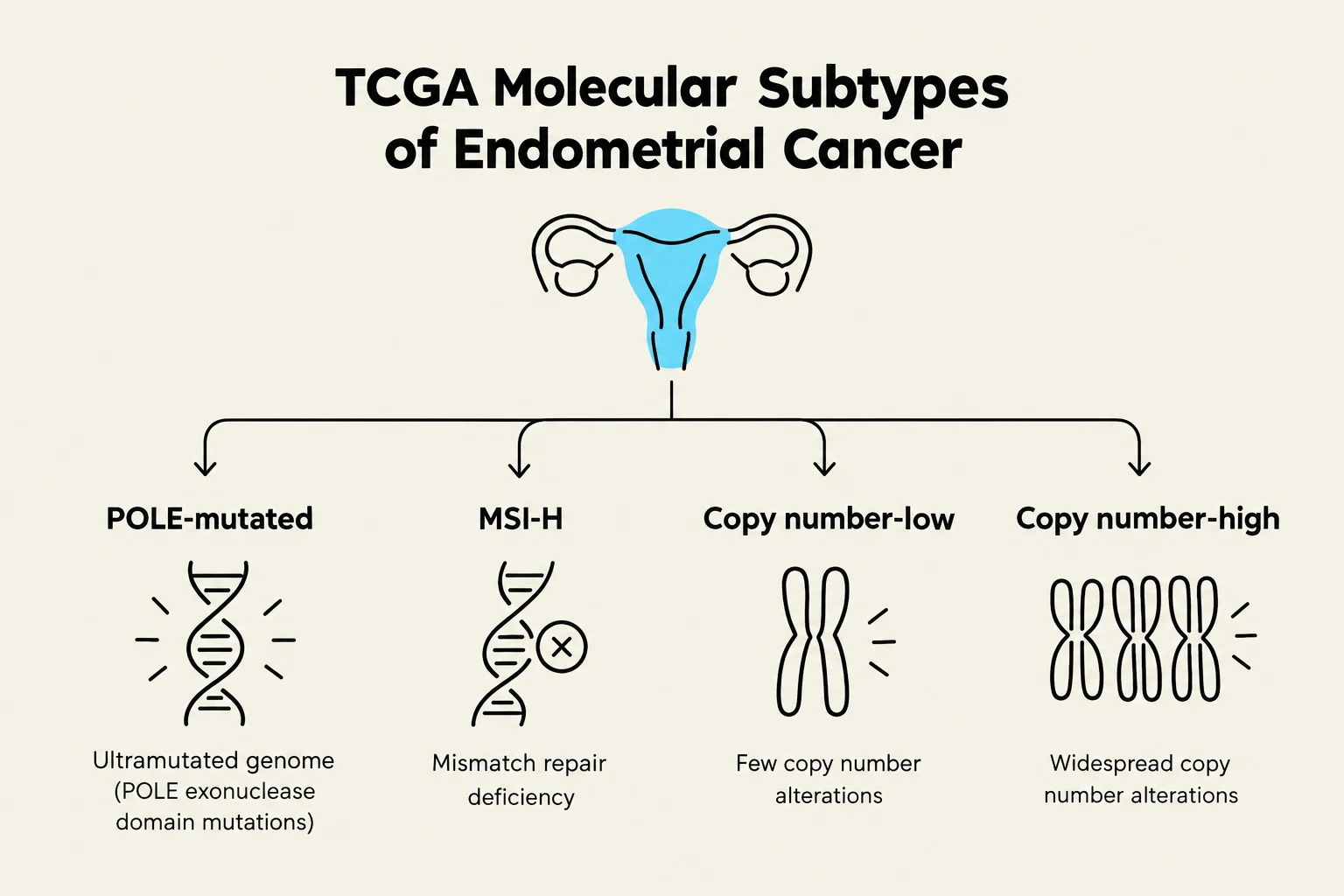
Modern management of endometrial cancer relies heavily on the TCGA molecular subtypes, which categorize tumors into four clinically significant groups based on their genetic signatures:
- POLE mutations: These tumors often exhibit high-grade histological features but generally carry a favorable prognosis.
- MSI-H (Microsatellite Instability-High): These tumors have an intermediate prognosis and are frequently associated with Lynch syndrome.
- Copy number-low (wild-type p53): These present with an intermediate prognosis.
- Copy number-high (abnormal p53): This is the most aggressive subtype, necessitating multimodality treatment.
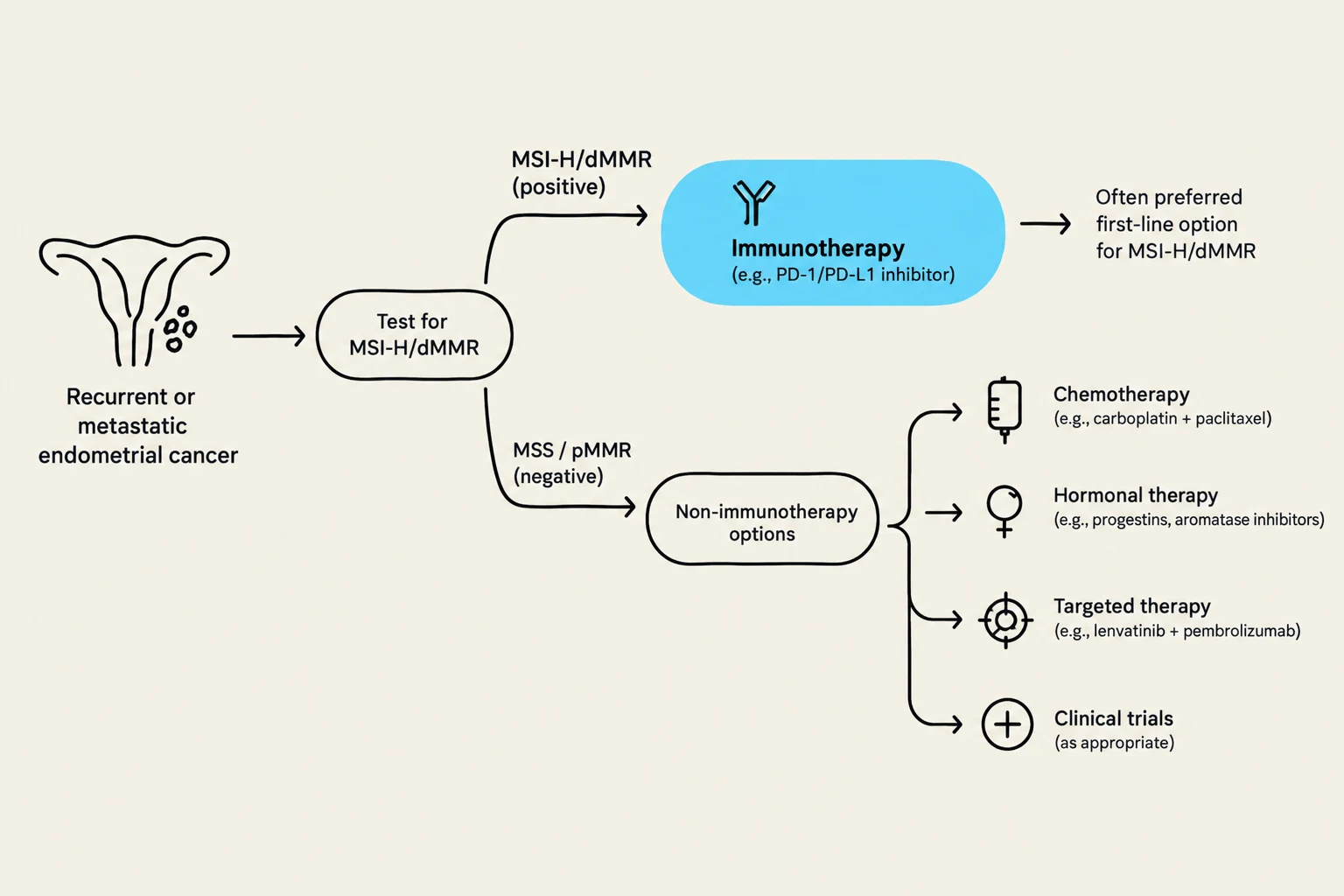
To guide therapy, clinicians must perform ancillary testing, including mismatch repair (MMR) immunohistochemistry to identify mismatch repair deficiency (dMMR) status. For patients with recurrent or metastatic disease, testing for tumor mutational burden (TMB) and specific gene fusions, such as NTRK gene fusions and RET fusions, is critical for identifying candidates for targeted therapies.
Exam Tip: When evaluating a patient for Lynch syndrome, always check for mismatch repair deficiency (dMMR) via immunohistochemistry. A dMMR status is a key biomarker for the efficacy of immunotherapy.
Keep reading for free.
Create an account to finish this reading and make it part of your study routine.
Continue reading freeAlready have an account? Log in
Updated