


The period between 1450 and 1750 was an era of massive geopolitical shifts, characterized by the rise of powerful centralized states and the collision of diverse cultures. At the heart of this era was the Ottoman Empire, which emerged as the Islamic world's most important empire. As it expanded across three continents, it became a primary site of significant cultural encounters, shaping the social, religious, and political landscapes of the Mediterranean and beyond.
The Ottoman Empire and Religious Dynamics
The Ottoman Empire was not a monolithic entity; it was a complex tapestry of different faiths and ethnicities. One of the defining internal and external pressures on the empire was the long-standing conflict between Sunni and Shia Muslims. This sectarian tension influenced much of the empire's foreign policy and internal stability as it navigated its role as a leader in the Islamic world.
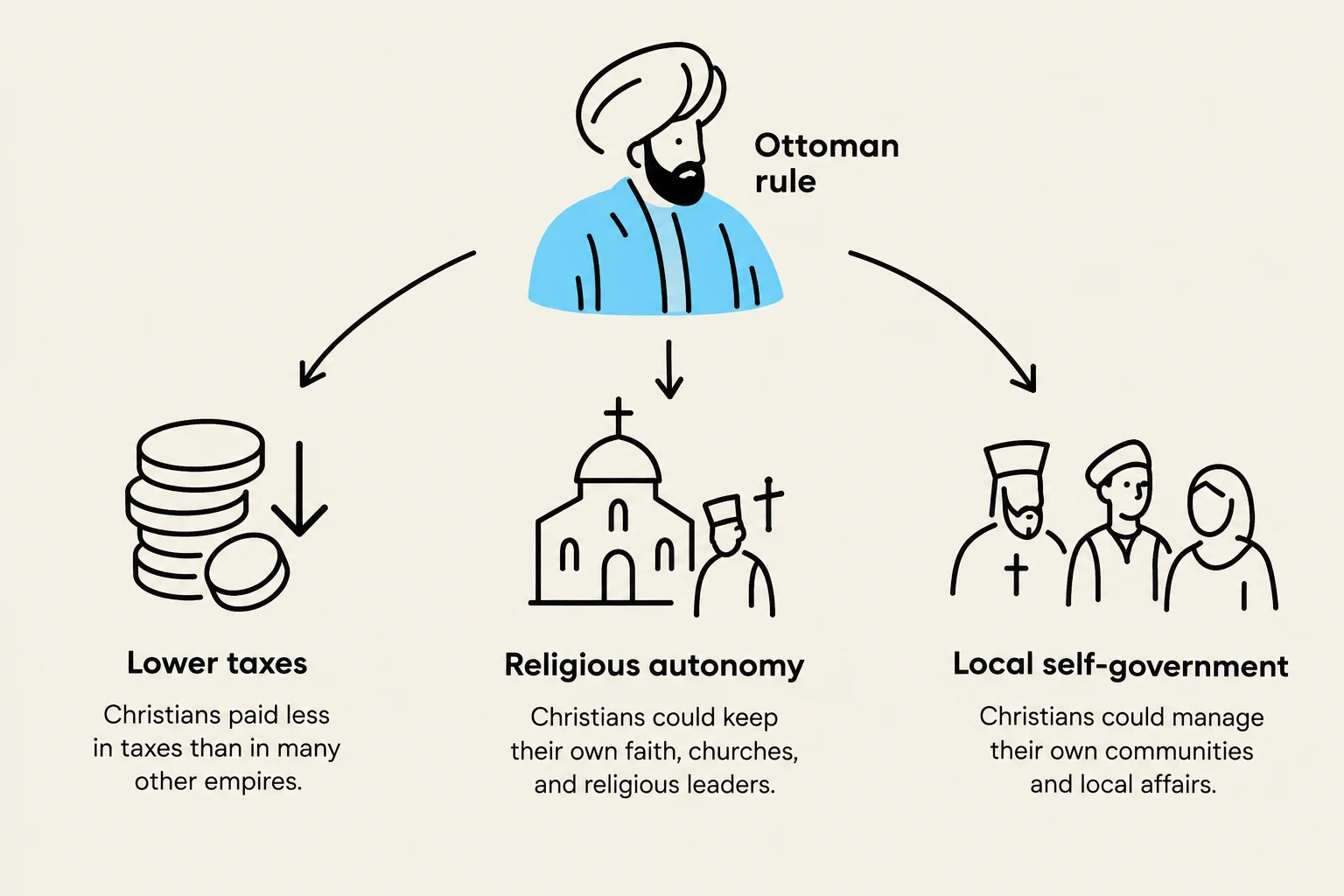
Beyond the internal Muslim dynamics, the empire was a crossroads where Christianity and Islam met in profound ways. The impact of this encounter varied significantly by geography. In Anatolia, the heartland of the empire, most Christians eventually converted to Islam. However, in the Balkans, the religious landscape remained distinct, as many Christian communities maintained their faith despite Ottoman rule.
Study Tip: When analyzing the Ottoman Empire, remember that "tolerance" did not mean "equality." While different groups could practice their faith, they existed within a specific legal and social hierarchy that defined their rights and obligations.

Keep reading for free.
Create an account to finish this reading and make it part of your study routine.
Continue reading freeAlready have an account? Log in
Updated