


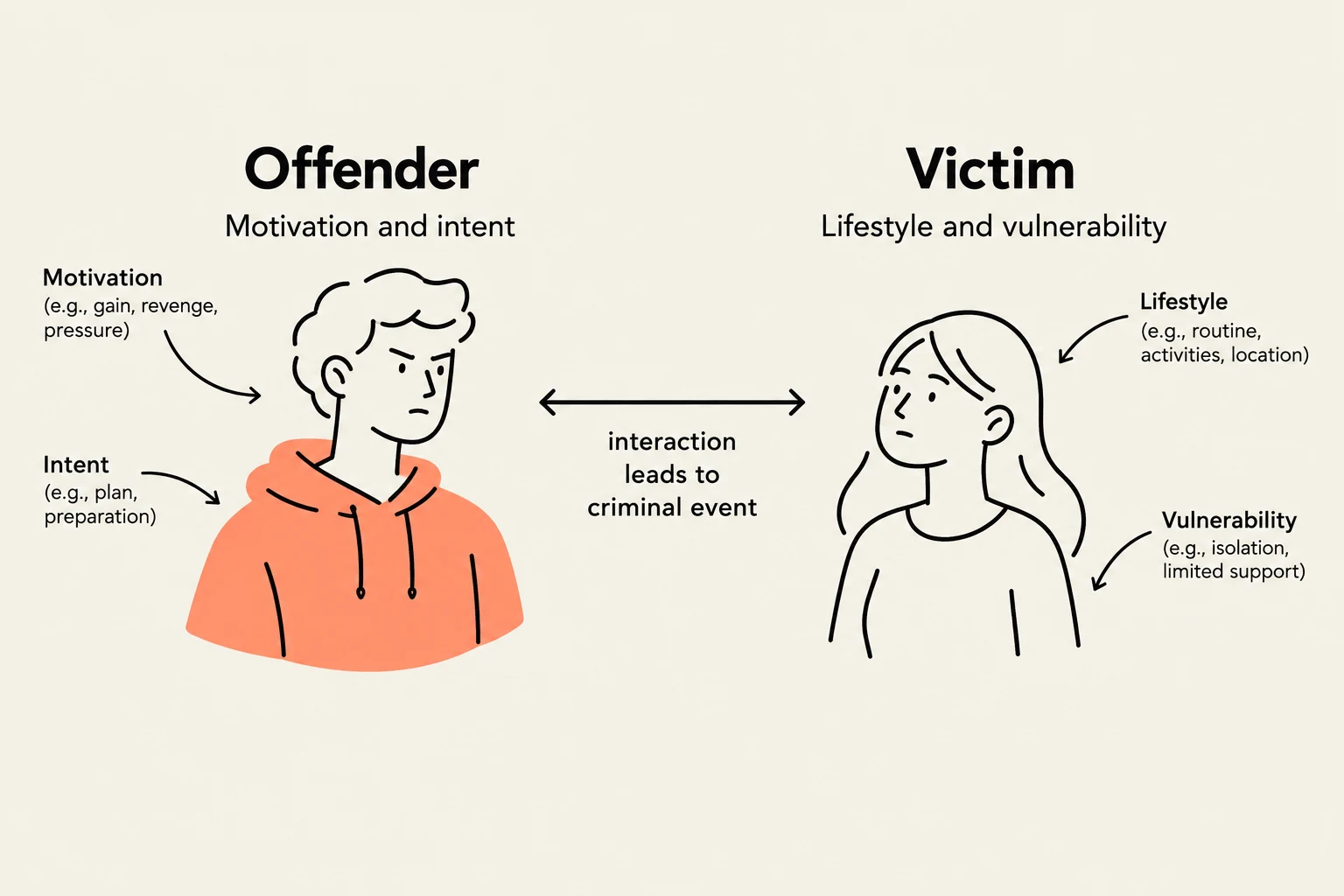
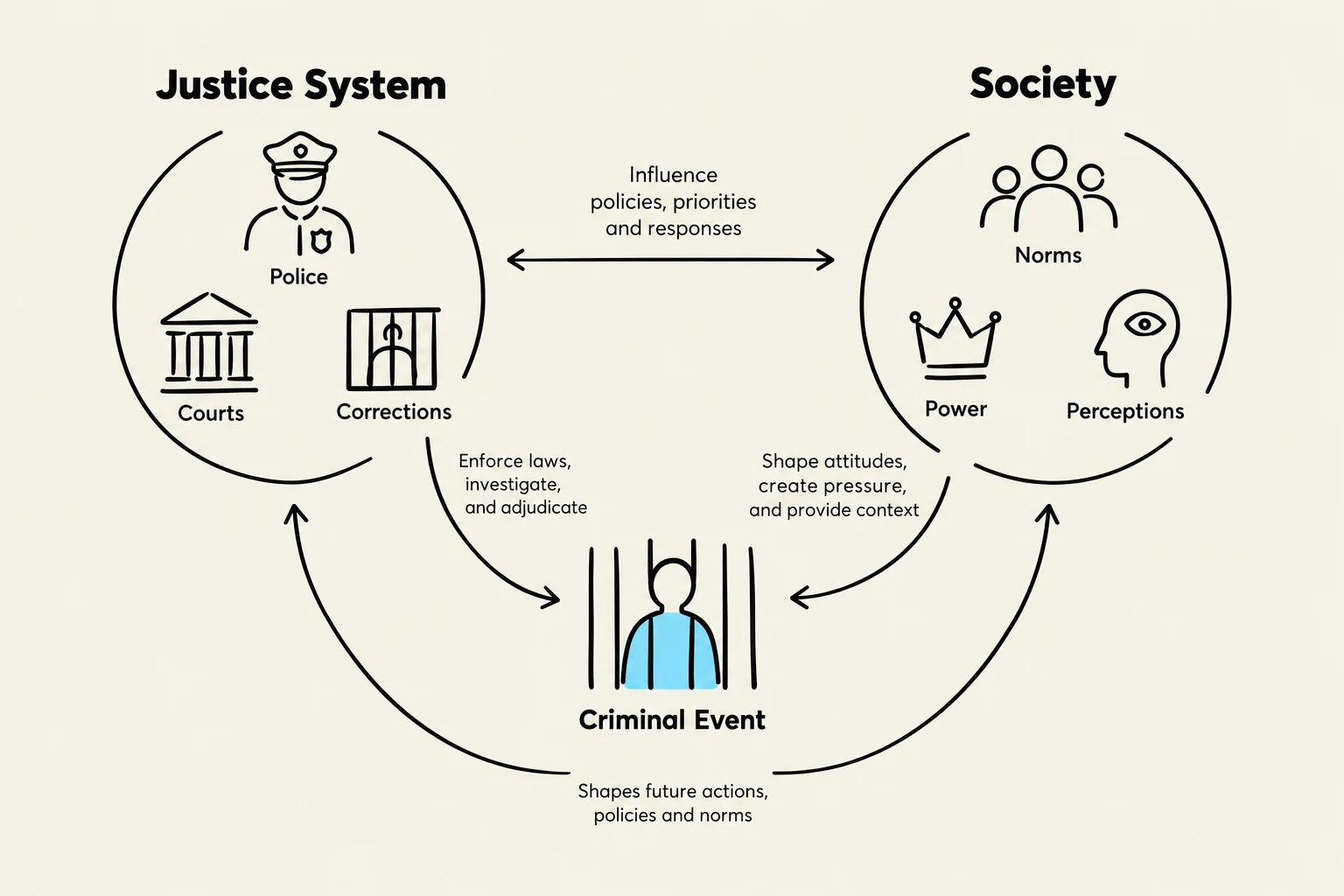
When we think of a crime, we often imagine a single moment of bad decision-making—a thief grabbing a bag or a person committing an act of violence. However, in criminology, a criminal event is viewed not as a spontaneous occurrence, but as a complex, multi-layered process. It is the result of various moving parts—offenders, victims, and the state—interacting within a specific context. To understand why a crime happens, and why some crimes result in an arrest while others go unnoticed, we must examine the interplay between background factors, foreground factors, and the justice system.
The Framework of Criminal Causation
Criminal events are driven by a combination of long-term influences and immediate triggers. Criminologists categorize these into two distinct layers: background factors and foreground factors.
Background factors are the "pre-existing conditions" that shape an individual's potential for crime over time. These include:
- Criminology and Personality: Individual traits, such as a lack of empathy or specific personality types, that may predispose someone to deviant behavior.
- Social and Environmental Context: The environment in which a person lives, including socioeconomic status, upbringing, and the level of disorder in their neighborhood (e.g., high-density urban areas with high drug prevalence).
- Knowledge and Skill: The technical ability required to execute a crime, such as knowing how to bypass a vehicle's security system.
Foreground factors, conversely, are the immediate, situational elements that converge to trigger the actual event.
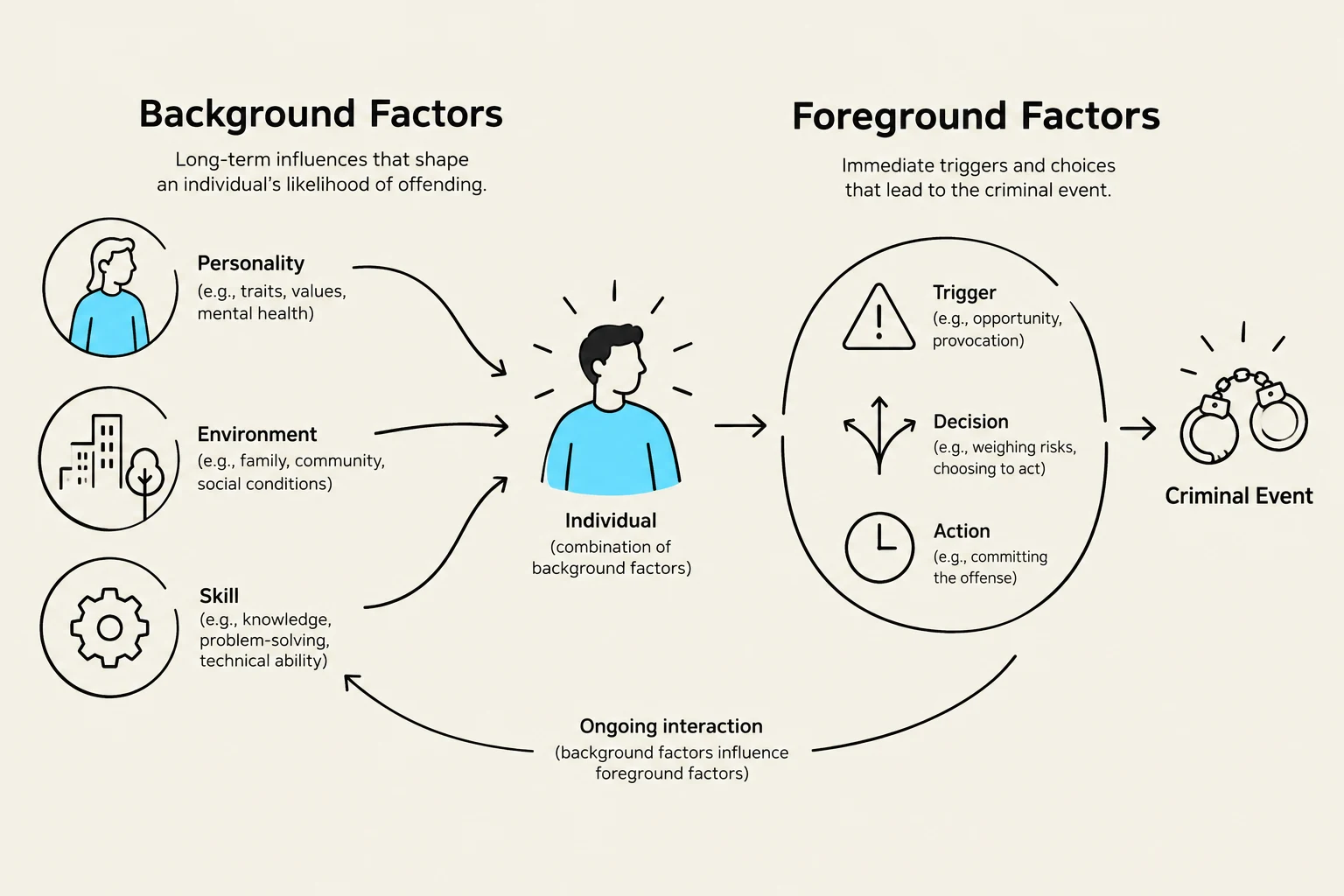
Exam Tip: If asked to explain "criminal event causation," do not just list the factors. You must explain that the event is an interaction. A crime happens when background predispositions meet a specific foreground opportunity.
Keep reading for free.
Create an account to finish this reading and make it part of your study routine.
Continue reading freeAlready have an account? Log in
Updated