


Life is a complex dance of chemistry. While the universe contains 94 naturally occurring elements, living organisms do not use them all equally. Instead, life relies on a highly specific subset of elements to build the structures and fuel the processes that define biological existence. By understanding how these elements combine to form biomolecules, we can unlock the fundamental rules that govern everything from the energy in your cells to the genetic code in your DNA.
The Building Blocks: Essential and Trace Elements
Living systems are composed of a specific subset of elements found in concentrations of $0.01%$ or higher. These are categorized based on how much of them an organism requires to function.
Essential Elements
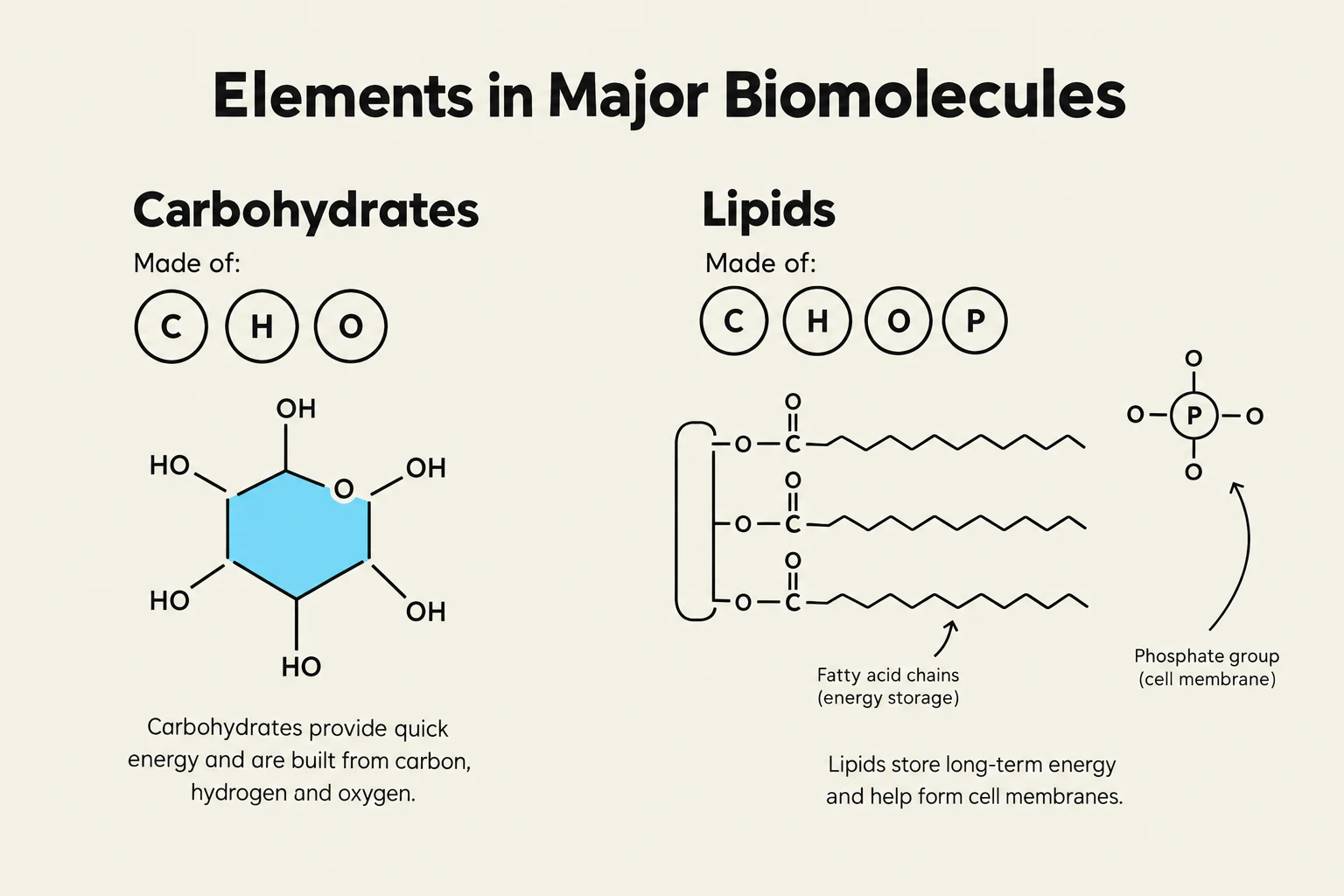
The most critical elements are the essential elements, which make up the vast majority of an organism's mass. The four most abundant are Carbon (C), Hydrogen (H), Oxygen (O), and Nitrogen (N). These are often referred to by the mnemonic CHON and constitute approximately $96.3%$ of an organism's weight. Other elements that make up the majority of the remaining $4%$ include Calcium (Ca), Phosphorus (P), Potassium (K), and Sulfur (S).
Trace Elements
Even though they are required in minute quantities, trace elements are vital for survival. For example, Iodine (I) is an essential trace element used by the thyroid gland to produce hormones that regulate metabolism, growth, and brain development. A deficiency in iodine can lead to serious health issues, such as a goiter (an enlarged thyroid gland) or developmental delays. Other examples include Iron (Fe) and Gold (Au).
Keep reading for free.
Create an account to finish this reading and make it part of your study routine.
Continue reading freeAlready have an account? Log in
Updated