


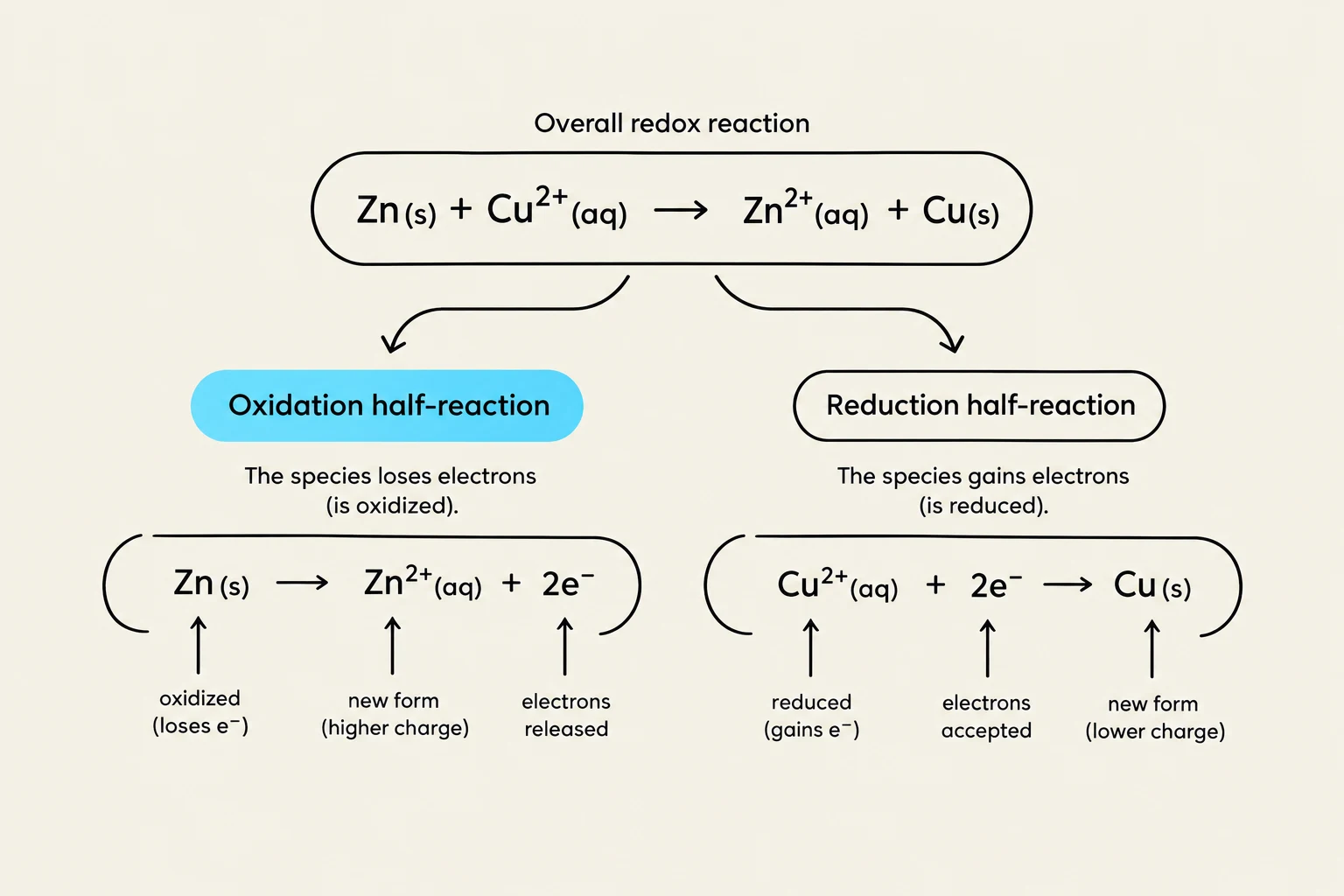
In the vast world of chemistry, reactions are often categorized by what happens to the atoms involved. While some reactions involve the exchange of ions to form solids (precipitation) or the exchange of protons (acid-base), one of the most fundamental processes is the movement of electrons. These are known as Redox reactions (short for reduction-oxidation). To understand how a complex chemical reaction works, we must learn to break it down into its fundamental components: the individual movements of electrons known as half-reactions.
The Core of Redox: Oxidation and Reduction
At its simplest level, a redox reaction is a transfer of electrons from one substance to another. Because electrons carry a negative charge, their movement changes the electrical state (the oxidation state) of the atoms involved. To keep things organized, chemists use two specific terms to describe these processes:
- Oxidation: This is the process where a substance loses electrons.
- Reduction: This is the process where a substance gains electrons.
A common mnemonic used by students to remember this is OIL RIG: Oxidation Is Loss, Reduction Is Gain.
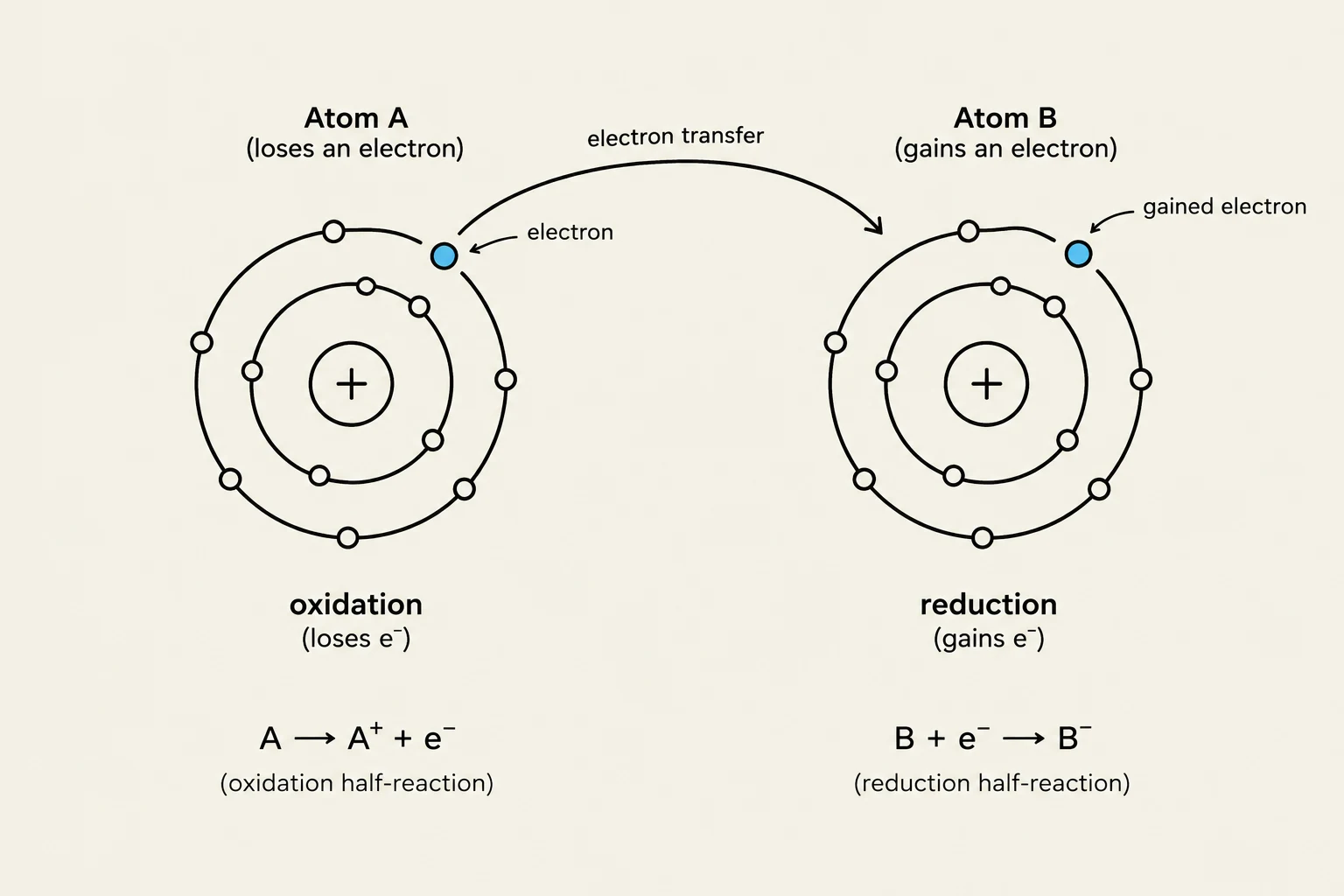
Exam Tip: Always look at the charge of the species. If the charge becomes more positive (e.g., from to ), the atom has been oxidized. If the charge becomes more negative (e.g., from to ), the atom has been reduced.

Keep reading for free.
Create an account to finish this reading and make it part of your study routine.
Continue reading freeAlready have an account? Log in
Updated