Electrical Equipment Installation and Protection Standards
This article explores the fundamental requirements for electrical installations, focusing on conductor sizing, wiring integrity, cable support, equipment mounting, cooling, and protection against environmental and chemical damage, as well as fault protection.
Ensuring the safety and longevity of an electrical system requires more than just selecting the right components; it requires strict adherence to installation standards. From the way a conductor is secured to the environment in which a circuit breaker resides, every detail impacts the system's ability to perform under normal conditions and during a fault. This article explores the fundamental requirements for electrical installations, focusing on mounting, mechanical execution, and protection against environmental deterioration.
Fundamentals of Conductors and Wiring
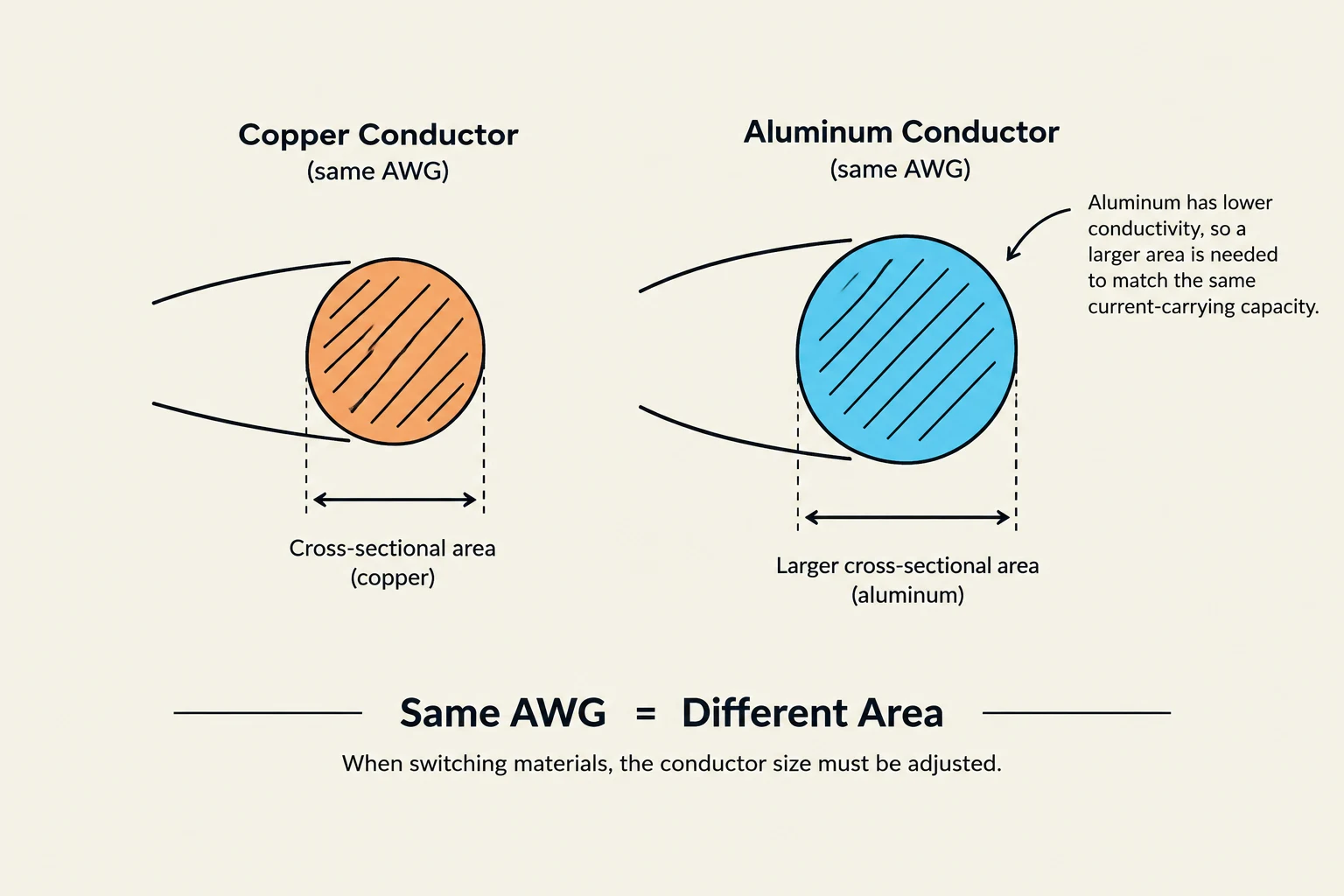
This diagram illustrates that for the same American Wire Gauge (AWG) size, an aluminum conductor requires a larger cross-sectional area than a copper conductor to achieve the same current-carrying capacity due to aluminum's lower conductivity.
Before installation begins, the electrical professional must understand the properties of the materials being used. Conductors are the lifeblood of any electrical system, and their selection is governed by specific material and sizing standards.
Conductor Materials and Sizing
Unless otherwise specified by the electrical code, conductors used to carry current must be made of copper, aluminum, or copper-clad aluminum. It is critical to note that if a specific material is not mentioned in the code, the provided sizes are assumed to apply to copper conductors. If an installer uses aluminum instead of copper, the conductor size must be adjusted accordingly to account for differences in conductivity.
Conductor sizes are standardized and typically expressed in:
American Wire Gauge (AWG)
Circular mils
Wiring Integrity and Methods
A completed wiring installation is not considered successful simply because the lights turn on. To meet safety standards, the installation must be free from short circuits, ground faults, or any unauthorized connections to the ground. Furthermore, installers must only use wiring methods that are recognized as suitable for the specific type of building or occupancy being serviced.
Exam Tip: Always distinguish between the "nominal voltage" of a circuit and the "voltage rating" of the equipment. The equipment's rating is not necessarily the same as the nominal voltage of the circuit it is connected to.
Installation and Support Standards
How equipment and cables are physically placed within a structure determines their resistance to mechanical stress and accidental damage.
Cables and Conductors Support
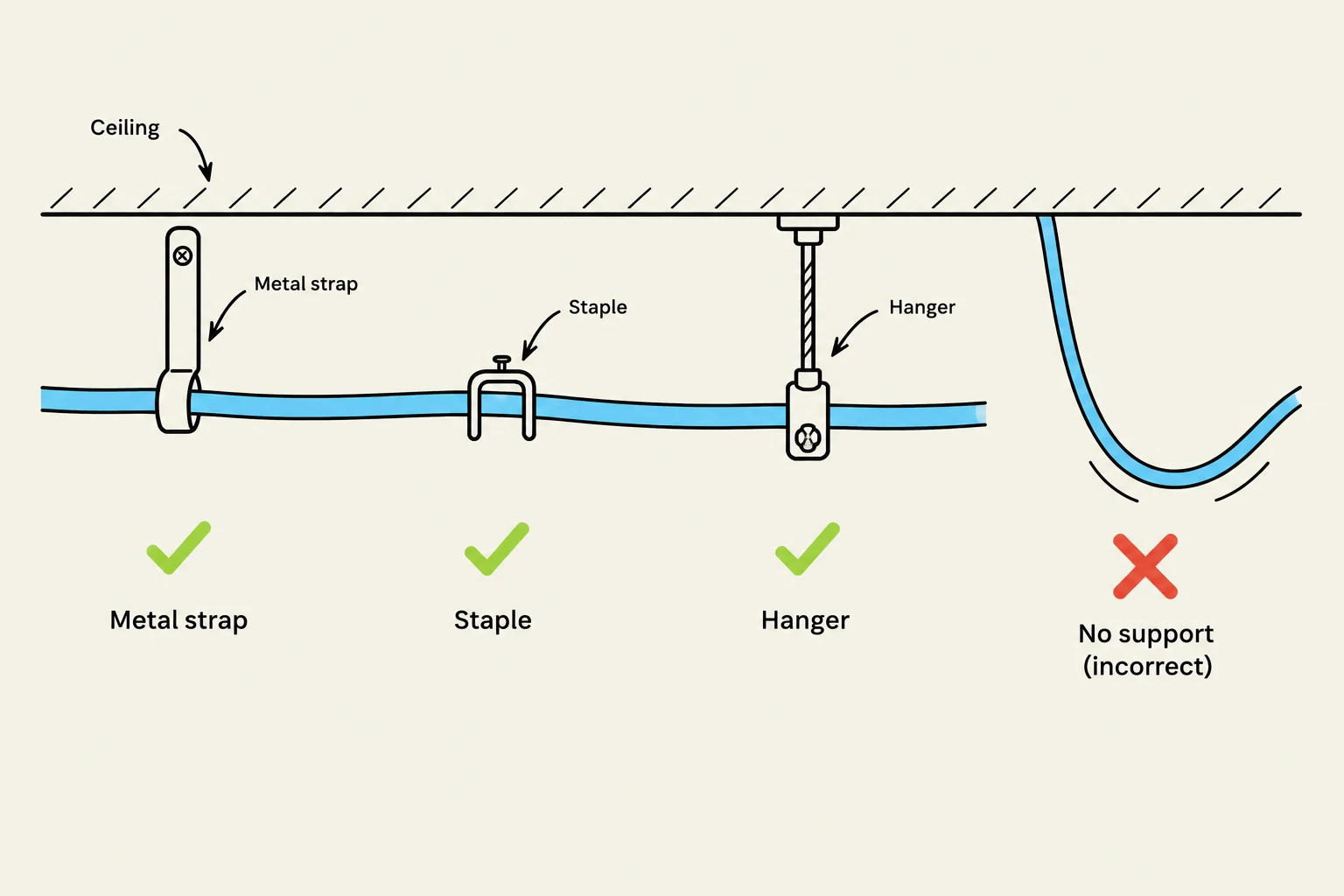
Diagram illustrating correct and incorrect methods for supporting a cable from a ceiling using a metal strap, staple, or hanger, with an example of improper support.
When cables and conductors are installed exposed on ceilings or sidewalls, they cannot simply be left hanging or loosely draped. They must be supported by the building structure in a way that prevents damage from "normal building use".
Proper support involves:
Hardware: Using straps, staples, cable ties, or hangers.
Damage Prevention: The hardware itself must be designed so that it does not crush or cut the cable during installation.
Bend Management: Conductors installed with 90° bends must be properly supported to prevent tension at the corner.
Mounting and Cooling
The physical mounting of equipment is a matter of both safety and structural integrity. For instance, electrical equipment that relies on its mounting surface for stability must be secured correctly. A common error to avoid is driving wooden plugs into holes in masonry, concrete, or plaster to secure equipment; this is strictly prohibited.
Additionally, many components rely on thermodynamics to function. Equipment that depends on the natural circulation of air and convection principles for cooling must be installed so that room airflow is not obstructed. If an enclosure is placed in a stagnant corner, the heat generated by the internal components may lead to premature failure or fire.
Protection from Deteriorating Agents
Electrical systems are often located in harsh environments. If the equipment is not rated for its specific surroundings, it will fail.
Environmental Protection
Installers must ensure that equipment is not placed in environments where it will be exposed to "deteriorating agents". These agents include:
Gases, fumes, and vapors
Liquids
Corrosive residues
Excessive temperatures
For example, uninsulated conductors or equipment must be positioned to prevent contact with these substances. Even common substances like paint, plaster, or cleaning solvents can be dangerous if they contaminate busbars, wiring terminals, or insulators, as they may adversely affect the mechanical strength or safe operation of the device.
Corrosion and Chemical Damage
Corrosion is one of the most common causes of electrical failure. Beyond environmental gases, even the products used to maintain equipment can be harmful.
Warning: Many cleaning and lubricating compounds can cause severe deterioration of the plastic materials used for insulation and structural components within electrical equipment.
Mechanical Execution and System Integrity
The final layer of protection is the quality of the workmanship itself.
Professional Workmanship
The code mandates that electrical equipment be installed in a "professional and skillful manner". This is not a subjective suggestion but a requirement to ensure that the installation meets industry standards, such as those found in ANSI/NECA 1-2015 regarding good workmanship.
Fault Protection and Interrupting Ratings
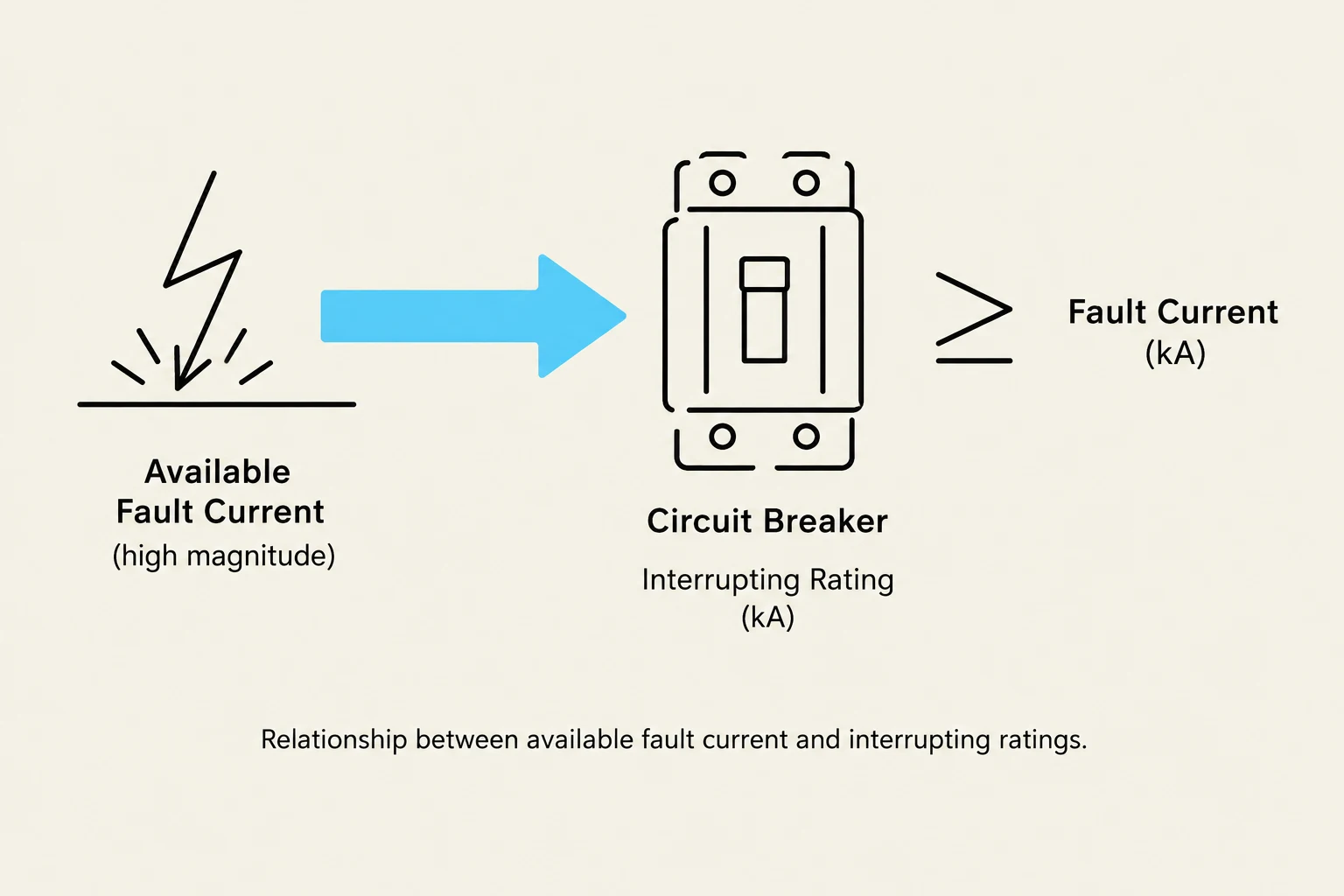
Relationship between available fault current and interrupting ratings of a circuit breaker.
A critical aspect of mechanical and electrical integrity is how the system handles a fault. When a short circuit occurs, the available fault current can be massive.
Interrupting Rating: Any equipment intended to interrupt current at fault levels must have an interrupting rating at the nominal circuit voltage that is at least equal to the available fault current at the line terminals.
Coordination: Overcurrent protective devices (like breakers or fuses) must be coordinated with the total circuit impedance. The goal is to ensure the protective device clears the fault before the fault causes extensive damage to the equipment.
By adhering to these standards—from the selection of copper conductors to the careful mounting of enclosures—installers ensure that electrical systems remain safe, reliable, and resilient against both human error and environmental decay.
Keep reading for free.
Create an account to finish this reading and make it part of your study routine.