


In the modern academic landscape, recorded lectures have become a cornerstone of the learning experience. Whether you are revisiting a complex seminar or catching up on a missed session, recorded lecture notes serve as a bridge between passive listening and active mastery. However, simply re-watching a video is rarely enough to ensure long-term retention. To truly benefit from these digital resources, students must transition from being spectators to being active participants in their own education.
The Anatomy of Effective Note-Taking
When dealing with recorded content, the primary challenge is the "illusion of competence"—the feeling that because you heard the information, you have learned it. To combat this, your notes should be structured to facilitate retrieval practice rather than just transcription.
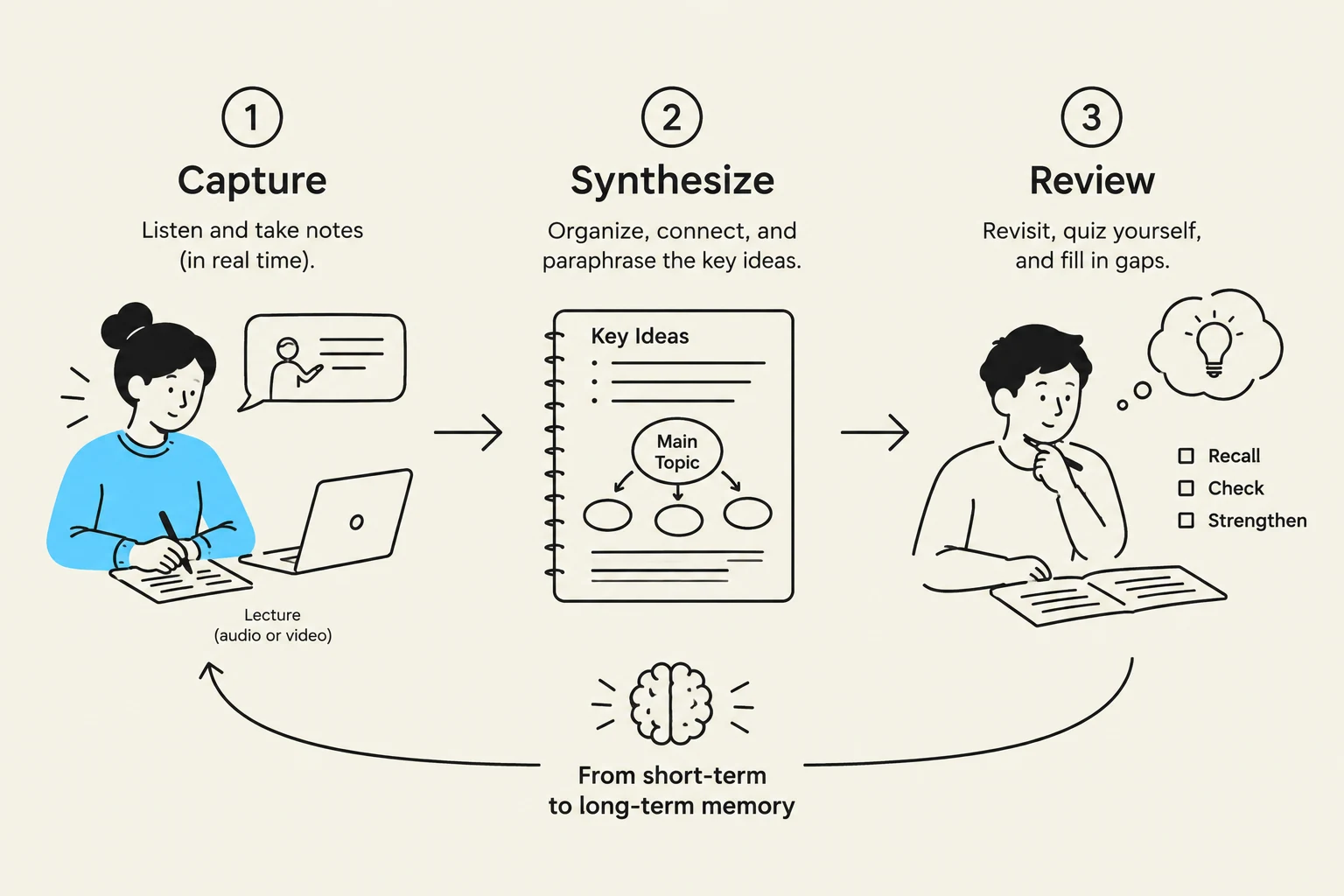
Effective note-taking during a recording typically follows three distinct phases:
- The Capture Phase: Identifying key terms, definitions, and core arguments as they are spoken.
- The Synthesis Phase: Reorganizing those raw notes into a logical flow that makes sense to you.
- The Review Phase: Testing yourself against the notes to identify gaps in understanding.
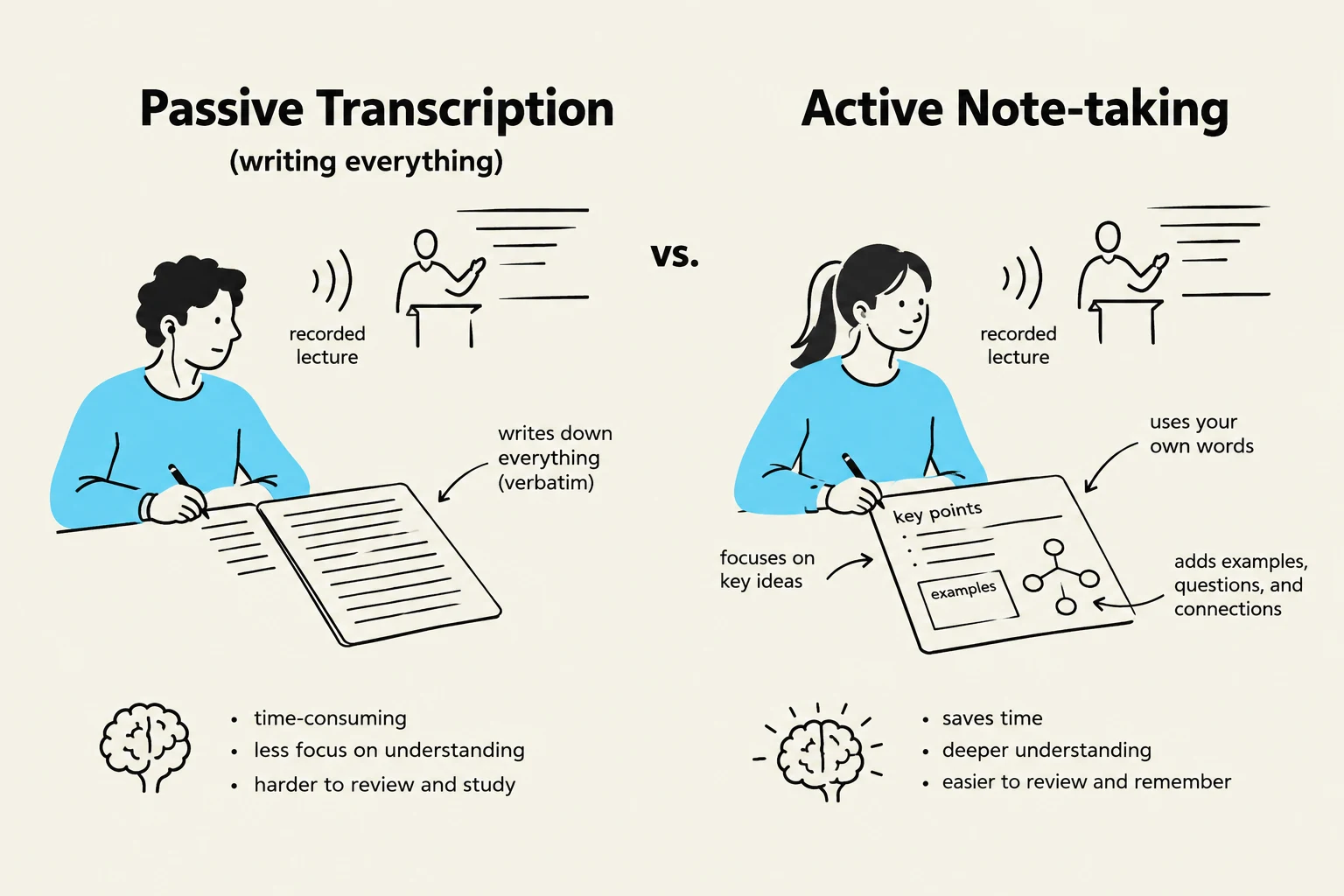
Exam Tip: Never aim for a verbatim transcript. If you spend all your energy typing exactly what the professor says, your brain stops processing the meaning of the words. Aim for "semantic notes"—notes that capture the meaning in your own words.
Leveraging Time-Stamps and Metadata
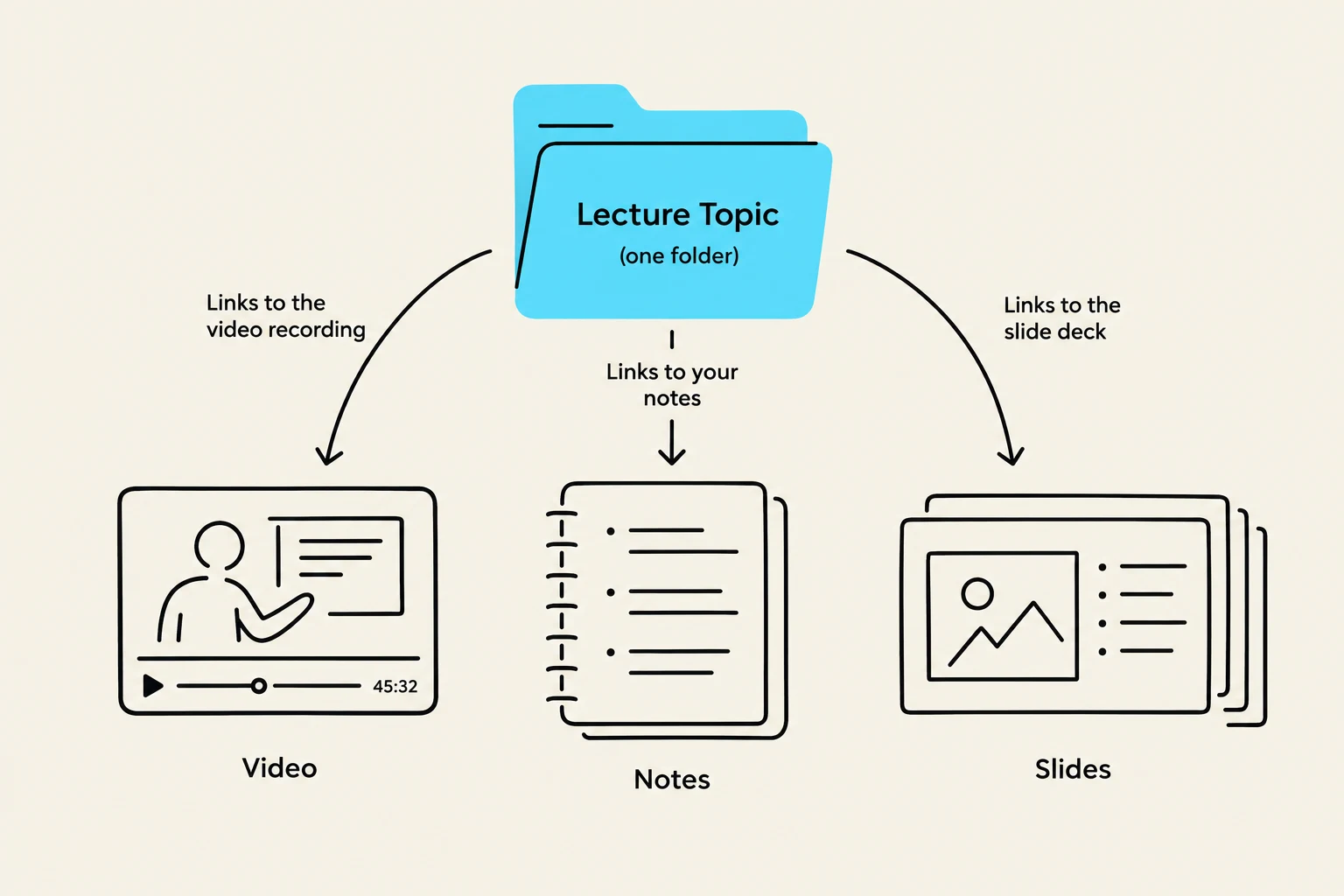
One of the greatest advantages of recorded lectures is the ability to "time travel" through the content. Unlike a live lecture, where a missed point might be lost forever, a recording allows you to pinpoint exact moments of confusion.
Keep reading for free.
Create an account to finish this reading and make it part of your study routine.
Continue reading freeAlready have an account? Log in
Updated