


Ecosystems are not merely collections of living things; they are complex, dynamic systems where various forms of life interact with one another and their physical environment. While we often notice the large, conspicuous animals and plants in our surroundings, the stability and function of an ecosystem depend on a much broader spectrum of life. This spectrum ranges from primitive, single-celled microbes that dominated Earth's early history to the complex, multicellular organisms we see today. To understand how these systems work, we must examine the specific ecological roles—or "niches"—that different groups of organisms occupy.
The Foundation: Producers and Consumers
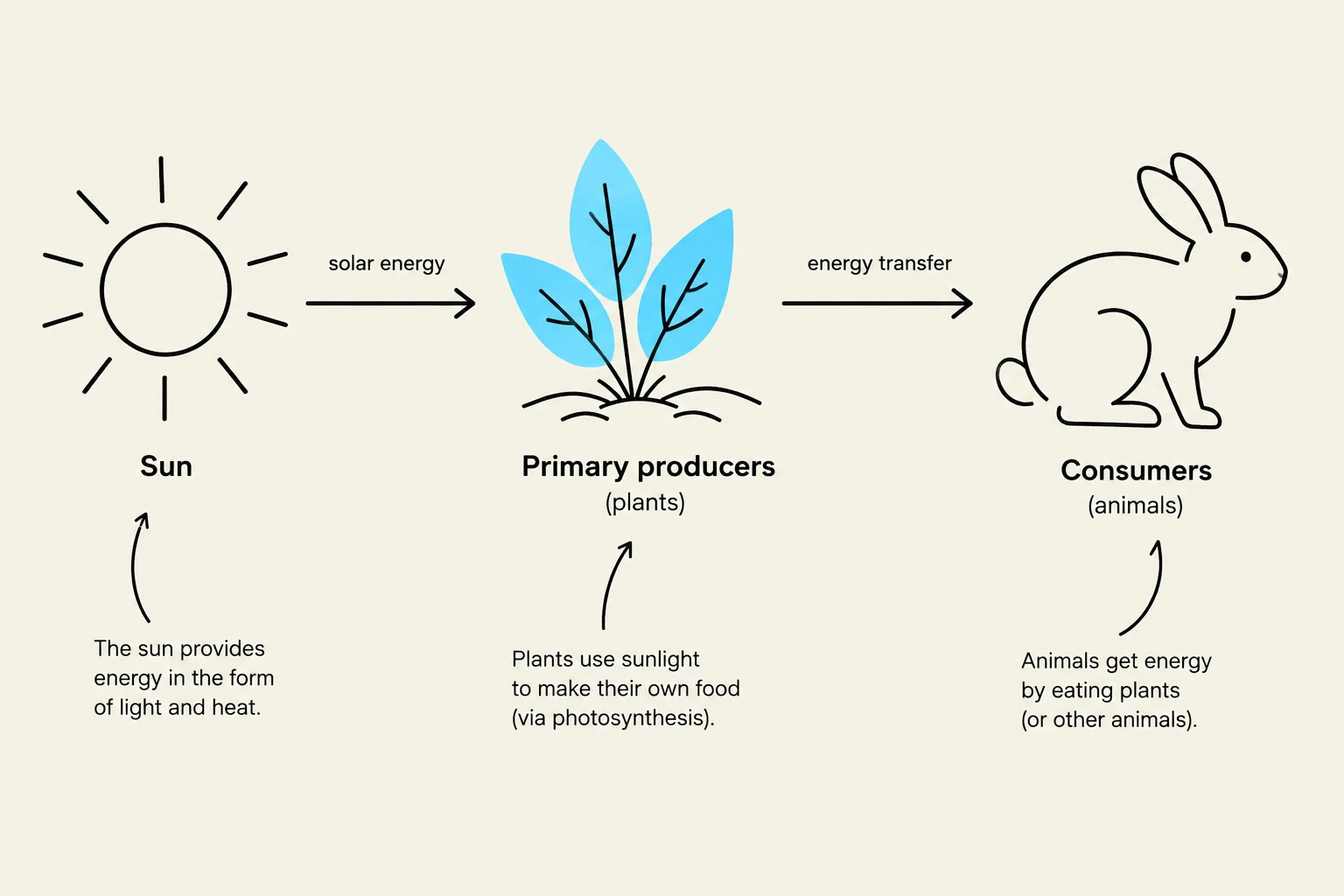
The flow of energy through any ecosystem begins with the ability to capture sunlight and convert it into a usable form.
Plants: The Primary Producers
Plants serve as the fundamental building blocks of most ecosystems by acting as primary producers. Through photosynthesis, they capture solar energy and transform it into chemical energy in the form of organic matter. Because they rely on external surfaces to absorb light, exchange gases, and take up nutrients and water, plants are generally closely tied to their water sources, such as soil or bodies of water.
Animals: The Consumers
In contrast to plants, animals function as consumers. They cannot produce their own food and must instead depend on the organic matter produced by plants or other organisms. One of the most significant evolutionary differences is that animals utilize internal surfaces for the exchange of gases, nutrients, and water. Furthermore, animal body designs often permit motility (the ability to move), which allows them to be less directly tied to stationary water sources than plants.
Keep reading for free.
Create an account to finish this reading and make it part of your study routine.
Continue reading freeAlready have an account? Log in
Updated