Explore the concept of ecological niches, differentiating between generalist and specialist species, and understand the four major roles species play in an ecosystem: native, nonnative, indicator, and keystone species.
In the complex web of life, no organism exists in isolation. Every living thing, from the smallest bacterium to the largest predator, occupies a specific place within its environment. This "place" is not just a physical location, but a functional role that influences how energy flows and how nutrients cycle through an ecosystem. Understanding how species interact and the specific roles they play is fundamental to the study of ecology and biodiversity.
The Concept of the Ecological Niche
An ecological niche is defined as a species' "pattern of living". It encompasses everything that affects an organism's ability to survive and reproduce, including its use of water, space, sunlight, food, and its interactions with predators and competitors.
A niche is more than just a habitat; it is a description of how a species fits into the biological community. For example, two birds might live in the same tree (the same habitat), but if one eats seeds from the canopy and the other eats insects from the bark, they occupy different niches.
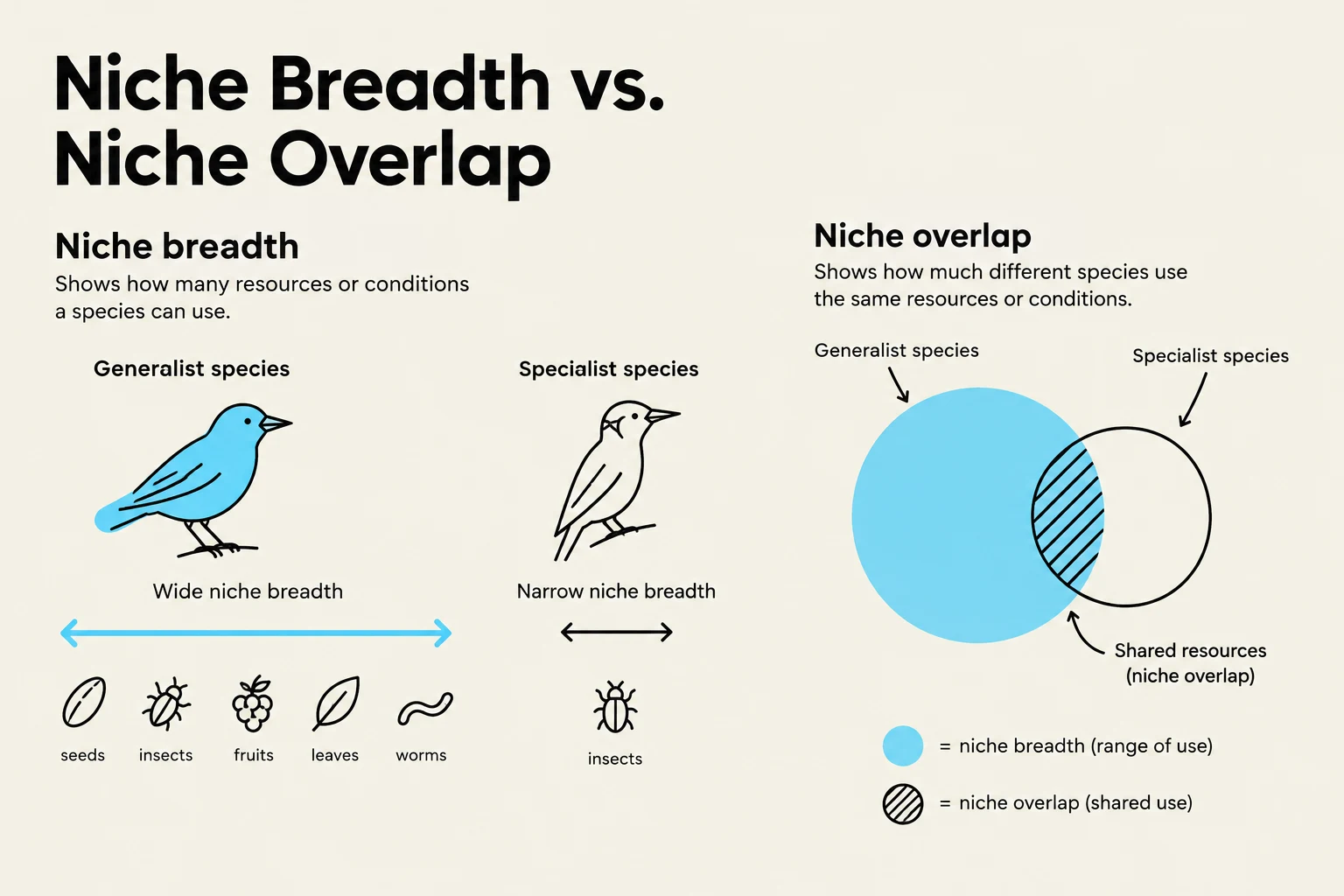
This illustration explains the ecological concepts of niche breadth and niche overlap. Niche breadth refers to the range of resources and conditions a species can utilize, while niche overlap describes the extent to which different species share these resources.
Niche Breadth and Competition
The "size" of a niche is referred to as its niche breadth. This concept is crucial for understanding how species coexist or compete:
Niche Overlap: When two species use similar resources (such as the same food source or nesting site), their niches overlap. High levels of overlap often lead to intense competition for those resources.
Niche Separation: To avoid direct competition and ensure survival, species often undergo niche separation, where they evolve to use different resources or different parts of the environment.
Study Tip: Think of niche breadth as "flexibility." A species with a wide niche can "pivot" to new foods if its primary source disappears, whereas a species with a narrow niche is highly vulnerable to change.
Generalists vs. Specialists
Species can be categorized by the breadth of their niches, which often dictates their ability to survive environmental shifts.
Generalist Species
Generalists possess a broad niche, meaning they have a wide range of tolerance for environmental conditions. They can thrive in a variety of habitats and consume a diverse array of food sources. This flexibility provides a significant advantage in rapidly changing environments.
Example: Cockroaches are considered ultimate survivors because they are generalists; they can eat almost anything and live in nearly any climate.
Specialist Species
Specialists possess a narrow niche, meaning they have a very limited range of tolerance. They often thrive in stable environments where they can become highly efficient at utilizing a specific resource. However, this specialization is a double-edged sword: if the environment changes suddenly, specialists are much more likely to die out.
This illustration contrasts generalist and specialist species. Generalist species, like the raccoon depicted, utilize a wide variety of resources including fruits, insects, plants, seeds, eggs, and small mammals. Specialist species, such as the monarch butterfly, rely on a specific resource, in this case, milkweed as their only food source.
Four Major Roles in an Ecosystem
Beyond their niche breadth, species can be classified by the specific roles they play within their community. These roles are categorized as native, nonnative, indicator, or keystone species.
Native and Nonnative Species
Native Species: These are species that normally live and thrive in a particular ecosystem. They have evolved within that environment and are part of its natural balance.
Nonnative Species: These are species that migrate or are accidentally introduced into an ecosystem where they do not naturally belong.
Indicator Species: The Biological Smoke Alarms
Indicator species serve as early warning systems for environmental change. Because they are sensitive to specific environmental stressors, changes in their population size or health can signal that an ecosystem is in trouble.
Example: Amphibians, such as frogs, are vital indicator species. Because their skin is highly permeable, they are extremely sensitive to pollutants like insecticides. A sudden decline in frog populations can alert researchers to chemical pollution or habitat degradation.
Keystone Species: The Ecosystem Engineers
A keystone species is one that has a disproportionately large effect on the types and abundance of other species in its community. If a keystone species is removed, the entire ecosystem structure can collapse or change drastically.
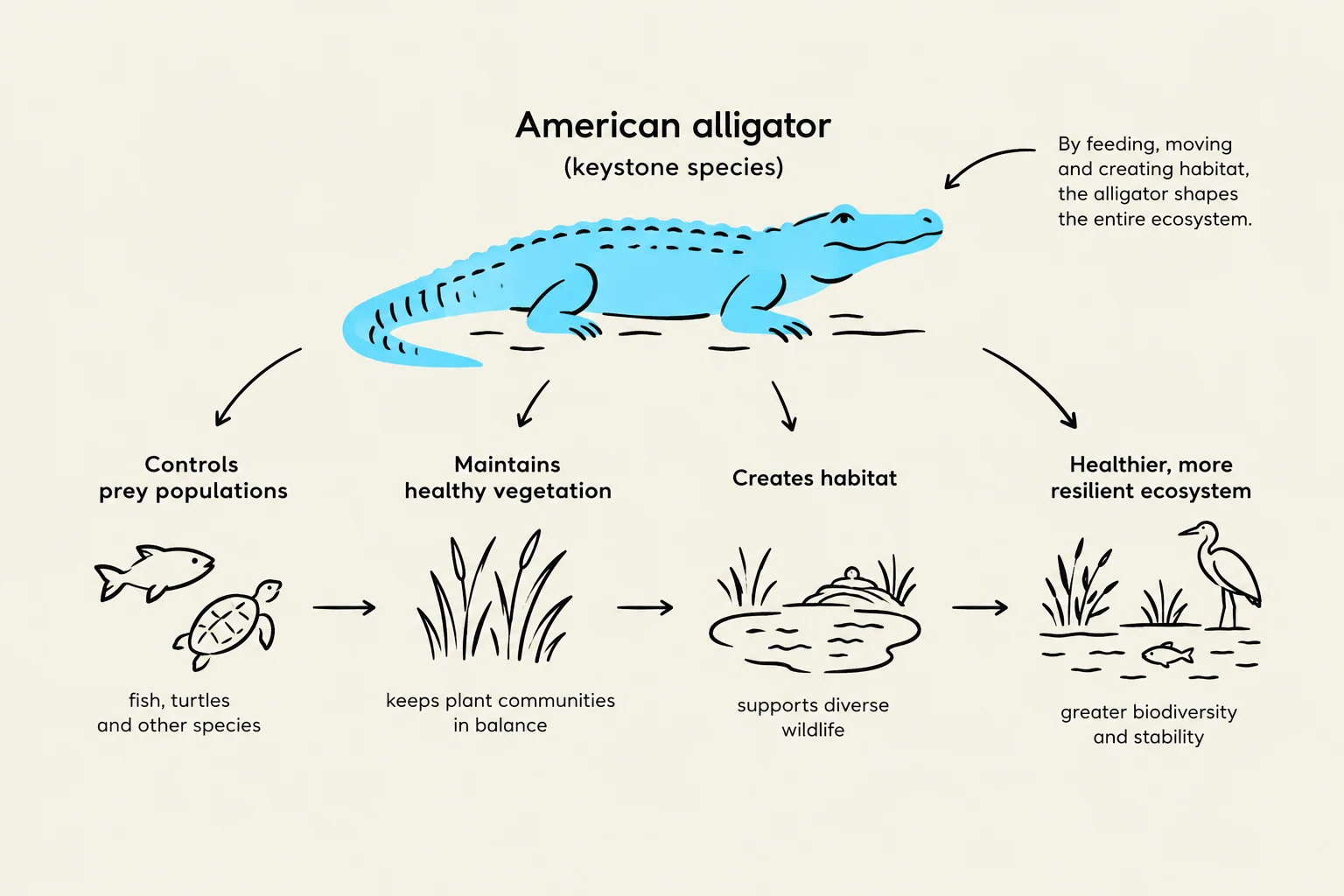
The American alligator is a keystone species that shapes its ecosystem by controlling prey populations, maintaining healthy vegetation, and creating habitat, leading to greater biodiversity and stability.
Example: The American Alligator: In subtropical wetlands, the alligator acts as a keystone species. By digging "gator holes," they create freshwater refuges for other aquatic life during dry periods. They also maintain balance by preying on certain fish (like gar), which prevents those fish from overpopulating and exhausting other resources.
Exam Note: When asked to identify a keystone species, look for an organism whose removal would cause a "cascade" of changes affecting many other species, even if that organism itself is not the most numerous in the area.
Summary Table of Species Roles
Role
Definition
Key Characteristic
Native
Naturally occurring in an area
Part of the evolved ecosystem balance
Nonnative
Introduced from elsewhere
May become invasive and disrupt niches
Indicator
Sensitive to environmental change
Acts as a "biological smoke alarm"
Keystone
Has a massive impact on community structure
Removal causes ecosystem-wide shifts
Keep reading for free.
Create an account to finish this reading and make it part of your study routine.