


Ecology is the scientific study of how organisms—ranging from microscopic bacteria to massive mammals—interact with one another and their physical environments. To understand these interactions, ecologists must look beyond simple observations and instead seek to explain the patterns of abundance and distribution. This involves identifying the pattern (what is observed), the process (why it occurs), and the mechanism (how it happens). Central to these explanations are two fundamental concepts: the specific role an organism plays in its community, known as its niche, and the inevitable variations in the environment across time and space.
The Ecological Niche: An Organism's "Occupation"
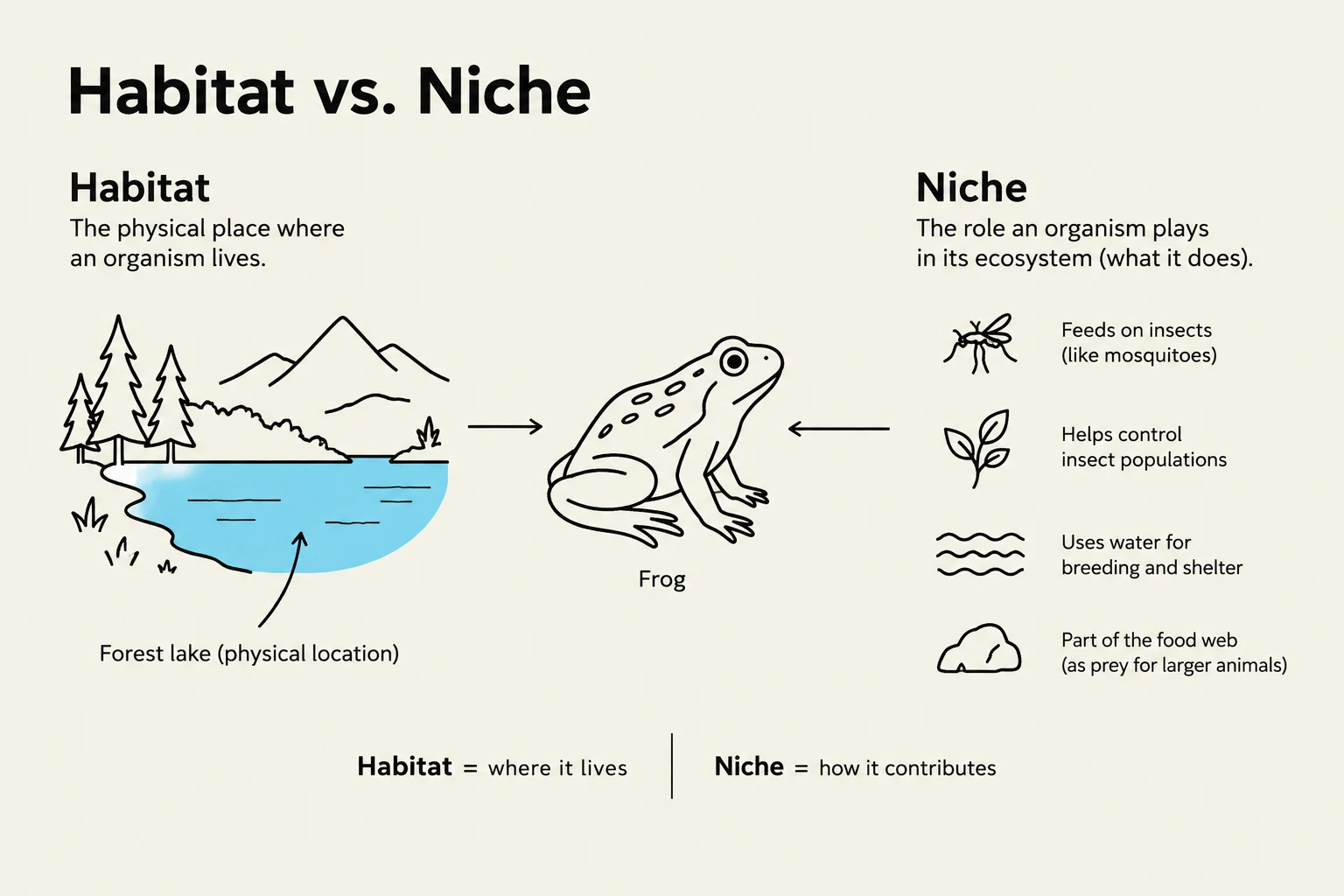
While a habitat is the physical setting or "address" where an organism lives—such as a forest, a desert, or a coral reef—the niche is much more complex. The niche represents the organism's "occupation" or its specific ecological role within a community. It encompasses the full range of environmental conditions an organism can tolerate and the specific resources it requires to survive.
A fundamental principle of ecology is that no two species can occupy the exact same niche. If they did, they would be in direct competition for the same resources, which is unsustainable in the long term. Instead, species evolve distinctive forms and functions that allow them to specialize. A classic example of this is seen in the Hawaiian Honeycreepers, where a wide variety of beak shapes reflect the different niches each species occupies, allowing them to feed on different food sources.
Exam Tip: Do not confuse "habitat" with "niche." Think of the habitat as the organism's address (where it lives) and the niche as its profession (what it does and how it uses resources).
Keep reading for free.
Create an account to finish this reading and make it part of your study routine.
Continue reading freeAlready have an account? Log in
Updated