Dynamics of Transformational Leadership: Work Design, Energy, and Motivation
Explores the dynamic nature of transformational leadership, examining how job design, leader energy levels (vigor), and prosocial motivation interact to influence leadership behaviors. Discusses practical implications for organizations.
Most leadership research treats leadership styles as stable personality traits—something a person "has" or "is". However, real-world leadership is rarely static. Leaders experience "ebbs and flows"; some weeks they are inspired and energetic, while other weeks they may feel drained by red tape or administrative burdens. This article explores the dynamic nature of transformational leadership, investigating how the design of a leader's work and their internal energy levels (vigor) interact with their personal values to shape how they lead their teams.
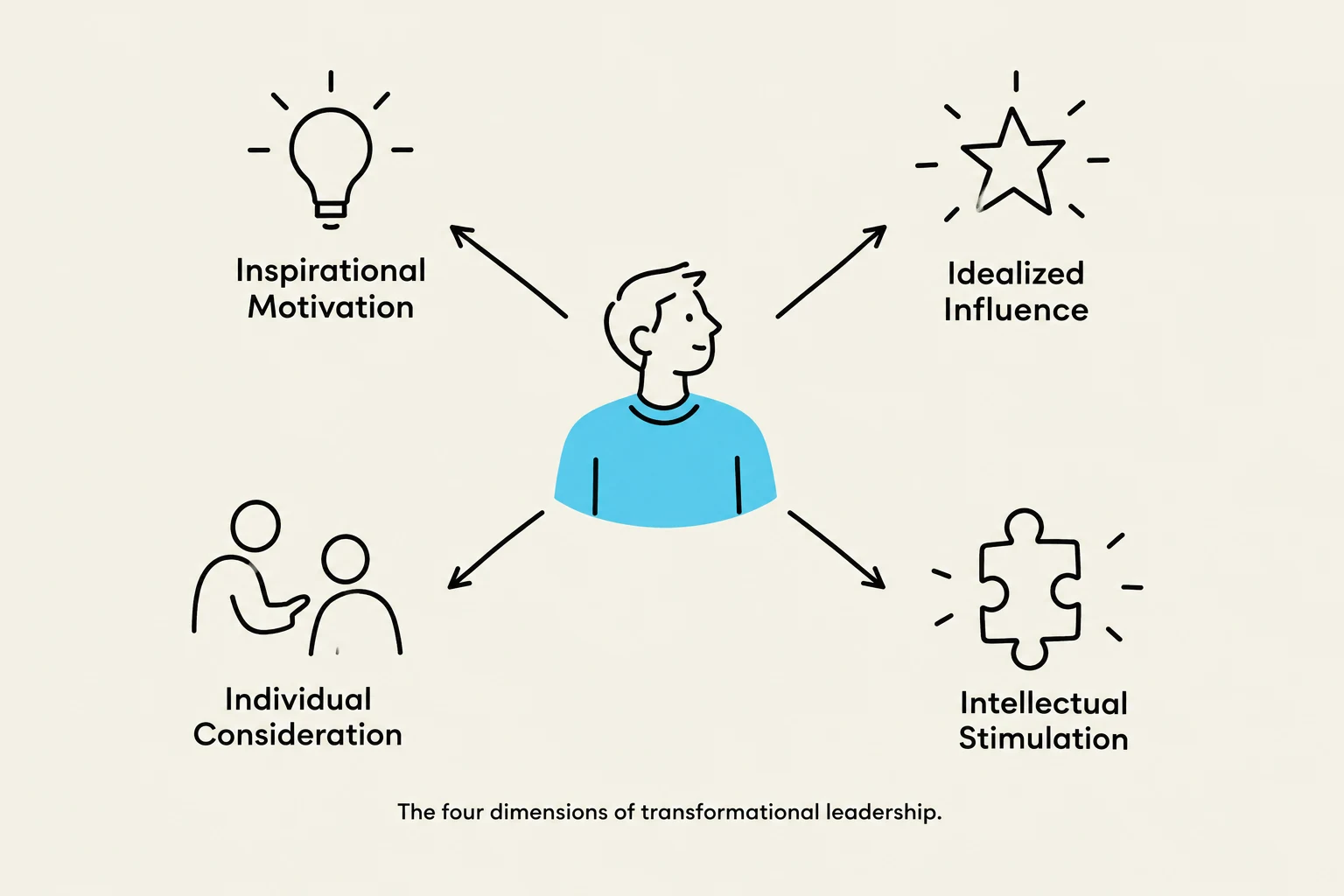
The four dimensions of transformational leadership: Inspirational Motivation, Idealized Influence, Intellectual Stimulation, and Individual Consideration.
Understanding Transformational Leadership
Transformational leadership is a style that goes beyond simple task management to inspire and motivate followers. It is not just about getting a job done; it is about changing the way followers think and feel about their work. According to the foundational work of Bass and Avolio (1994), this leadership style is composed of four distinct dimensions:
Inspirational Motivation: Creating and communicating an appealing vision based on shared values and ideals.
Idealized Influence: Acting as a role model, where the leader’s actions are consistent with the vision they promote.
Individual Consideration: Recognizing the unique needs and abilities of each follower and acting as a coach to foster their personal growth.
Intellectual Stimulation: Challenging followers to think creatively and approach problems from new perspectives.
Because these behaviors—especially being an "inspirational" or "intellectually stimulating" leader—require significant emotional and mental effort, they are highly sensitive to a leader's current state of energy.
The Role of Job Design and Work Characteristics
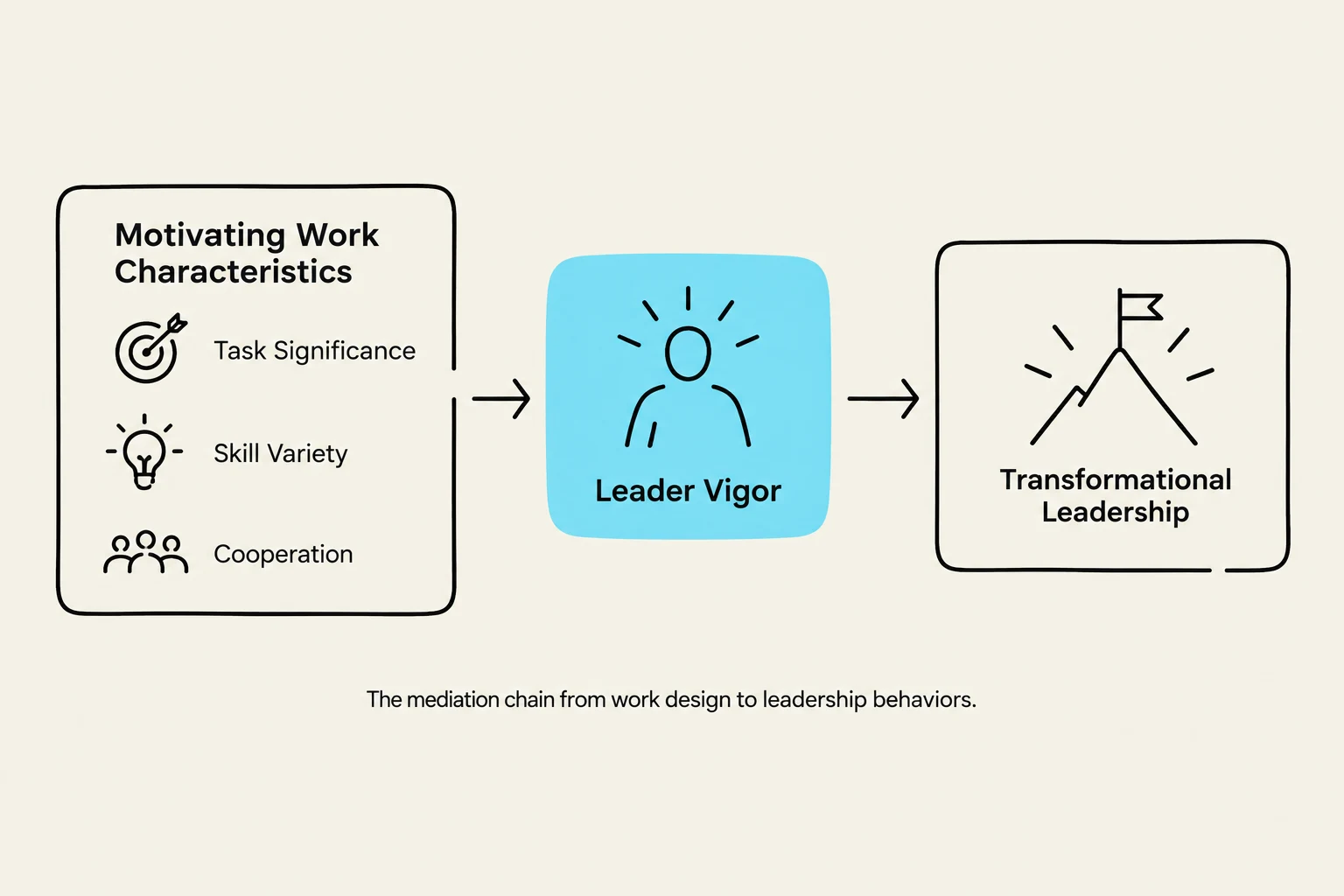
This diagram illustrates the mediation chain from work design characteristics such as task significance, skill variety, and cooperation, to leader vigor, and ultimately to transformational leadership.
To understand why leadership fluctuates, we can look to Job Design Theory. Traditionally applied to employees, researchers are now applying these concepts to leaders to see how their specific work tasks influence their ability to lead.
The research suggests that certain motivating work characteristics can trigger a psychological process that releases positive energy. Specifically, three characteristics were found to be critical for leaders:
Task Significance: The degree to which a leader perceives their work as having a meaningful impact on other people.
Skill Variety: The opportunity to use a diverse range of talents and skills rather than performing repetitive, monotonous tasks.
Cooperation: The level of supportive collaboration and social connection a leader experiences with peers and other departments.
When these three elements are present, they satisfy a leader's psychological needs for competence and belonging, which in turn boosts their vigor—a state of high mental energy, resilience, and willingness to persist.
Study Tip: The Mediation Chain
In research terms, this relationship is a "mediation" model. The flow looks like this:
Motivating Work Characteristics→Leader Vigor→Transformational Leadership
This means work design doesn't just "make" someone a transformational leader directly; it provides the energy (vigor) necessary to perform those demanding leadership behaviors.
The "Amplifier": Prosocial Motivation
This diagram illustrates how prosocial motivation influences the relationship between vigor and transformational leadership, showing different effects at high and low levels of prosocial motivation.
Even if a leader has high energy, will they always use it to be transformational? This is where prosocial motivation comes in. Prosocial motivation is an individual's intrinsic drive to benefit others.
The study found that prosocial motivation acts as a moderator—an "amplifier" that changes the strength of the relationship between vigor and leadership.
High Prosocial Motivation: For these leaders, vigor and transformational leadership are tightly linked. When they feel energetic, they naturally channel that energy into helping others, coaching followers, and inspiring the team because it aligns with their core values.
Low Prosocial Motivation: These leaders may feel vigorous (energetic), but they are less likely to translate that energy into transformational behaviors. Their energy might be spent on other tasks that do not focus on the growth or inspiration of their followers.
Summary of Findings and Practical Implications
Through a weekly diary study of 100 leaders in Switzerland, researchers confirmed that leadership is a dynamic, "within-person" phenomenon. The study provides a roadmap for organizations to sustain high-quality leadership:
Strategy
Actionable Step
Optimize Job Design
Ensure leaders see the task significance of their roles and provide opportunities for skill variety and cooperation.
Cultivate Prosociality
During recruitment, look for individuals with a high drive to help others. For current leaders, use storytelling to highlight the positive impact they have on their teams.
Manage Energy (Vigor)
Recognize that leadership is energy-intensive. Provide recovery tools, such as flexible schedules or wellness programs, to prevent leaders from "running on empty".
Exam Note: Within-Person vs. Between-Person Variation
When analyzing this study, remember the distinction:
Within-person variation: How a single leader's leadership changes from Week 1 to Week 2 (e.g., due to vigor).
Between-person variation: Why Leader A is generally more transformational than Leader B (e.g., due to their level of prosocial motivation).
By understanding that transformational leadership is a result of both the environment (job design) and the individual (motivation and energy), organizations can move away from simply "hiring the right person" and toward "creating the right conditions" for leadership to thrive.
Keep reading for free.
Create an account to finish this reading and make it part of your study routine.