


In the criminal justice system, the law generally holds that individuals are responsible for their own actions. However, there are rare circumstances where a person may be compelled to commit a crime against their will due to extreme pressure. One such legal excuse is the defense of duress. While it is a difficult standard to meet, it is a recognized defense even in cases involving perjury in an official proceeding.
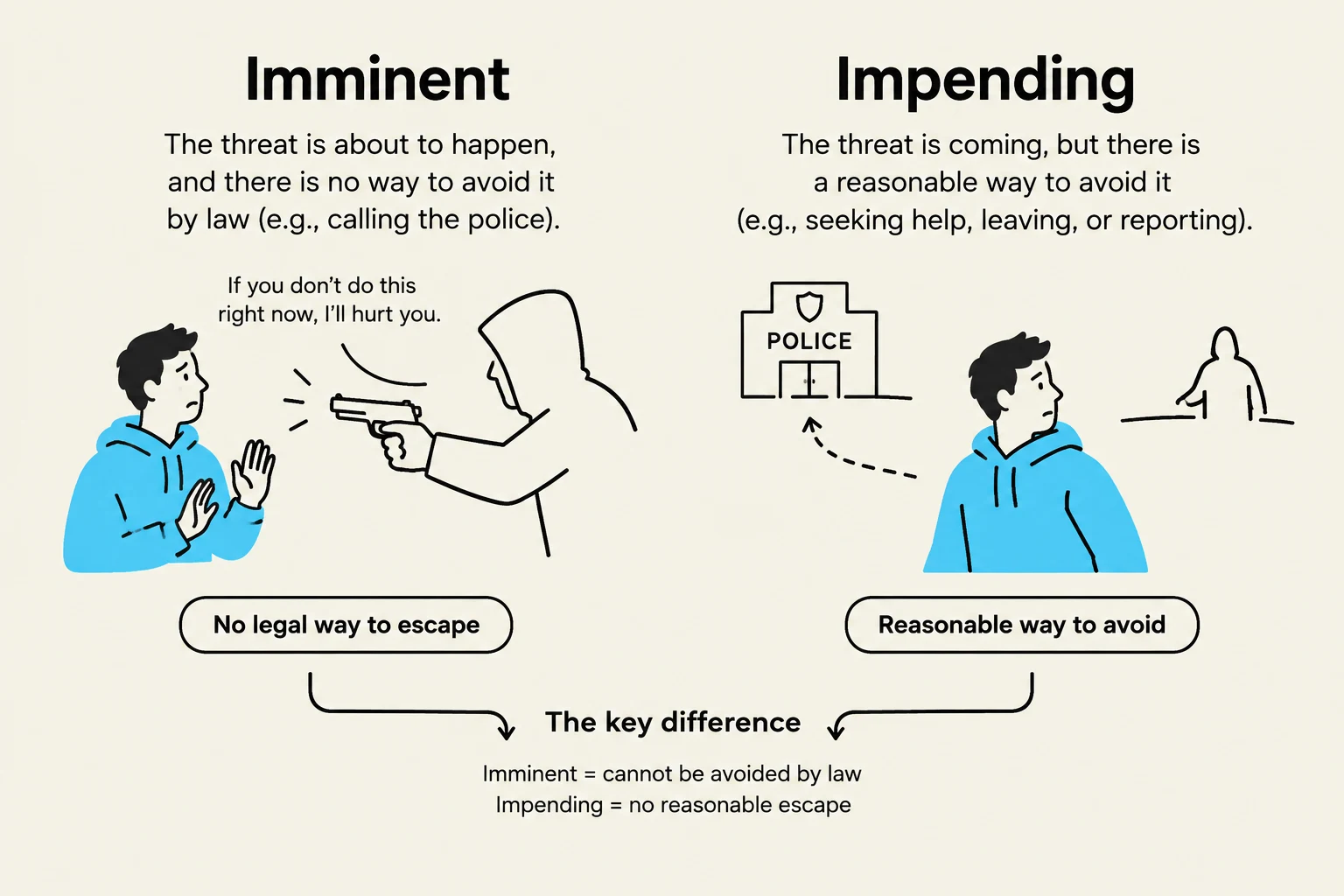
This article explores the specific legal requirements for asserting duress, the distinction between imminent and future threats, and how courts handle these claims during a trial.
Understanding Duress and Perjury
Perjury occurs when an individual willfully makes a false statement under oath during an official proceeding, such as a deposition or a trial. While the integrity of the judicial process relies on truthful testimony, the law recognizes that a witness might be coerced into lying through compulsion or coercion.
The defense of duress is closely related to the concept of necessity, where a defendant argues they committed a crime to avoid a greater harm. In a perjury context, a defendant might claim they lied because they feared for their life or the safety of a loved one due to the threats of another party.
Exam Tip: When analyzing a duress defense, always check if the defendant had a "reasonable opportunity to escape" the coercion without committing the crime. If an escape route existed, the defense will likely fail.

Keep reading for free.
Create an account to finish this reading and make it part of your study routine.
Continue reading freeAlready have an account? Log in
Updated