Explores the ethical principles, regulatory frameworks, and practical applications of drug regulation and administration in nursing, focusing on patient safety and informed consent.
In the modern healthcare landscape, medication administration is one of the most critical tasks performed by nursing professionals, accounting for approximately 40% of a nurse's time. Because of this high volume, nurses serve as the "first line of defense" against medication errors. Ensuring patient safety requires more than just technical skill; it demands a deep understanding of the legal, ethical, and regulatory frameworks that govern how drugs are developed, tested, and administered. From the initial stages of laboratory research to the post-marketing surveillance of a drug on the market, every step is governed by strict standards designed to protect human life.
Core Ethical Principles in Research
Before a drug ever reaches a pharmacy shelf, it undergoes extensive research. Because this research often involves human subjects, it must be guided by fundamental ethical principles derived from the Belmont Report and the World Medical Association Declaration of Helsinki. These principles ensure that the pursuit of scientific knowledge never supersedes the dignity and safety of the individual.
Respect for Persons and Autonomy
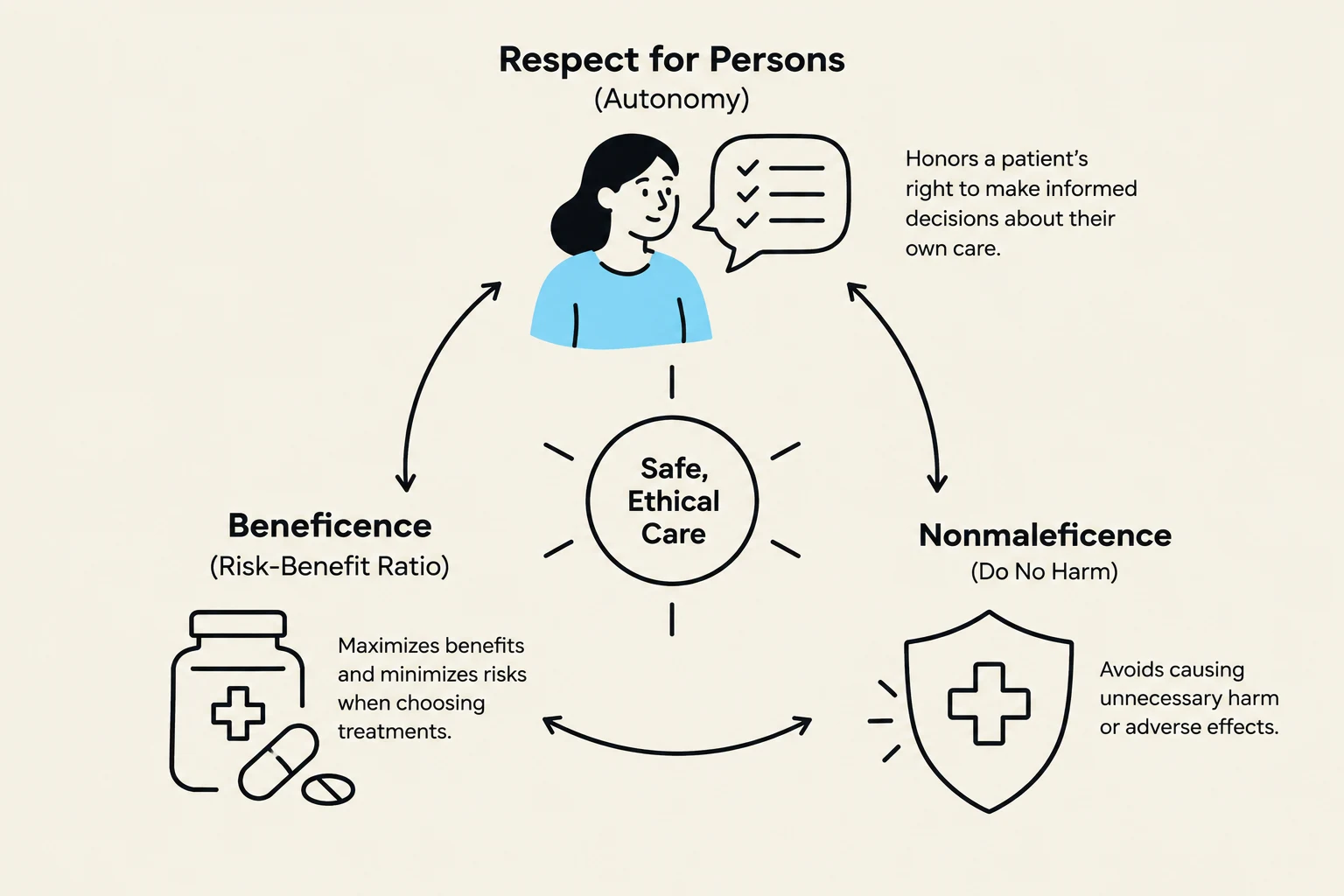
The principle of Respect for Persons dictates that individuals should be treated as autonomous agents capable of making their own decisions. A central component of this is autonomy, which is the right to self-determination. In a clinical or research setting, this means patients have the right to accept or refuse treatment, and research participants have the right to withdraw from a study at any time without penalty.
Nursing Tip: Nurses must remain vigilant for patients with diminished decision-making capacity (e.g., due to cognitive decline or acute illness). These patients are entitled to extra protection, and the nurse plays a vital role in assessing cognitive status to ensure decisions are truly autonomous.
Beneficence and the Risk-Benefit Ratio
Beneficence is the ethical obligation to "do good" and to protect subjects from harm. In pharmaceutical research, this is operationalized through the evaluation of the risk-benefit ratio. Researchers must demonstrate that the potential benefits of a new drug (such as curing a disease) outweigh the potential risks (such as side effects or toxicity).
Justice
The principle of Justice requires that the burdens and benefits of research are distributed fairly across all social, racial, and ethnic groups. It prevents the exploitation of vulnerable populations by ensuring that no single group bears the brunt of research risks while another group reaps all the therapeutic rewards.
This diagram illustrates the core principles of safe and ethical healthcare: Respect for Persons (Autonomy), Beneficence (Risk-Benefit Ratio), and Nonmaleficence (Do No Harm).
Informed Consent: A Continuous Process
Rooted in the 1947 Nuremberg Code, informed consent is not merely a signature on a piece of paper; it is a continuous process of communication. To be valid, consent must be voluntary and free from coercion.
The process involves several key requirements:
Information Sharing: The participant must understand the purpose, procedures, risks, and benefits of the study.
Comprehension: Consent forms should be written at or below an eighth-grade reading level, using simple language.
Voluntariness: Participation must be a choice, not a requirement for receiving standard care.
While the healthcare provider (such as the principal investigator) is responsible for explaining the study and answering technical questions, the nurse plays a critical role in supporting the patient, witnessing the signature, and ensuring the patient truly understands the information provided.
The Phases of Pharmaceutical Research
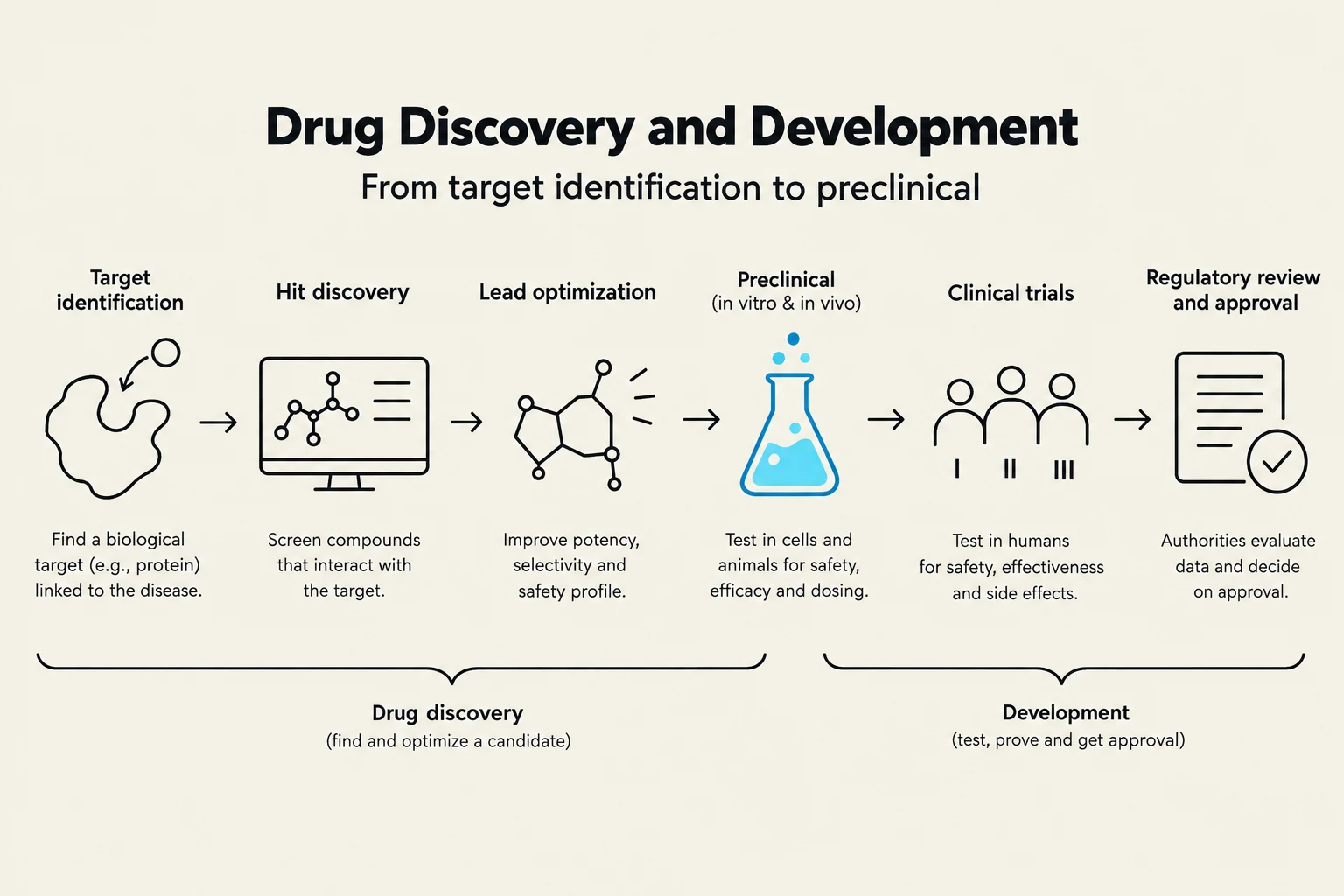
The journey from a chemical compound to a marketed drug is a massive undertaking, often taking 12 or more years and costing billions of dollars. Most drugs (approximately 90%) fail to reach the market due to lack of efficacy or unmanageable toxicity.
Preclinical Trials
Before any human is exposed to a new drug, it undergoes preclinical trials. These involve in vitro (test tube/culture) and in vivo (animal) testing to determine the drug's toxicity and its ADME profile: Absorption, Distribution, Metabolism, and Excretion.
Human Clinical Experimentation
Once preclinical safety is established, the drug moves into human clinical development, which is divided into four distinct phases:
Phase I (Safety): Conducted on a small group (20–100) of healthy volunteers to evaluate safety, dosage, and side effects.
Phase II (Effectiveness): Conducted on a larger group (100–300) of patients who actually have the condition to assess whether the drug is effective.
Phase III (Pivotal Trials): Large-scale studies (1,000–5,000 patients) designed to confirm efficacy, monitor side effects, and compare the new drug against current standard treatments.
Phase IV (Postmarketing Surveillance): Occurs after the drug is approved and on the market. This phase monitors long-term effects and how the drug impacts diverse, real-world populations.
This diagram illustrates the key stages of drug discovery and development, from identifying a biological target to regulatory review and approval.
Standards, Regulation, and the Nurse's Role
To maintain public trust and safety, drug development is strictly regulated by federal and international bodies.
FDA and USP-NF
In the United States, the Food and Drug Administration (FDA) oversees the approval process for new drugs. The FDA's Critical Path Initiative aims to drive innovation while ensuring medical products are safely manufactured and evaluated.
While the FDA regulates the approval of drugs, the United States Pharmacopeia (USP-NF) provides the authoritative standards for the quality of drugs, including their purity, strength, and identity.
Nursing Advocacy and Clinical Judgment
Nurses operate under the American Nurses Association (ANA) Code of Ethics, which mandates their role as patient advocates. In the context of drug regulation and research, this advocacy manifests in several ways:
Monitoring for Adverse Events: Nurses are often the first to notice unexpected reactions in patients, especially during Phase IV surveillance.
Ensuring Protocol Integrity: In clinical research, nurses must be knowledgeable about inclusion and exclusion criteria to ensure participant safety.
Patient Education: Nurses translate complex pharmacological information into understandable teaching for patients, focusing on adherence, side effects, and proper administration.
Student Alert: The "Edge Case" of Non-Adherence
Students often assume non-adherence is simply "forgetfulness." However, through the lens of clinical judgment, a nurse must investigate deeper. Is it a financial barrier? A cultural dietary restriction? Or perhaps a side effect like dizziness that makes the patient afraid to take the pill? Always assess the reason behind the behavior.
Applying Clinical Judgment to Medication Safety
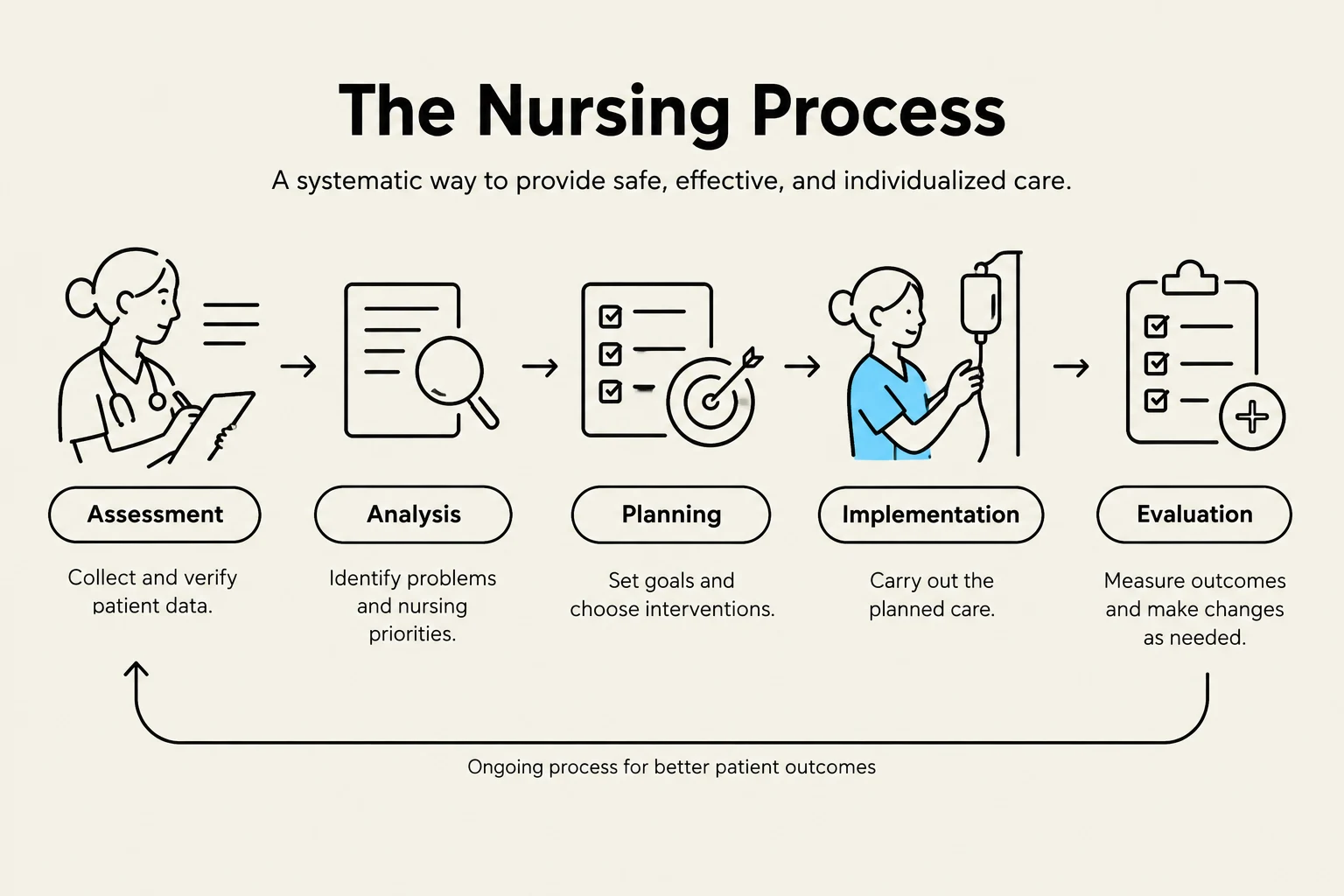
Nurses use the Clinical Judgment Measurement Model (CJMM) to navigate the complexities of drug therapy. This involves a systematic approach:
Recognize Cues: Assessing subjective data (what the patient says) and objective data (what the nurse observes, like vital signs).
Analyze Cues: Interpreting how the data relates to the patient's condition.
Prioritize Hypotheses: Ranking patient problems by urgency (e.g., an allergic reaction takes priority over a need for health teaching).
Take Action: Implementing the plan, such as administering the drug or providing education.
Evaluate Outcomes: Determining if the intervention worked and if the patient's condition improved.
The Nursing Process is a systematic approach to providing safe, effective, and individualized patient care, involving assessment, analysis, planning, implementation, and evaluation.
By integrating ethical principles, regulatory knowledge, and clinical judgment, nurses ensure that the powerful tools of pharmacology are used safely and effectively to promote patient health.
Keep reading for free.
Create an account to finish this reading and make it part of your study routine.