


What separates a nation of high prosperity from one struggling with stagnation? While the answer is multifaceted, the core drivers of global wealth—measured by GDP per capita—revolve around the ability to create value, the efficiency of capital allocation, and the regulatory frameworks that govern them. To understand how wealth accumulates at both a macro and micro level, we must examine the interplay between human capital, entrepreneurial innovation, asset appreciation, and the institutional policies that shape market behavior.
The Engine of Growth: Entrepreneurship and Human Capital
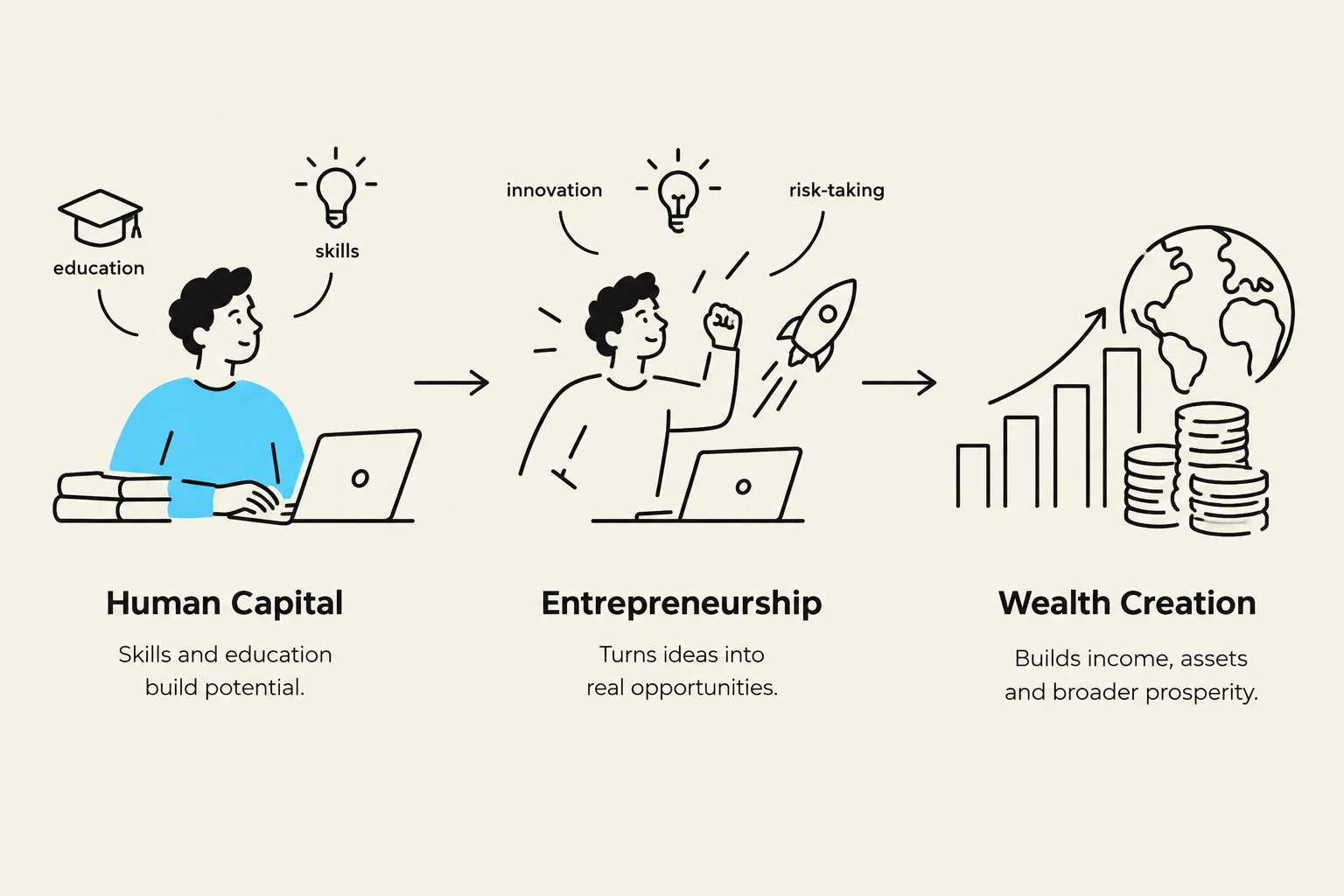
At the heart of economic expansion lies the concept of value creation. While labor provides the necessary effort, it is entrepreneurship that directs that effort toward solving problems and meeting market demands. Entrepreneurship acts as a catalyst, transforming raw resources and ideas into scalable products and services.
However, entrepreneurship does not exist in a vacuum; it is fueled by human capital. Human capital refers to the collective skills, knowledge, and experience possessed by individuals. In the context of wealth management and economic development, high levels of human capital allow for more sophisticated decision-making and the ability to navigate complex financial environments.
Exam Tip: When analyzing economic growth, distinguish between "Physical Capital" (machinery, infrastructure) and "Human Capital" (education, skills). While physical capital is essential, human capital is often the primary driver of long-term productivity gains.
The Multiplier Effect: Asset Appreciation and Capital Allocation
Once value is created through entrepreneurship, the resulting wealth is typically channeled into assets. Wealth accumulation is rarely a linear process of saving cash; rather, it is a process of investing in assets that appreciate over time. These assets can be categorized into several types:

Keep reading for free.
Create an account to finish this reading and make it part of your study routine.
Continue reading freeAlready have an account? Log in
Updated