


To understand how a single cell can direct the complex processes of life, we must look at two fundamental components: the blueprint itself—Deoxyribonucleic acid (DNA)—and the specialized cellular machinery that prepares the tools for building proteins. This article explores the intricate chemical structure of DNA and the vital role of the nucleolus in the production of ribosomes, the cell's protein factories.
The Building Blocks: DNA Structure
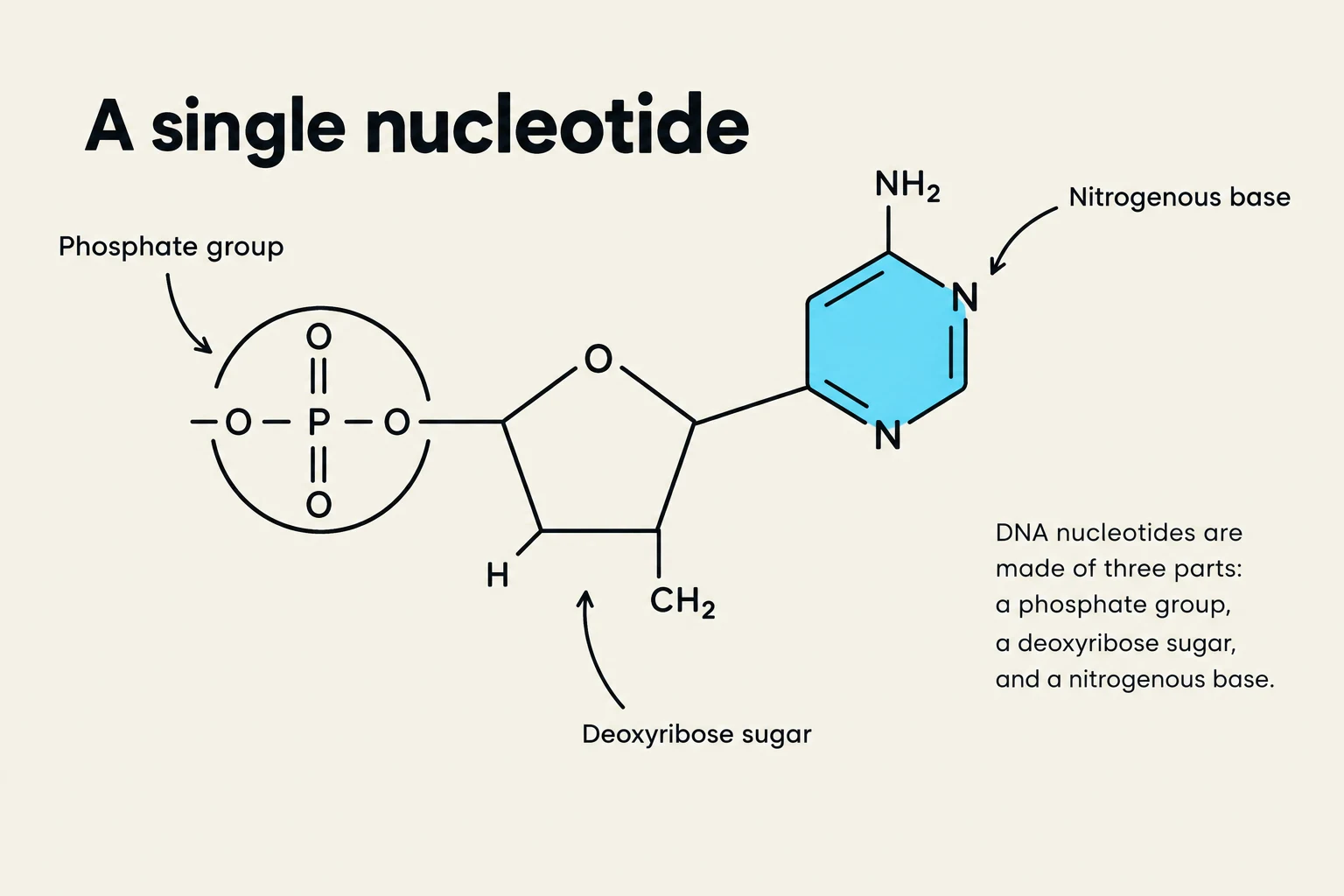
DNA is a nucleic acid macromolecule that serves as the repository of genetic information. Rather than being a simple string, it is a highly organized structure built from repeating units called nucleotide subunits.
The Nucleotide Unit
Every single nucleotide is composed of three essential chemical components:
- A nitrogenous base (the information carrier).
- A deoxyribose sugar (a five-carbon sugar).
- A phosphate group (the structural connector).
The structural integrity of a DNA strand is maintained by a sugar-phosphate backbone. This backbone is formed through phosphodiester bonds, which are covalent links that connect the phosphate group of one nucleotide to the deoxyribose sugar of the next nucleotide.
Nitrogenous Bases and Complementary Pairing
The "code" of DNA is written in its four primary nitrogenous bases. These bases are categorized into two distinct chemical groups based on their ring structures:

Keep reading for free.
Create an account to finish this reading and make it part of your study routine.
Continue reading freeAlready have an account? Log in
Updated